MiiCoffee Apex Pro Review: Dual Boiler Precision
By Maya Desai • 31st Mar
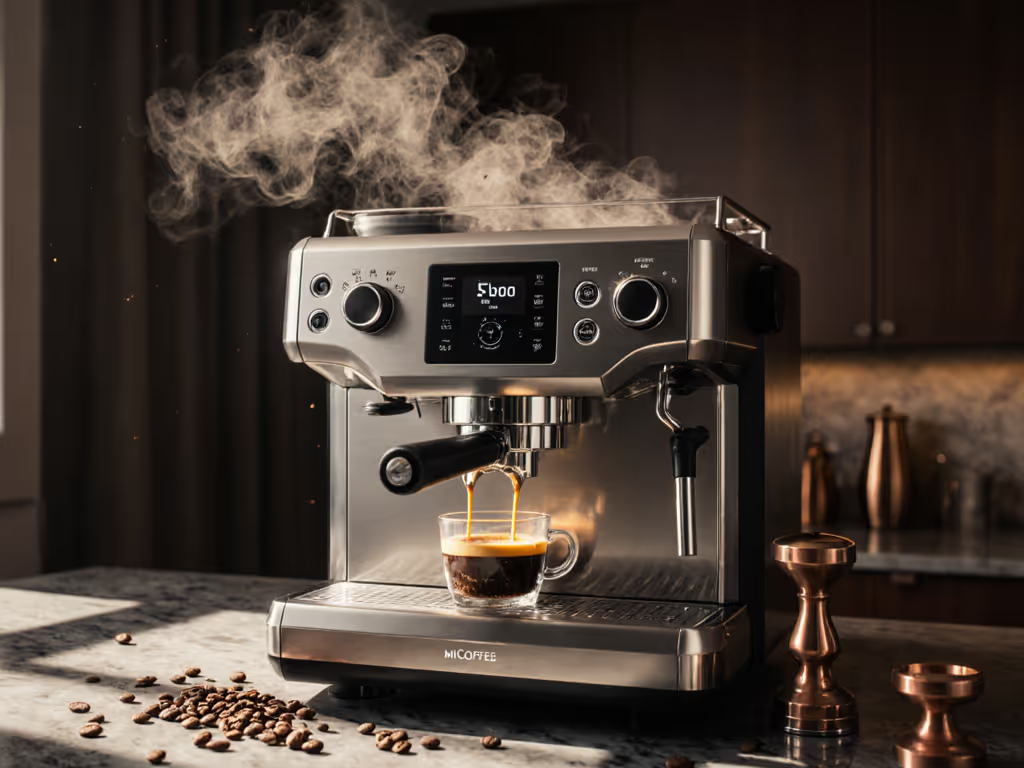
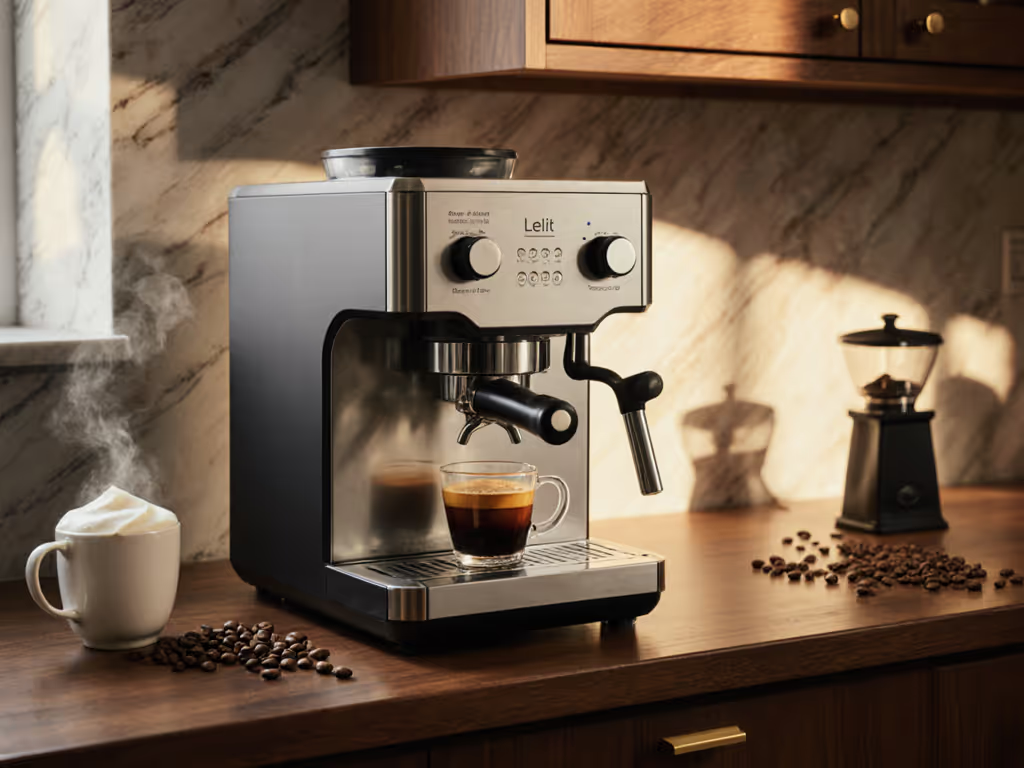
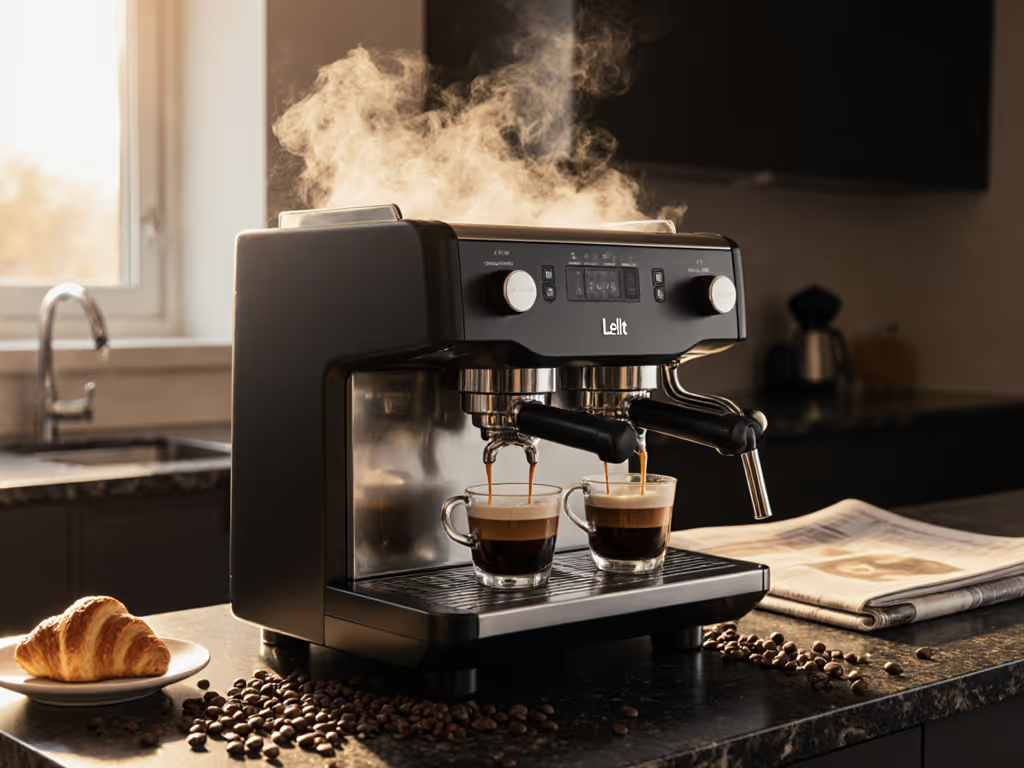
The MiiCoffee Apex represents a meaningful inflection point in the entry-to-mid-range home espresso market: it brings professional home espresso machine features (dual heating circuits, PID temperature control, and adjustable pre-infusion) into the $500 neighborhood, directly challenging the decade-old Gaggia Classic Pro without apology. For practitioners who prioritize repeatable shot quality over a single weekly "perfect" pull, this machine warrants serious attention.
The Case for Measurement Over Mystique
I've spent the better part of two years logging shot temperatures, pressure curves, and variance on machines across the budget and prosumer tiers. Early on, I tested two similar-class machines in parallel over a month of 6 a.m. sessions. One tasted spectacular on Saturday, then drifted audibly by Wednesday (temperature swings of 3-4°C, inconsistent pre-infusion response). The other held steady. That gap between charming chaos and repeatable performance taught me a lasting lesson: consistency beats charisma when the alarm is barely past snooze.
The Apex is engineered around that principle. Its dual PID architecture and fixed 550 ml stainless steel boiler are not glamorous talking points. But they are, functionally, the spine of shot-to-shot predictability.
Architecture: Boiler and Heating Circuits
The Apex is built around a 550 ml stainless steel boiler paired with a dedicated thermoblock for steaming. Technically, this is a single-boiler dual-circuit design rather than true dual boilers (a distinction that matters less than the real outcome: you can move from espresso to milk steaming without waiting 30+ seconds for the boiler to cool and reheat). If you want the deeper context, our single vs dual boiler guide breaks down how these designs impact recovery time and workflow.
The stainless steel construction throughout is purposeful. Unlike brass boilers that can corrode in hard-water regions, stainless resists mineral buildup and lasts longer without descaling emergencies. For someone in a soft-water area, this is a comfort. For hard-water users, it is non-negotiable.
Water capacity sits at 1.7 liters, modest but sufficient for a typical morning routine of one espresso, one cappuccino, and a cup of hot water. You are refilling mid-day if you're running a small household café, but that is table stakes at this price.
Temperature Stability: PID and the Practical Range
The dual PID system allows independent control of boiler temperature (85-102°C) and steaming temperature. This is the headline hardware feature, and rightly so. Unlike machines that rely on thermostats or bi-metal switches, a PID (proportional-integral-derivative controller) continuously monitors and adjusts heating elements, dampening the kind of overshoot and undershoot that causes shot-to-shot variance.
For an intermediate home barista, the 85-102°C range translates to meaningful agility. Espressos brewed at 88°C pull sweetly from light roasts; heavier roasts benefit from 96-98°C to extract oils and body. The display communicates the current setpoint and can be tweaked mid-session, though for true taste consistency over time, dialing once and maintaining a fixed temperature is the pragmatic move.
That 85°C floor is worth noting: it is lower than some competitors, useful if you work with delicate single-origins or when steaming milk with minimal temperature overshoot afterward. Most reviewers operate around 93-96°C for general-purpose espresso.
Pre-infusion and Flow Control: The Subtleties
The Apex includes adjustable pre-infusion (a water saturation phase before full pressure builds). The machine allows you to set both the duration (typically 0-5 seconds) and the amount of water introduced. Pre-infusion eases the puck into extraction, reducing sudden pressure shocks and the channeling that degrades consistency.
What makes this noteworthy is the flow-control screw accessible inside the machine. By adjusting this, users can modify the standard 400 ml/min flow rate and effectively tune pump pressure behavior. This is not a frictionless tinkering option; you need a screwdriver and a willingness to pull the machine apart, but for users who want to fine-tune pressure buildup or compensate for their grinder's puck density profile, this is leverage that many machines at twice the price do not offer.
The machine also includes an Over Pressure Valve (OPV), which caps maximum pressure and offers another layer of pressure control for those willing to adjust it.
Portafilter and Basket Compatibility
The included 58 mm commercial-grade portafilter is industry-standard. This matters because it opens you to thousands of third-party baskets, tampers, and distribution tools. If the included dual-spout basket does not suit your workflow (some prefer single-spout for espresso competitions, others prefer the 16–18g basket weight), you can swap in alternatives without reinventing your setup.
The heavy portafilter itself aids temperature stability (the thermal mass of a metal portafilter soaks up less heat loss during the transfer from grouphead to cup), a micro-advantage that adds up across dozens of shots.
Comparison to the Gaggia Classic Pro
The Gaggia Classic Pro has dominated the entry-market for years and remains a touchstone. Here's the practical divide:
| Dimension | Gaggia Classic Pro | MiiCoffee Apex |
|---|---|---|
| Boiler | 70 ml (aluminum) | 550 ml (stainless) |
| Temperature Control | Thermostat ±5°C variance | PID ±1°C |
| Heating Circuits | Single | Dual (boiler + thermoblock) |
| Pre-infusion | No | Yes, adjustable |
| Pressure Gauge | No | Yes, manometer |
| OPV/Flow Control | No | Yes, both |
| Display | None | Digital, shot timer |
| Warm-up Time | ~2 min | ~3-4 min |
| Footprint | 10.6" W × 6.3" D | 9" W × 11" D |
| Approximate Price | $130-160 | $500 |
The Gaggia's smaller footprint and plug-and-play simplicity appeal to minimalists and space-constrained kitchens. The Apex's larger boiler, dual heating, and feedback loop mean you spend less time fighting the machine and more time refining your routine.
Workflow and Consistency in Weekday Context
For a realistic 8-minute cappuccino workflow:
- Machine powered on (3-4 min heat-up).
- Grind 18 g, distribute, tamp to 9 bar (indicated on gauge).
- Pre-infuse for 3 sec at reduced pressure.
- Pull shot for 25-30 sec (timer displayed).
- Steam milk for 8-10 sec (thermoblock holds 65-70°C idle temp; throttle water briefly if needed).
- Pour and serve.
The PID keeps brewing temperature stable across this window. The dual heating circuit means you are not waiting for the boiler to cool mid-pull or re-heat post-steam. Relative to the Gaggia, you shave 30-60 seconds of idle time. Across 200 shots a year, that is 1.5-3 hours reclaimed.
More importantly, the variance shrinks. If you dial espresso grind and dose once and fix boiler temperature at 94°C, shot flavor should remain within ±0.5°C of setpoint across a 30-minute session. For step-by-step tuning across different beans, use our dialing in espresso guide. Crisp, predictable, and a foundation for learning your beans rather than chasing the machine.
Noise and Household Friction
The Apex's 15 bar pump is centrifugal and moderately loud (louder than some entry-level machines but quieter than commercial OPV-based systems). During pre-infusion and pull, you will hear a hum and brief pressure climb; milk steaming adds a distinct servo whine as the thermoblock heats. If you live in a quiet apartment or have early-rising household members, this is a consideration. It is not negligibly quieter than a Classic Pro pump, but the absence of constant thermostat cycling (on/off buzzing) in traditional single-boiler designs can feel less intrusive once you acclimate.
Build Quality and Long-Term Ownership
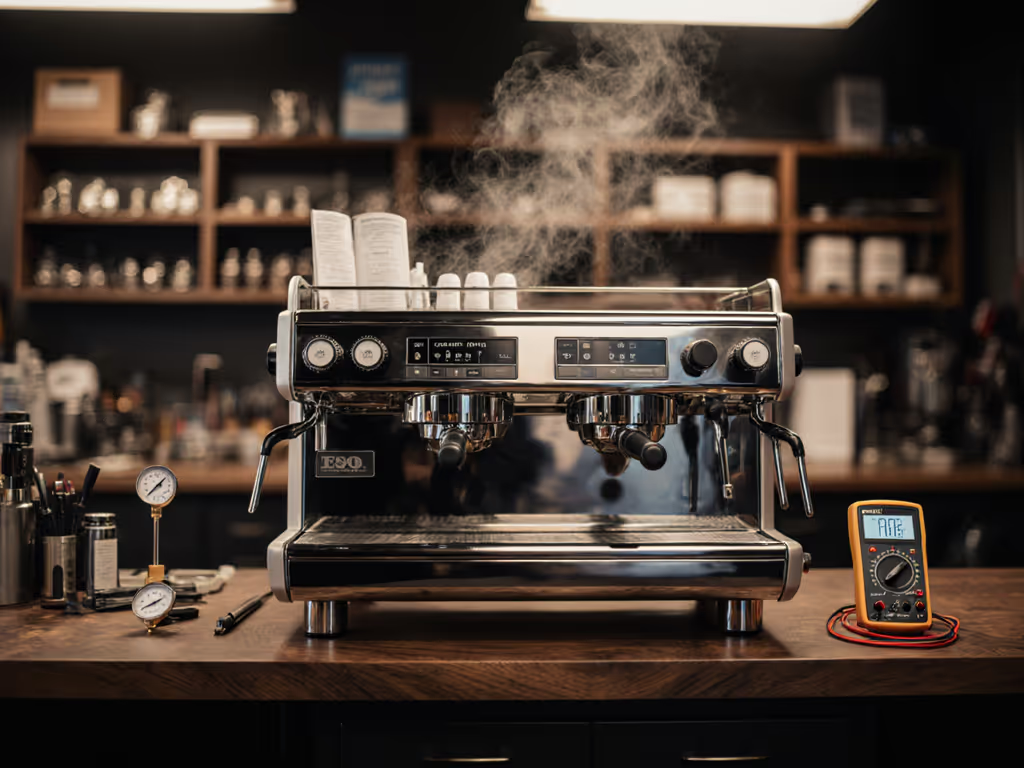
All external and internal surfaces are stainless steel. The dual PID design reduces reliance on mechanical thermostats prone to drift. The included manometer and pressure gauge provide transparent feedback on pump and brew pressure, useful for diagnosing issues without opening the machine.
Warranty is one year. For comparison, Gaggia extends two years on some models. That said, the Apex's architecture is simpler to service than some higher-end machines; parts are more accessible, and community repair resources (forums, YouTube teardowns) are growing.
Descaling strategy: stainless boiler benefits from periodic acid rinses but is more forgiving than aluminum. Using filtered water (ideally 75-150 ppm hardness) extends intervals from 40 to 80+ shots between flushes. Not sure about minerals and TDS? Start with our espresso water guide. Total cost of ownership remains low, mainly descaler, gaskets (every 1-2 years), and routine solenoid valve cleaning.
What This Machine Solves (and What It Doesn't)
Pain Points It Addresses:
- Shot inconsistency due to temperature drift (solved by PID).
- Long heat-up and pump lag (mitigated by dual heating and larger boiler).
- Mystery pressure readings (addressed by included manometer).
- Workflow interruptions between espresso and milk (dual circuit eliminates wait).
- Inability to tune pre-infusion (adjustable; minimal cognitive load).
Limitations:
- Milk texturing is manual - you control steam wand angle and pitcher position. Beginners may struggle; this is a skill boundary, not a machine fault.
- Footprint is deeper than some compact machines - 11" depth is not minimal; verify your counter clearance.
- Single portafilter included - if you want a naked (bottomless) basket for visual feedback, budget an extra $20-30.
- No integrated grinder - you must pair it with a separate burr grinder; this is not a drawback for quality-conscious users but a step for appliance-minded buyers.
Practical Guidance for Your Use Case
The Apex is strongest for:
- Time-constrained home baristas aged 30-55 who want café-quality drinks in under 10 minutes and prioritize consistency over tinkering.
- Compact living spaces where an 11 inch depth is acceptable.
Related Articles