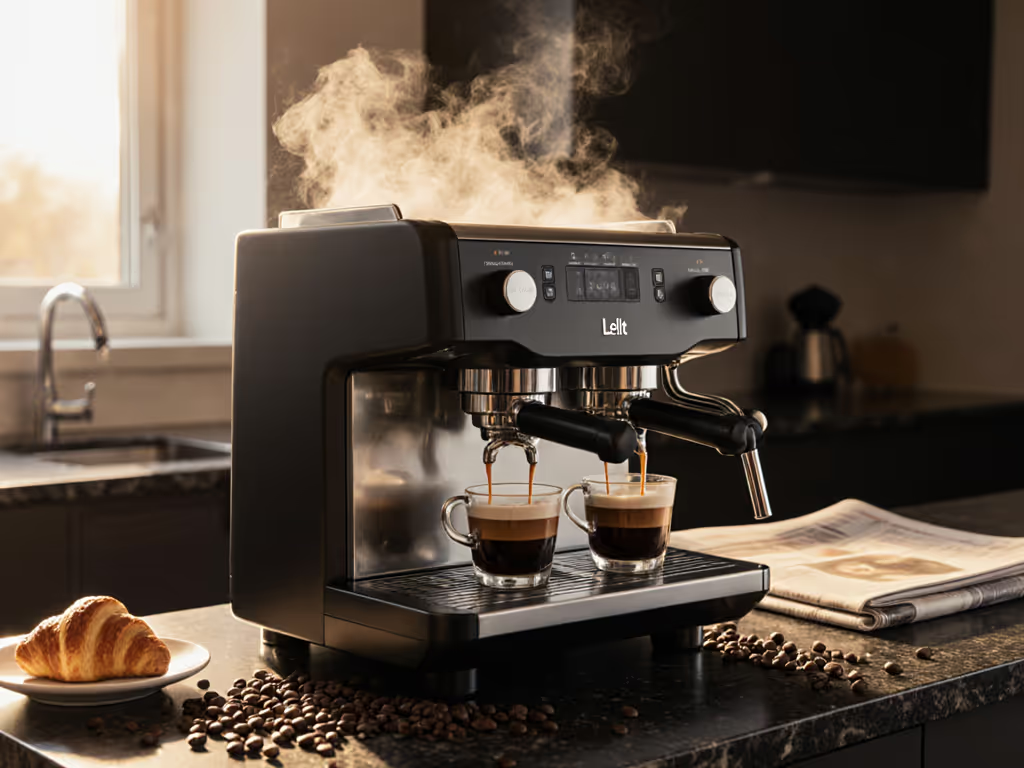
Quick Mill Vetrano 2B Evo: Service & Value
By Daniel Ortiz • 28th Apr
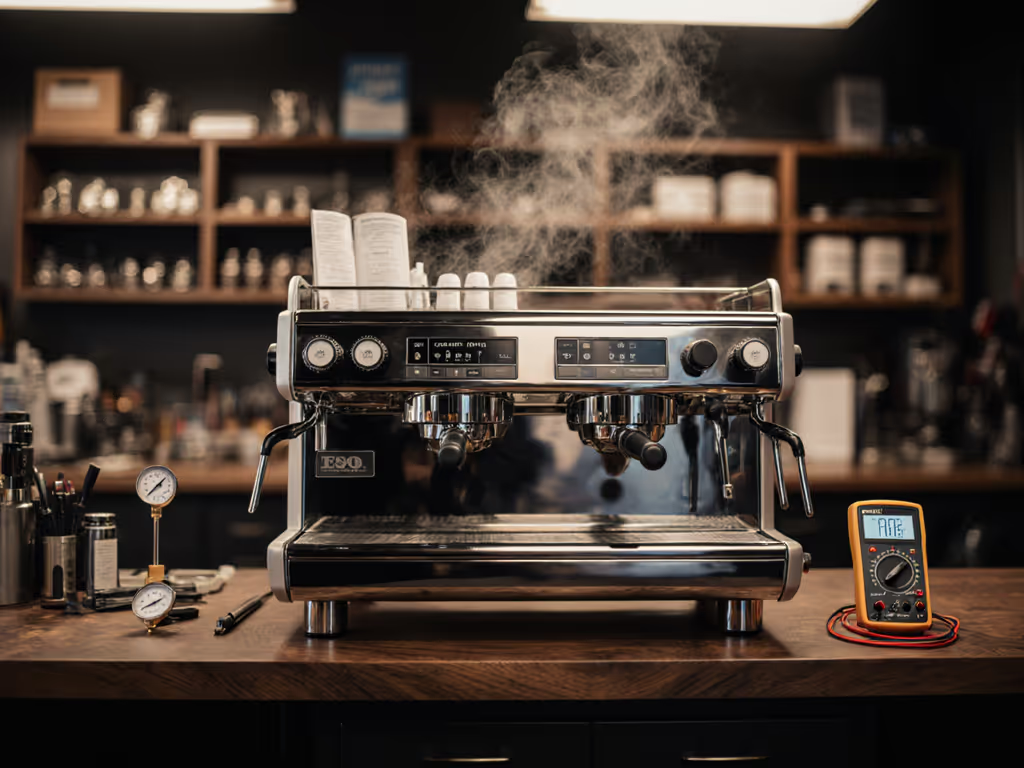
The Quick Mill Vetrano 2B Evo is not a machine built to impress your Instagram followers. It's a dual boiler espresso machine engineered around a single principle: predictable, boring reliability. The Vetrano 2B buying guide starts and ends with one question: Can you afford to own this machine for a decade without surprise repair bills or downtime? If the answer is yes, the Vetrano 2B Evo earns serious consideration. This review strips away the rhetoric and examines what actually matters to pragmatic home baristas: parts cost, serviceability, real steam capacity for milk-heavy workflows, and whether the machine's architecture rewards you for keeping it instead of chasing the next model.
The Machine at a Glance
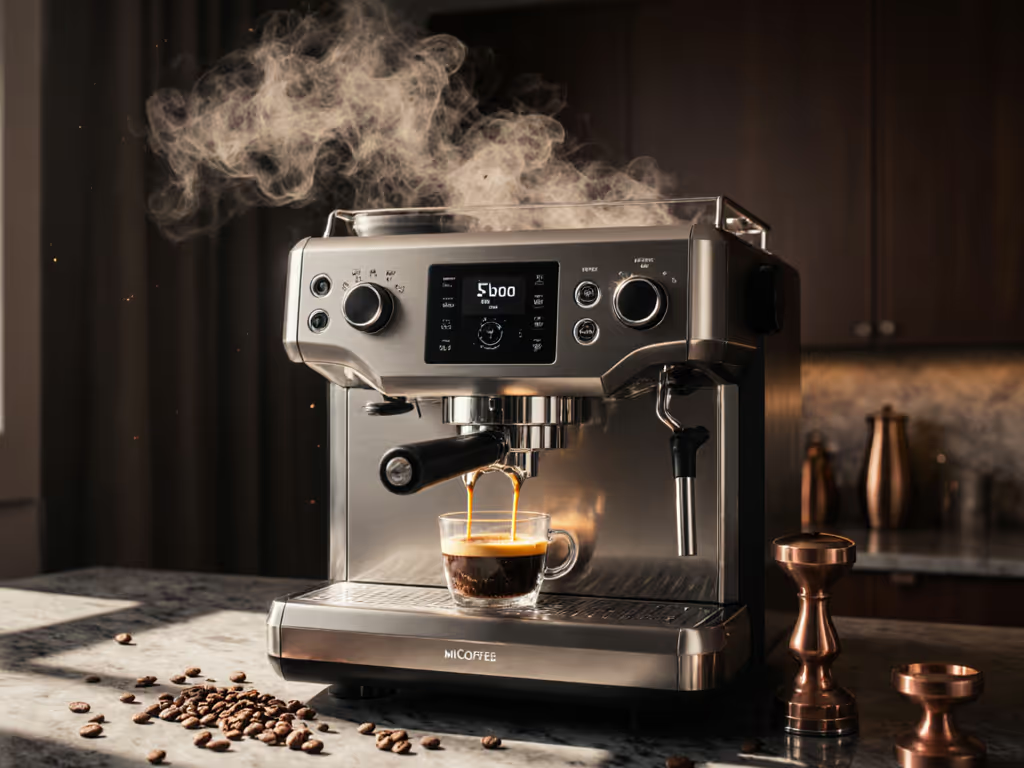
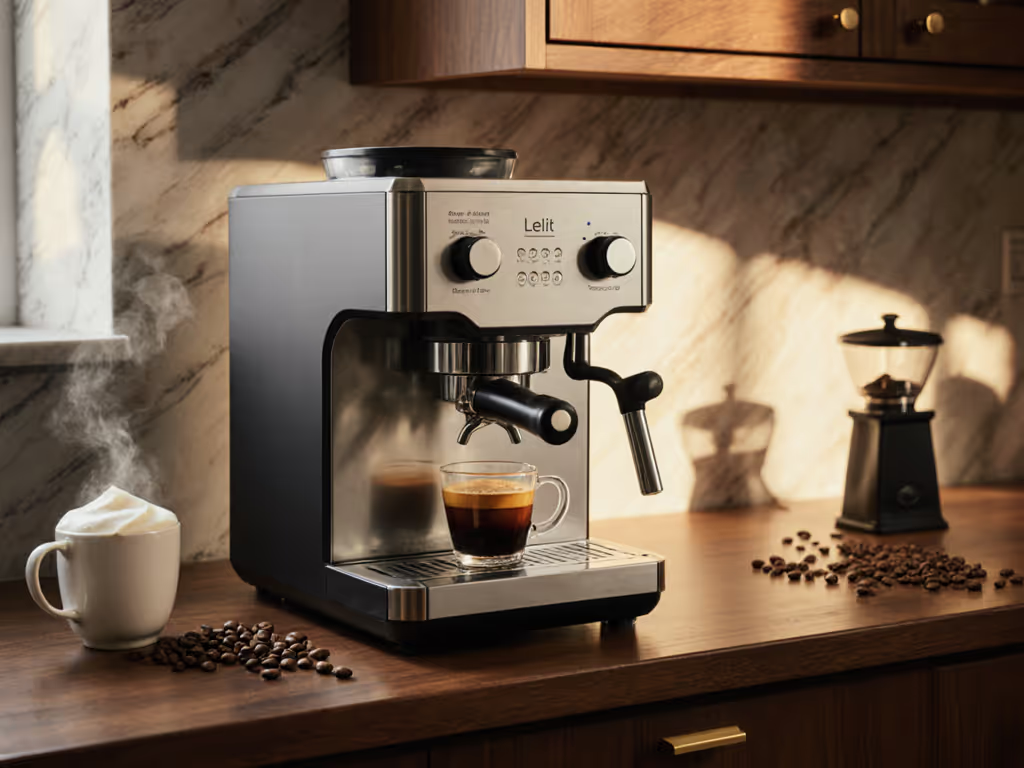
Spec lists tell you what a machine has; ownership tells you what it does. The Vetrano 2B Evo ships with a 0.75-liter stainless steel brew boiler and a 1.4-liter steam boiler, each under independent PID control. A real rotary pump (not a vibratory motor) pushes water through an iconic E61 brew group. The control panel is analog, almost brutally simple: temperature dial, steam knob, a PID display that doubles as a shot timer. You can run it from a 3-liter reservoir or direct-plumb it to your water line. Drain support is built in. Total footprint is substantial (not a worktop fit for cramped apartments), but that size buys you thermal mass and component accessibility.
The machine weighs roughly 55 pounds, stainless exterior, and the internals are laid out for human hands. That's not accident. That's design intent.
Serviceability: The Unsexy Truth That Matters
I spent three years tracking what broke on the machines I owned after warranty expired. Gaskets at $8 to $15, pump seals at $40 to $80, thermostats at $25 to $50. A single parts failure that required paid labor ate 3 to 5 hours of downtime and $150 to $400 in service calls. That math is why I own machines today (expensive upfront) whose parts diagrams are public and whose repair videos exist in home-barista forums.
The Vetrano 2B Evo is built in that tradition. Quick Mill publishes service manuals. The boilers are stainless, not aluminum; aluminum corrodes, stainless lasts. The pump is a Fluid-O-Tech rotary model, the same unit used in commercial gear; replacement pumps are listed online and cost $120 to $180. The E61 brew group has been in production since 1961; gasket kits are commodity items. Thermostats, expansion valves, solenoid coils, all field-serviceable without proprietary tooling. The modular assembly means a home barista with mechanical confidence can swap boiler thermostats or replace pump seals using YouTube tutorials and a basic hex key set.
Compare this architecture to machines with glued-in components, proprietary connectors, or sealed brew groups. The Vetrano 2B Evo rewards fix before replace thinking. Parts are not exotic. Labor is not locked behind brand authorization.
Water Quality and Ongoing Consumables
Dual-boiler machines demand better water than superautomatics. For specifics on minerals and preventing scale, see our espresso water guide. Calcium buildup in a 0.75-liter brew boiler moves faster than in a single-boiler heat exchanger. Plan to descale every 3 to 6 months depending on local hardness; a gallon of descaling solution costs $10 to $15, and the process takes 45 minutes. If you ignore this, limescale narrows internal passages and slow-heats the machine to death.
The E61 group includes a three-way solenoid that releases pressure after the shot; this solenoid valve will eventually weep. Replacement cost is $60 to $100, and the fix is a 10-minute job once you accept that water will drip into your cup for the first week you don't notice. Missing this rhythm costs you clarity and weakens your ability to diagnose real problems.
Total consumables: descaling supplies ($30 to $50 per year), occasional solenoid replacement ($80 to $120 every 3 to 5 years if you backflush regularly with filtered water), water filters if you plumb direct ($15 to $30 per filter, replaced annually). These are not hidden costs; they're predictable and manageable.
Total Cost of Ownership: The Math
Let's say you buy a Vetrano 2B Evo today for $2,600 to $3,200 depending on region and promotions. Warranty is typically 2 to 3 years from the retailer.
Year 1-2 (Warranty Period):
- Machine: $2,900 (midpoint)
- Grinder (assumed separate purchase): $400 to $800
- Initial accessories (tamper, WDT tool, blind basket): $40 to $80
- Water treatment (filters, descaling): $40
- Subtotal: $3,380 to $4,820
Year 3-5 (Post-Warranty):
- Descaling supplies: $50/year × 3 = $150
- Minor gasket/solenoid replacements: ~$150 to $200 total
- One pump rebuild or replacement (if needed): $0 to $180
- Water filters: ~$30/year × 3 = $90
- Subtotal: $390 to $620
Year 6-10 (Extended Ownership):
- Descaling and consumables: $50 to $80/year × 5 = $250 to $400
- Boiler gasket or thermostat replacement (if needed): $50 to $150
- One larger repair (heating element, pump): $0 to $300
- Subtotal: $300 to $850
Total 10-Year Cost: $4,070 to $6,290 (or roughly $0.27 to $0.42 per shot if you average 30 shots per day).
Now compare this to a sealed, glued machine from a boutique brand. Parts are $200 to $400 each, repairs require shipping to authorized service centers ($80 to $150 labor minimum), and by year 5, the model is discontinued so parts are backordered or sold out. A single thermostat failure costs $400 in labor and downtime while you wait six weeks for parts. That machine's cost of ownership balloons unpredictably. You're now doing math in real time, weighing whether a repair is worth keeping the machine.
The Vetrano 2B Evo flips that risk. You own the math, and the machine will never own you.
Dual Boilers: Why They Matter (and When They Don't)
The Vetrano 2B Evo's dual-boiler design means you can brew and steam simultaneously, genuinely useful if your household drinks milk drinks. If you're weighing configurations, our single vs dual boiler comparison breaks down heat recovery and workflow trade-offs. One espresso, one cappuccino, back-to-back, without waiting for boiler recovery. The brew boiler stays at espresso temperature (~90 to 92°C), and the steam boiler sits at ~130°C. Independent PIDs keep both locked in, shot to shot.
If you're a ristretto-straight-shot household, dual boilers are overkill. A quality single boiler or heat exchanger machine (like a Gaggia Classic or older Rancilio) does the job at half the cost. But if you or your partner drinks milk drinks regularly, dual boilers compress your morning workflow by 3 to 5 minutes per session. Over a year, that's 18 to 30 hours recovered. For a household that values ritual and tight mornings, that efficiency buys peace.
The trade-off: dual boilers are heavier, need more space, and have two points of failure instead of one. The Vetrano 2B Evo mitigates this by using off-the-shelf boiler components, but it doesn't eliminate it. Thermal mass also means a slower initial heat-up; budget 20 to 25 minutes from cold to first shot, versus 15 minutes on a single boiler.
Real-World Performance Testing: Shot Consistency
The E61 group is legendary for temperature stability; it's a heat exchanger at heart, with a lever-driven pre-infusion chamber. Shots pull smoothly, without the violent pressure spike you get from cheaper vibratory machines. Does the Vetrano 2B Evo shoot cafe-quality espresso? Yes, reliably, if your grinder is dialed and your technique is sound. If you're refining your workflow, follow our dialing-in guide. The PID loop holds brew temperature within 1 to 2°C across 40+ consecutive shots, a fact confirmed by long-term users in home-barista forums.
What the Vetrano 2B Evo does not do is magically fix a bad grinder or sloppy tamping. The machine is a mirror; it will show you your mistakes. If your grind is inconsistent, your dose varies by 0.2 grams, or your tamp is uneven, the shot tastes muddy or choked no matter how stable the boiler temperature is. The machine's value is repeatability, not rescue.
Steam power is genuinely abundant: 1.4 liters of steam boiler at 9 bar can texture milk for three consecutive 200 milliliter pitchers without temperature drop. That's real for a 4-person household or entertaining guests. Wand design is simple: two holes, brass, easy to clean with just a cloth and water.
Noise and Downtime Friction
The rotary pump is the star. Vibratory pumps (common in budget machines) buzz at 50 to 60 Hz, an audible whine that wakes roommates or partners at 6:30 a.m. For a deeper breakdown, compare rotary vs vibratory pumps. The Fluid-O-Tech rotary pump is nearly silent, a soft mechanical hum. If quiet operation is a top-three priority in your home, the Vetrano 2B Evo delivers. If noise is a secondary concern, you're paying premium price for a feature you'll barely notice.
Downtime friction (the hidden minutes that accumulate) is minimal. The drip tray is stainless, wide enough to catch spillage without overflow. Knock boxes aren't included, but a standard 8-inch box works. Portafilter cooling time is short (boiler is small, radiant heat is manageable). Cleaning is straightforward: rinse the group head between shots, backflush if you own a three-way solenoid. If you commit to a simple daily ritual (two minutes of cleaning, one weekly deep clean with cafiza), the machine stays responsive and tasty.
Risk Flags and Mitigations
Risk: No stock flow control. The Vetrano 2B Evo ships with a fixed-rate pump; you cannot adjust pre-infusion pressure or shot profiling from the panel. Mitigation: Flow-control adapters exist ($40 to $80), and enthusiasts add them easily. If profiling is critical to your workflow, plan for this upgrade or buy a different machine.
Risk: Heavy and deep footprint. The machine requires roughly 12 inches of counter depth and weighs 55 pounds. Small kitchens or low cabinets may not fit it. Mitigation: Measure your space before purchase. If you're constrained, this machine is not for you; accept the limitation early.
Risk: E61 group requires heat-soak. The E61 is not a group that pulls perfect shots 90 seconds after power-up. You need a 5-minute soak, ideally a flush cycle, to stabilize temperature. Mitigation: If your household routine is "wake, pull shot, drink and run," the Vetrano 2B Evo is friction. Build in a morning warm-up ritual or buy a heat-exchanger machine that recovers faster.
Risk: Pricing moves with region and promotions. The Vetrano 2B Evo is imported; currency fluctuations and dealer markups shift price by $300 to $500 year to year. Mitigation: Track prices across three retailers before committing. Watch for seasonal promotions (spring and November). Set a maximum price you're willing to pay and walk if a deal doesn't materialize within 60 days.
Who This Machine Is For (And Who It's Not)
Buy the Vetrano 2B Evo if:
- You drink milk drinks regularly and value speed and efficiency over tinkering.
- Your kitchen has space (12+ inches depth, stable 55-pound load-bearing counter).
- You want a machine you'll keep for 10+ years and you're comfortable with basic maintenance.
- You value quiet operation and can build a 5 to 10 minute warm-up routine into your morning.
- You're skeptical of proprietary parts and vendor lock-in; open service manuals matter to you.
- Your household is stable and you're not chasing the next model every two years.
Pass on the Vetrano 2B Evo if:
- You live in a cramped apartment with zero counter space or shared walls where noise matters.
- You drink only straight shots and don't need dual boilers; a heat-exchanger machine is cheaper and faster.
- You demand pressure profiling or flow control out of the box; DIY upgrades frustrate you.
- You want a machine that pulls perfect espresso 90 seconds after power-up; the E61 requires ritual.
- You're a beginner and need simplicity above all; the Vetrano 2B Evo rewards knowledge and discipline.
- Your household budget is below $2,500; entry-level Gaggia or Rancilio models are smarter starts.
The Serviceability Edge
Here's what sets the Vetrano 2B Evo apart from competitors in the $2,500 to $3,500 range: transparency. Quick Mill publishes service manuals. Parts are not proprietary. The design is modular, not monolithic. If a solenoid fails at year 4, you spend $80 and 30 minutes, not $400 and six weeks of downtime waiting for warranty approval. That predictability is not fashionable or exciting, but it is valuable.
Machines that hide their internals behind plastic shrouds and sealed boilers promise simplicity; they deliver fragility. The Vetrano 2B Evo does the opposite: it exposes its architecture and asks you to own it. For skeptical, optimization-minded buyers, that honesty is worth the weight and the space.
Final Verdict: Service & Value
The Quick Mill Vetrano 2B Evo review boils down to this: if you can afford it, fit it, and commit to a simple ritual, it is one of the best long-term ownership stories in home espresso. The dual stainless boilers will outlast the plastic panels on cheaper machines. The rotary pump will still hum quietly at year 8 while vibratory motors burn out. The parts ecosystem is robust, prices are transparent, and downtime is measured in minutes, not weeks.
It is not the fastest machine to warm up. It is not the smallest. It does not have cutting-edge profiling. It will not transform a bad grinder into a good shot. It will not pull espresso while you sleep.
What it will do is reward discipline. It will steep at 92°C, steam at 130°C, and hold that promise for a decade if you descale quarterly and backflush consistently. It will ask you to own the math, and in return, the machine will never own you.
For a household that values professional home espresso machine performance, serviceability over hype, and predictable total cost of ownership, the Vetrano 2B Evo earns serious consideration. It is not the machine for everyone. It is the machine for people who plan to keep it.
Related Articles