Heat Exchange Espresso Explained: Your Guide to HX Systems
By Luca Moretti • 18th Oct
If you've ever stared at espresso machine specs feeling paralyzed by jargon like heat exchange espresso explained or hx system guide, you're not alone. As a home barista coach, I've seen smart, detail-oriented people freeze just trying to understand how these machines actually work in real kitchens. Let's cut through the noise with bounded options and defaults that match your actual morning routine (not cafe workflows). Because constraints create confidence; repeatability breeds better taste. Today, we'll explore HX systems through the lens of your pain points: inconsistent shots, slow steaming, and that nagging fear you'll waste hundreds on gear that doesn't fit your life. Lock the recipe, enjoy the routine.
1. What Actually Happens Inside an HX Machine (No Engineering Degree Required)
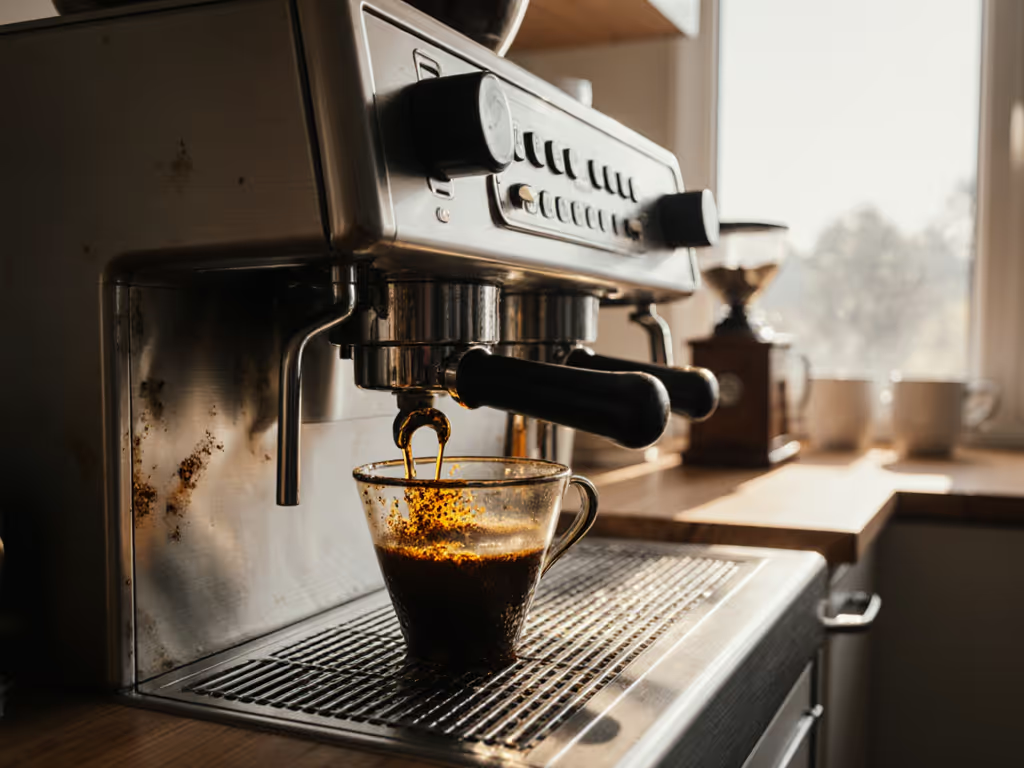
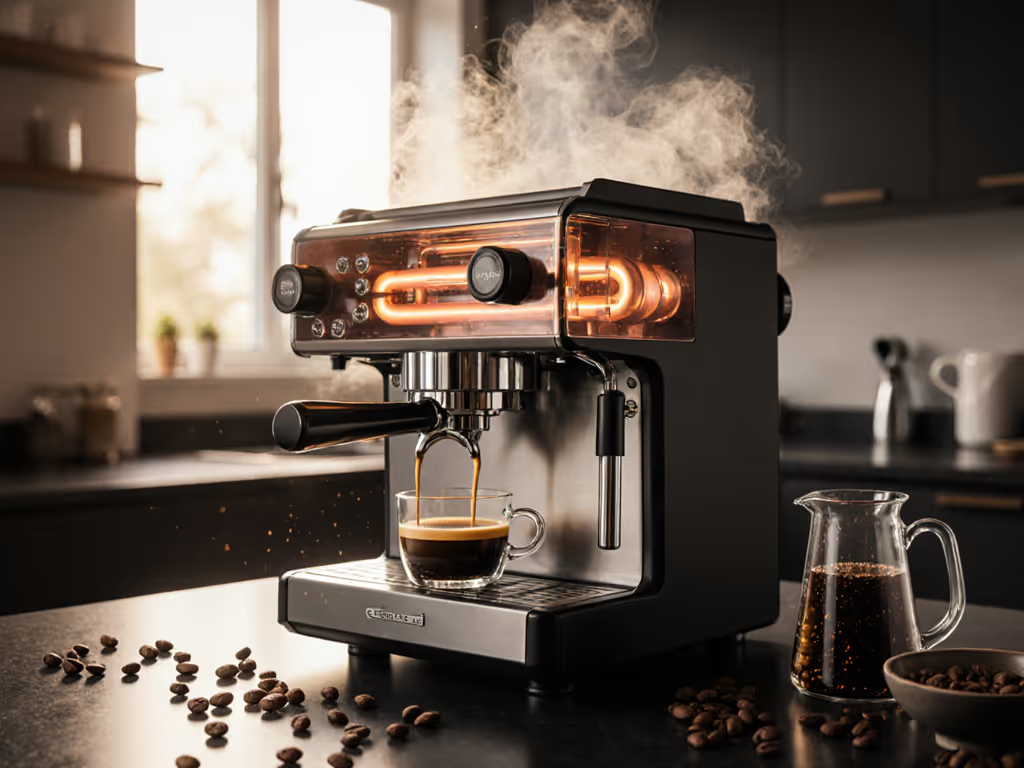
Forget complex schematics. Picture this: a single boiler stays at steam temperature (around 250°F), while a copper tube, the heat exchanger, runs through it like a straw. Cold water zips through this tube on its way to your portafilter, warming up to ideal brew temps (195-205°F) by the time it hits the coffee puck. Meanwhile, a thermosyphon loop (a sealed water circuit) constantly circulates hot water from the boiler through your group head, keeping it preheated. This is espresso machine heating technology at its most elegantly simple.
Why this matters for you: No waiting between shots and steaming. Perfect for parents rushing kids out the door or remote workers squeezing in two cappuccinos before a 9 a.m. meeting.
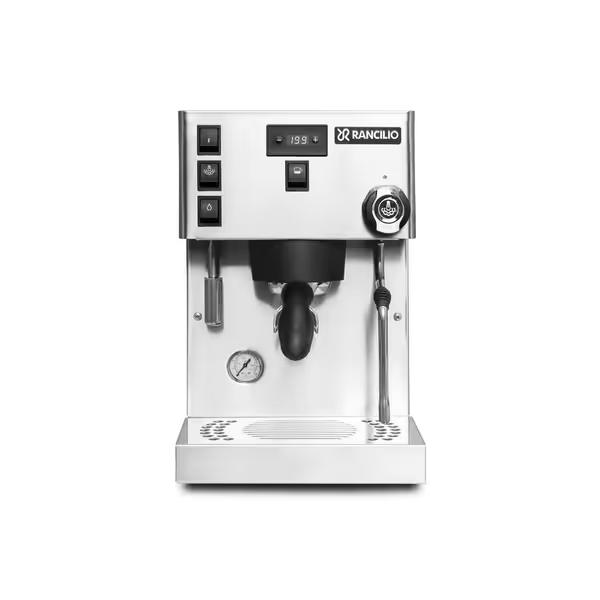
Rancilio Silvia Pro X
Consistent café-quality espresso with professional features for home baristas.
$2195
Boiler TypeDual Boiler (1L steam, 300ml brew)
Boiler TypeDual Boiler (1L steam, 300ml brew)
Pros
Simultaneous brewing and powerful steaming.
Precise PID temperature control for consistent shots.
Adjustable pre-infusion improves shot quality.
Cons
Performance receives mixed feedback.
Higher price point for a home machine.
Customers find this espresso machine makes wonderful coffee and appreciate its dual-boiler system, well-built construction, and ease of use. They consider it good value for money and like the control panel, with one customer noting they can set steam and boiler temperatures manually.
Customers find this espresso machine makes wonderful coffee and appreciate its dual-boiler system, well-built construction, and ease of use. They consider it good value for money and like the control panel, with one customer noting they can set steam and boiler temperatures manually.
2. The Real HX Temperature Stability Trade-Off (Hint: It's Manageable)
"HX machines can't hold stable temps" (a myth haunting beginners). Truth? HX temperature stability is affected by boiler size, thermosyphon design, and your usage rhythm. But here's what specs rarely tell you: consistency comes from routine, not just PID controllers. If you pull shots every 3-5 minutes (like a typical home workflow), the thermosyphon loop self-regulates beautifully. Problem arises during long idle times (like brewing one shot at 7 a.m. and another at noon). Solution? A calibration prompt: flush 2-3 oz of water before your first midday shot. Two seconds of your time. One less variable.
What the pros do: I've watched a neuroscientist dial in her HX machine in 10 minutes using just sensory anchors ("shot turns bitter too fast? coarser grind"). No apps. No spreadsheets. Just bounded choices. If shots still taste sour or bitter, use our espresso troubleshooting guide to fix it fast.
3. Heat Exchange vs. Thermoblock: Why HX Wins for Home Rituals
"But isn't a thermoblock cheaper?" Yes, but compare ownership reality:
- Thermoblocks: Heat water on demand through a metal coil. Great for tiny kitchens... until you want two milk drinks. Steam recovery takes 45-60+ seconds. Your pain point: Morning chaos with slow steaming.
- HX Systems: That thermosyphon loop means near-instant steam recovery. Make two lattes back-to-back in under 90 seconds. For silky microfoam at home, follow our milk steaming for latte art guide. Your win: Steaming power that matches your drink volume without lag.
The catch: HX needs a cooling flush if idle >15 mins (unlike dual boilers). If you're weighing HX against a dual boiler, see our HX vs dual boiler comparison. But for 95% of home users pulling shots within a 10-minute window? Heat exchange vs thermoblock isn't a debate (it's a rout). HX delivers cafe speed without dual boiler costs or complexity.
4. Who Actually Benefits From HX? (Spoiler: Probably You)
Don't buy jargon. Buy solutions to your pain points:
- ✅ You want to brew and steam simultaneously (no "wait for boiler" pauses)
- ✅ Your kitchen is compact (HX machines are smaller than dual boilers)
- ✅ You pull ≤3 shots/day (perfect for 1–2 drinkers; less flushing)
- ❌ You demand absolute brew temp precision (get dual boiler PID)
- ❌ You pull 5+ shots in one sitting (HX boiler may droop; dual boiler recovers faster)
My rule of thumb: If your desired outcome is "two milky drinks in 8 minutes, quietly," HX is your sweet spot. Constraints create confidence; an HX machine's bounded workflow eliminates decision fatigue before work.
5. Making HX Work For You: The 3-Step Home Calibration
Stop chasing perfection. Start with repeatable flavor:
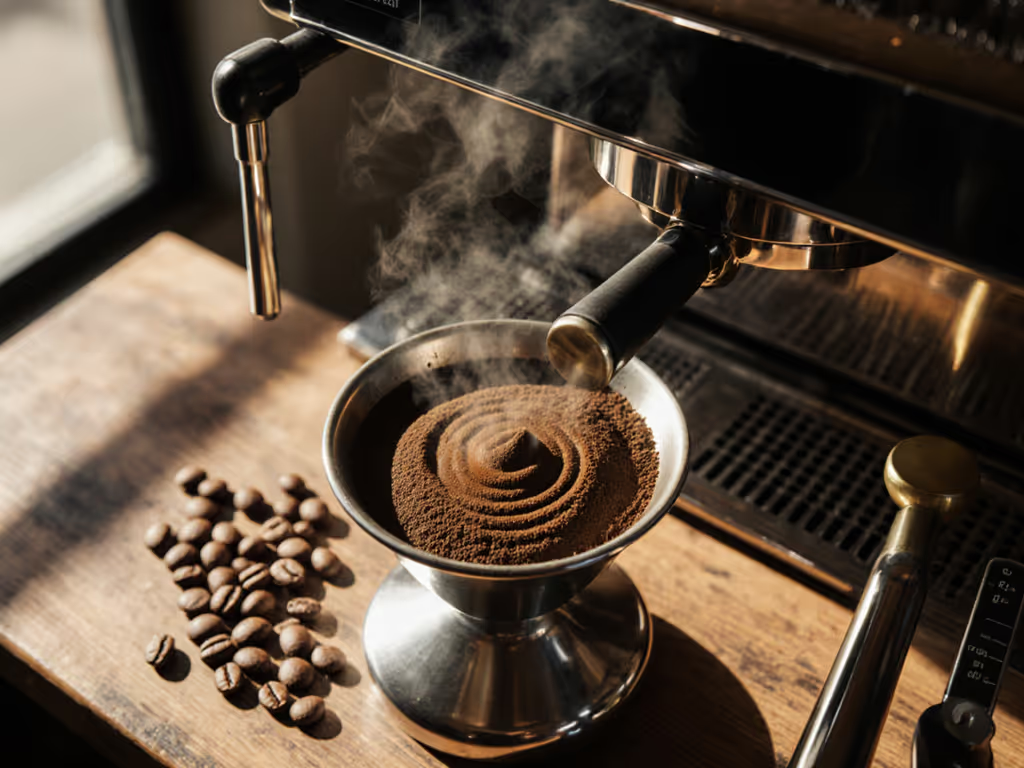
- Dose: 18g (default for most 58mm baskets). Why? Forgiving for beginners; less puck channeling.
- Grind: Start midway on your grinder. Calibration prompt: Shot takes 30-35 seconds? Coarser. <25 sec? Finer.
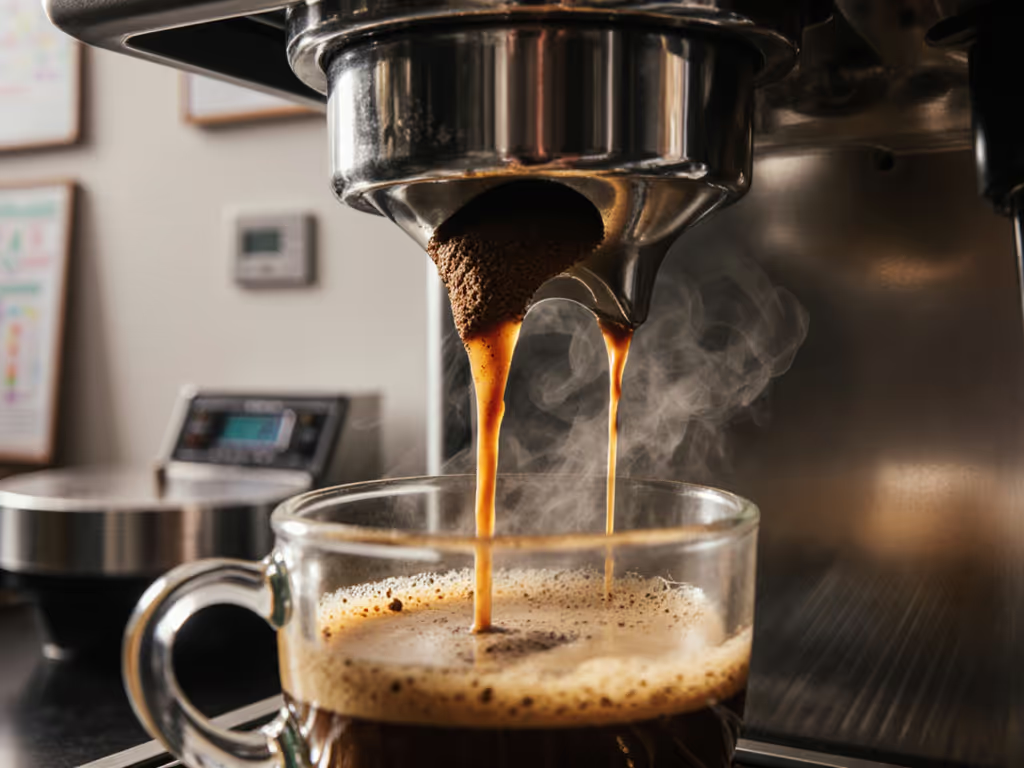
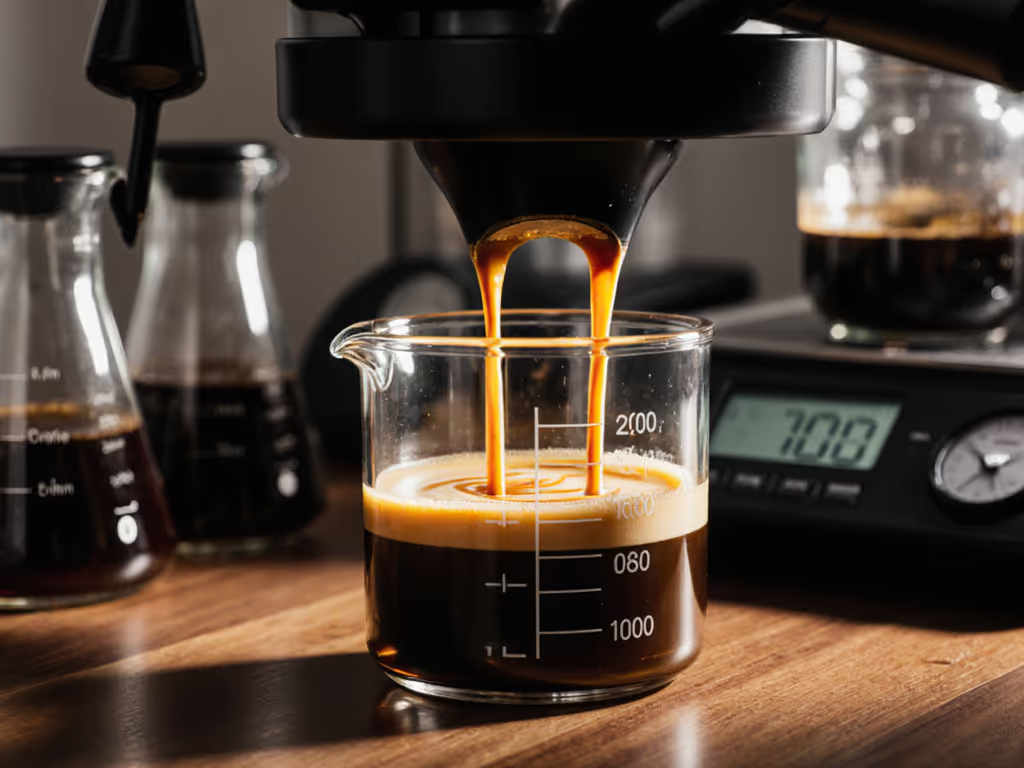
- Time: Target 36g liquid output in 28-32 seconds. Sensory anchor: Taste flat? Too fast. Bitter? Too slow.
Do this once when you set up. Then refine with our step-by-step dial-in guide. Then lock the recipe, enjoy the routine. I've seen engineers reduce dial-in time from 20 minutes to 4 using this. No scales needed after Week 1, just trust your taste.
Why This Isn't Just Another "Specs Comparison"
You didn't ask for boiler physics. You asked: "Will this simplify my mornings?" HX machines thrive under home constraints: limited counter space, short time windows, and zero tolerance for fussy workflows. Their heat exchanger pros and cons boil down to one question: Does it fit your ritual?
If you're optimizing for reliability over tinkering, an HX machine's thermosyphon rhythm becomes your ally. That neuroscientist I mentioned? She's now pulling identical shots at 6:45 a.m. for her family, no morning adjustments needed. Constraints didn't kill her creativity, they killed her doubt.
Ready to Explore Further?
Don't just take my word. Try these next steps:
- Watch a real home kitchen HX workflow (search "HX morning routine no commentary")
- Visit a local shop that lets you touch HX vs. thermoblock machines
- Join a home barista community thread on "HX machines for apartment living," real users, no hype
Your goal isn't the "best" machine. It's the machine that locks into your life. When you find that alignment? Confidence brews faster than the espresso. Lock the recipe, enjoy the routine. Every. Single. Time.
Related Articles