Lever Espresso Technique: A Home Barista's Guide
By Luca Moretti • 29th Oct
If you've ever felt overwhelmed by the intricate dance of pressure and timing required for a perfect lever espresso shot, you're not alone. Many home baristas face inconsistent results with their manual lever espresso journey, unsure why their lever machine technique explained in theory doesn't translate to practice. The good news? Lever machines offer remarkable control with surprisingly simple frameworks when you establish repeatable patterns. I've seen countless beginners freeze at their grinders, only to gain confidence with a few bounded choices that transform anxiety into anticipation. Let's demystify lever espresso with structured, repeatable approaches that work in real home environments.
1. Understand Your Machine's Basic Mechanics
Before you grind a single bean, familiarize yourself with how your lever machine functions. Unlike automatic machines that handle pressure for you, lever machines require your hands-on involvement in the extraction process. The fundamental sequence remains consistent across most models:
- Pull down to introduce water to the coffee bed
- Hold for pre-infusion (optional but recommended)
- Release for main extraction
Don't get caught up in complex physics. Focus on the simple rhythm: lower, hold, release. This creates a natural pressure curve that, when repeated consistently, produces remarkable results. A home espresso maker like the Minipresso GR2 demonstrates how elegantly simple lever mechanics can be with its manual 18-bar pressure system.
Bounded choices, repeatable shots (taste you can set a clock to).
2. Establish Your Foundation: Dose With Intent
For lever machines, dose consistency is your anchor. Unlike pod espresso machines where dosage is predetermined, lever machines require precise measurement. Start with these simple, bounded options:
- Single shot: 14-16g coffee for 20-30ml espresso
- Double shot: 18-20g coffee for 40-60ml espresso
Use the same scale every time. For a deeper primer on choosing beans that extract well on levers, see our espresso bean selection guide. I've watched beginners achieve transformational results simply by weighing consistently instead of eyeballing. That small constraint eliminates one major variable before you even touch the grinder. For travel or compact setups, a portable espresso machine like the Pixapresso offers pre-measured chambers that simplify dose consistency. Keep it simple and repeatable.
3. Grind Size: Three Simple Checkpoints
Rather than chasing infinite grind settings, establish just three reference points that work with your lever machine:
- Too coarse: Water passes through in under 20 seconds, tasting flat and weak
- Just right: 25-30 second extraction with balanced sweetness
- Too fine: Over 35 seconds, resulting in bitter, over-extracted coffee
This sensory anchor system lets you quickly identify where you stand. When dialing in, make small adjustments and brew immediately after, no waiting for the grinder to stabilize. Remember to wipe the burrs between adjustments for immediate feedback. These bounded options eliminate the endless tweaking that frustrates so many home baristas.
4. Master the Timing Framework
Lever extraction timing works differently than pump machines. The classic "25 seconds for 25ml" rule doesn't apply directly. Instead, use this simple timing framework:
- Pre-infusion: 3-5 seconds (lever halfway down)
- Main extraction: 20-25 seconds (slowly releasing lever)
- Total time: 25-30 seconds from first contact to endpoint
Set a visible timer you can glance at during extraction. This visual cue creates the rhythm that builds confidence. Notice when the espresso begins to blond (turning pale yellow). That is your signal to stop. With practice, you'll develop an intuitive sense of timing that requires less active monitoring. This timing framework turns an abstract process into a repeatable routine.
5. Pre-Infusion Technique Made Simple
Proper pre-infusion is where lever machines shine. Use this straightforward technique:
- Lower lever slowly until coffee begins to flow (not just drips)
- Hold for 4-7 seconds, watch for the coffee to swell and form a dome
- Begin slowly releasing the lever as extraction begins
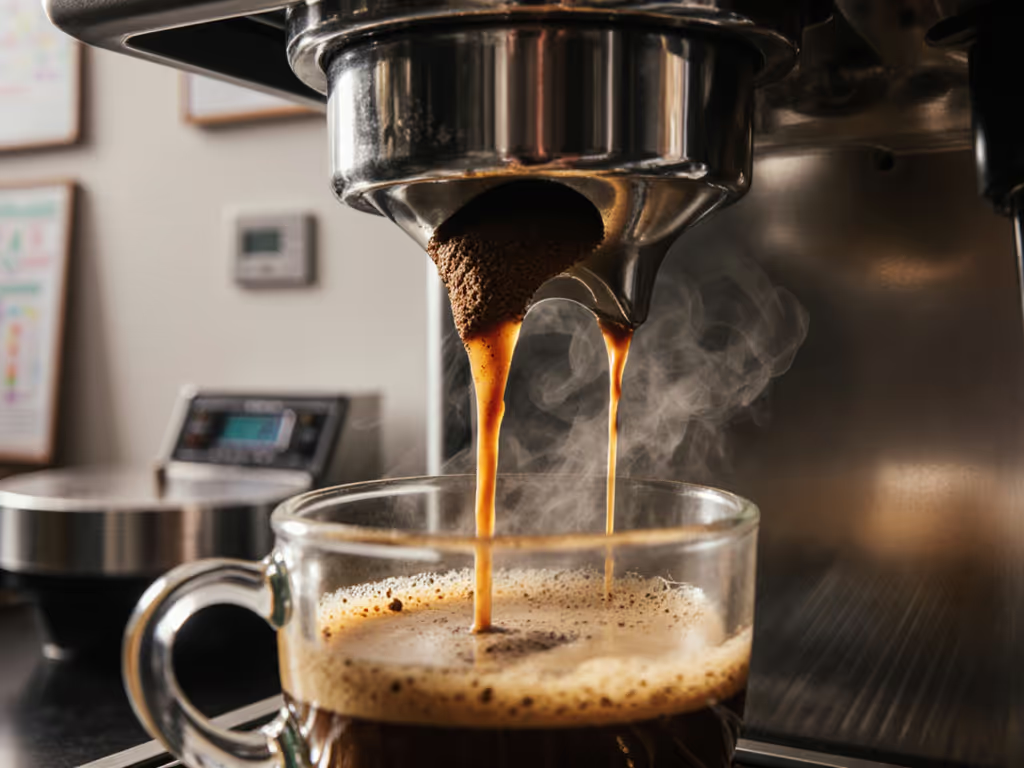
The pre-infusion stage should resemble honey in consistency, not watery, not a thick paste. This gentle start prevents channeling and creates even extraction. If your shot streams unevenly from the start, it's usually a tamping or distribution issue, not a machine problem. For quick fixes to channeling, sour/bitter taste, and pressure hiccups, use our espresso troubleshooting guide. Practice this technique with a transparent bottomless portafilter if possible (it provides immediate visual feedback without changing your workflow).
6. Maintenance as Part of Your Ritual
Lever machine maintenance doesn't need to be complicated. Integrate these simple steps into your existing routine:
- After each use: Rinse group head and wipe down immediately
- Weekly: Backflush with clean water (no detergent needed for most home machines)
- Monthly: Check gasket for wear while you're already disassembling for cleaning
Many home baristas overcomplicate maintenance, creating unnecessary barriers to consistent use. Treat it as part of your ritual rather than a separate chore. Even with regular use, lever machines require less frequent descaling than automatic machines since water flows in one direction without recirculation.
7. Troubleshooting With Bounded Choices
When problems arise, avoid endless tweaking. Use these simple diagnostic checkpoints:
- Weak flavor? → Increase dose by 1g OR grind finer
- Bitter taste? → Decrease dose by 1g OR grind coarser
- Too slow? → Check pre-infusion timing OR adjust grind size
- Too fast? → Apply slightly more tamp pressure OR adjust grind size
Make only one change at a time and brew immediately to assess the impact. This systematic approach prevents the "where did I go wrong?" panic that derails so many morning routines. Remember that water temperature fluctuations in home environments often cause more inconsistency than you realize. Always use water heated to 92 to 96°C (198 to 205°F) for best results. To control flavor and machine health, tune minerals with our espresso water guide.
Final Pour: Confidence Through Constraints
Lever espresso isn't about mastering complexity (it's about finding freedom within structure). The constraints I've outlined (simple dose options, three grind checkpoints, precise timing, and minimal maintenance) exist to eliminate doubt, not creativity. I've seen countless home baristas transform their morning ritual from stressful to serene simply by locking three variables and focusing on one adjustment at a time.
When you lock the recipe, enjoy the routine, you're not limiting your potential (you're creating space to truly taste and appreciate the nuances in your coffee). That moment when you pull a perfect shot with consistent technique isn't magic; it's the natural result of constraints that build confidence. Your lever machine isn't just making coffee (it's teaching you how coffee works, one repeatable shot at a time).
Ready to deepen your understanding? Explore our milk steaming guide for lever machines, where we apply the same principle of bounded choices to create cafe-quality milk drinks with minimal equipment and maximum repeatability.
Related Articles