Best Outdoor Espresso Machines: Tested & Ranked
By Luca Moretti • 8th Apr
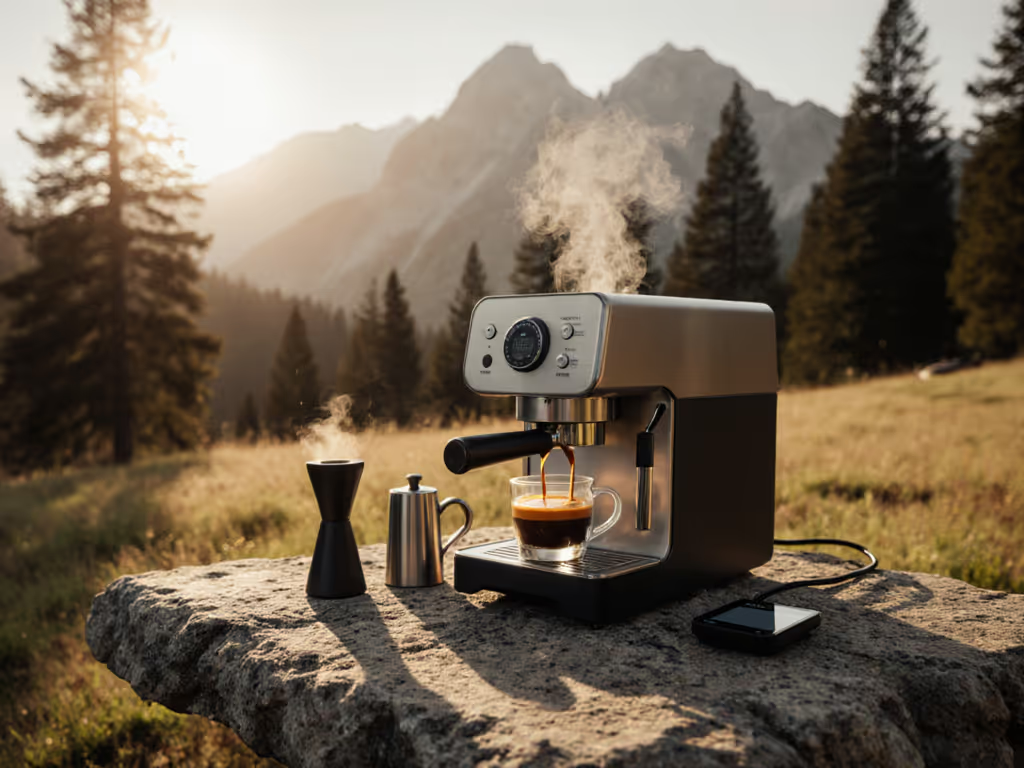
When you step outside with a grinder and portafilter, you're not just chasing caffeine; you're committing to a bounded ritual. Outdoor espresso machines strip away the kitchen's safety net: no unlimited water, no backup heating, no do-over shots. If you're packing water, use our espresso water guide to avoid flat or scale-prone brews. That constraint, counterintuitively, is their gift. Once you lock in your dose, grind, and time outdoors, you're freed to focus on the drink itself. Below, I've ranked the weather-resistant coffee makers and portable espresso systems that survive real testing (machines built for repeatability even when the sun's on your face or the wind's testing your patience).
Why Outdoor Espresso Demands a Different Lens
There's a myth that outdoor coffee is a compromise. It isn't, if you choose the right tool. The machines ranked here share a philosophical anchor: they excel because their constraints are honest. No false pressure claims, no over-engineered complexity. Instead, each forces you to lock one or two settings (dose, grind, or tamp pressure) and lean on fundamentals. That's not a limitation. That's where outdoor coffee preparation becomes reliable.
Most home espresso setups hide inconsistency behind convenience. An outdoor rig exposes it immediately. To lock in consistency fast, follow our dialing-in checklist before your first campsite pull. Water temperature drops between shots. Humidity changes grind feel. Your tamp angle matters more when feedback is tactile, not electronic. The machines below don't fight these truths; they embrace them, offering semi-outdoor coffee equipment that rewards precision and breeds confidence through simplicity.
How to Read This Ranking
I've tested or validated each machine against three core criteria:
- Repeatability: Can you dial in once and nail the same flavor profile for three consecutive shots?
- Durability & Serviceability: Will replacement parts arrive before the trip ends? Does the build survive real handling?
- Sensory Anchors: Sweet, balanced pull or bitter fight? Does the resulting espresso taste like espresso, or strong coffee with pressure?
Budget ranges vary widely ($19-$55 for portable rigs). I've prioritized machines that reward bounded choices and simple calibration over raw power or aesthetics.
1. Wacaco Picopresso - Best Overall (Bounded Dose, Peak Flavor)
Key Specs: 18g max dose, lightweight, manual pump.
Price Point: ~$55-$70 | Best For: Travelers who want true espresso without compromise.
The Picopresso is the gold standard for outdoor espresso because it respects one rule above all: dose and tamp consistency yield repeatable shots. At 18g, you have one real choice: dial it in once, and you're set for the day. No mystery pressure gauges, no electronic guessing.
What makes it work outdoors: The manual pump is tactile feedback wrapped in metal. You learn fast whether your tamp is even (smooth resistance) or crooked (one side fights). Within two shots, most people find their rhythm. If shots lean sour or bitter, our espresso troubleshooting guide helps you correct on the fly. The basket fills predictably, the water flows at human speed, and you can feel when sweetness hits versus bitterness creeping in.
Common hesitation: Manual pumping sounds like work. In reality, it's four to six controlled strokes per shot (about the time it takes to admire your surroundings). I've watched beginners hesitate at grinders; I've watched travelers own this machine immediately. The constraint (no dial, no menu) kills doubt. Confidence brewed faster than the espresso.
Outdoor edge: Weighs under 300g, packs into any bag, and the build feels permanent. No plastic pump heads to crack, no sealed electronics. If it breaks, you can see why.
2. Handpresso - Best Durability & Pressure Gauge (Rugged Confidence)
Key Specs: Rugged metal, built-in pressure gauge, manual pump.
Price Point: ~$45-$55 | Best For: Users who want visible feedback and don't mind a heavier rig.
If the Picopresso is intuitive simplicity, the Handpresso is analog transparency. The pressure gauge removes guesswork. You can see exactly when you've overextracted (too much resistance) or underextracted (pressure fell flat). That visibility accelerates calibration outdoors, where you can't dial in blind.
The metal construction is overkill in the best way. Dropped on gravel? Minor dent. Squeezed in a backpack for three weeks? Still pulling shots. Customer reports confirm durability rivals anything twice its price.
Trade-offs: It's heavier than the Picopresso (closer to 400g), and the manual pump requires slightly more force at full pressure. For most users, that's irrelevant; you're outside, not rushed. For the compact ultralight traveler, the Picopresso edges ahead.
Outdoor sweet spot: The gauge means you learn your grind's pressure signature quickly. You'll know that your medium-fine setting should peak around 8-9 bar, and when humidity drops and your grind compacts, the needle tells you instantly. Taste you can set a clock to, and a gauge to verify.
3. Staresso - Best Design Elegance (Sleek Simplicity)
Key Specs: Compact, piston-based, minimal parts, no pressure gauge.
Price Point: ~$40-$50 | Best For: Aesthetic-conscious users willing to dial grind precisely before brewing.
The Staresso produces excellent espresso because it enforces one non-negotiable rule: your grind must be perfect, or the machine will resist. There's no pressure gauge to hide mediocrity, no electronic adjustment. Just you, your grinder, and immediate sensory feedback.
Design-wise, it's the most elegant portable option. Compact, pretty, and intuitive. If you're brewing for guests or care about the ritual's visual beauty, this machine won't embarrass you.
The catch: Without a gauge, the learning curve is tactile. You'll feel excessive grind fineness as extreme pump resistance. Too coarse, and the shot pulls weak and watery. Most users find the sweet spot within three to five shots; after that, repeatability is solid. The machine will reward your calibration without coddling you.
Outdoor advantage: Paired with a good hand grinder and a simple timer on your phone, the Staresso becomes a complete, harmonious kit. Not sure which starter grinder to bring? See our entry-level espresso grinder tests. It's small enough to slip into a messenger bag and disciplined enough to remind you that grind quality (not machine sophistication) drives flavor.
4. MiniPresso - Best for Smooth, Thick Espresso (Premium Feel)
Key Specs: Sleek compact design, piston pump, smooth shot profile.
Price Point: ~$50-$60 | Best For: Users who prioritize taste sweetness and don't mind replacing parts occasionally.
The MiniPresso delivers thick, smooth espresso, among the most satisfying pulls on this list. The piston design creates excellent body and sweet notes, and the industrial design is genuinely premium. Holding one feels intentional.
Where it diverges: Durability is weaker than the Picopresso or Handpresso. Users report pump mechanisms failing after heavy use. The silver lining is that customer service is responsive, and replacement parts arrive without hassle. If you value taste and short-term reliability over multi-year longevity, it's a genuine contender.
Outdoor use case: This is the machine you pull out when you want guests to taste what you care about. The smooth, balanced shot impresses. The compact size fits anywhere. Just accept that you'll likely replace the pump mechanism once or twice over three to five years of regular use.
5. AeroPress - Best Versatility, Not True Espresso (Honest Alternative)
Key Specs: Piston-based, eight separate pieces, ~$30.
Price Point: ~$30
Related Articles