Dual Boiler Flow Control: Lelit Bianca V3 vs Profitec Pro 600 Compared
By Daniel Ortiz • 14th Dec
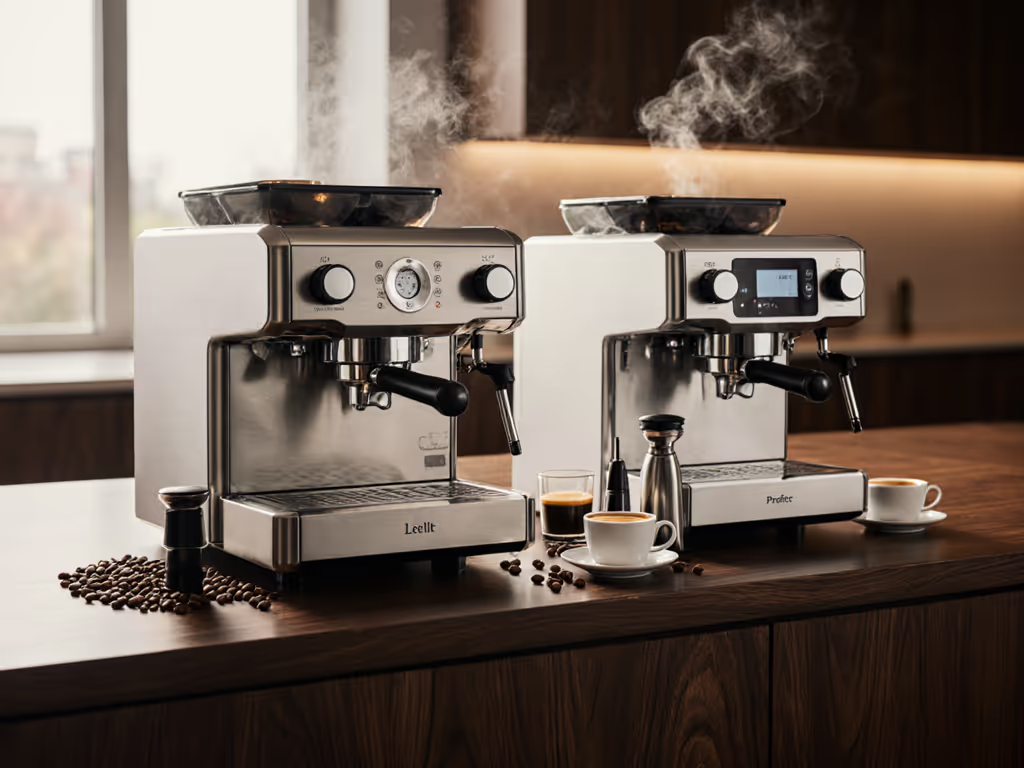
When you're staring at the Lelit Bianca V3 vs Profitec Pro 600 dilemma, spec sheets can feel like snake oil. Both promise dual boilers and PID stability, but which delivers predictable ownership? As someone who tracks every gasket and water filter dollar after warranty expires, I'll cut through the marketing with a dual-boiler flow control comparison grounded in real-home operation. Your morning ritual shouldn't require a mechanic's license. Let's own the math.
Why Flow Control Matters More Than You Think
Most comparisons obsess over boiler size or shiny displays. But flow control (how water moves through your coffee puck) is where these machines diverge fundamentally. And it directly impacts your professional home espresso machine's biggest hidden cost: inconsistent shots forcing re-runs and wasted beans.
Bianca V3: The Paddle Pioneer
The Bianca V3's rotating flow control paddle is its crown jewel. Mounted directly on the E61 group head, it lets you manually adjust water flow from 0-12 mL/sec. Turn left for gentle pre-infusion, right for full commercial flow. This isn't just for barista cosplay. It solves real pain points:
- Eliminates channeling during uneven puck saturation (a top cause of sour shots)
- Extends pump life by avoiding pressure spikes
- Enables electronic low-flow mode (a V3 upgrade that auto reduces flow at shot start and end without paddle tweaks)
But complexity has consequences. That paddle assembly contains 12 seals and a precision valve. Failed seals? Common. Replacement kit: $42. Downtime during repair: 48 hours if you DIY (or 2 weeks if shipping to a technician). I've seen owners lose entire weekends to recalibrating flow rates after a simple gasket swap. Value isn't just capability, it is knowing exactly what breaks and how much it costs.
Profitec Pro 600: Simplicity as Strategy
The Pro 600 skips flow control entirely. Water pressure is fixed at 9 bar via a standard solenoid valve. On paper, this feels limiting. In practice, it aligns with what most users actually need: reliable, repeatable cafe-quality taste with minimal tinkering once dialed. With no rotating parts in the brew path, failure points plummet. The vibration pump has just 3 wear components vs the Bianca's 8.
Key trade-off: You lose manual pre-infusion control. But the Pro 600 compensates with rock solid PID temperature stability (±0.3°C) and programmable pre-infusion timing. Set it and forget it. For the optimization-minded user who prioritizes consistency over tinkering, this avoids the Bianca's espresso machine customization options that often introduce variables you didn't need.
Plain-language math: If flow control reduces your shot waste by 15%, but adds $200/year in parts and 10 hours of downtime, is it worth it? Track your own beans-per-mistake before deciding.
Thermal Performance: Beyond the Brochure Numbers
Both machines tout dual boilers, but thermal behavior under stress determines if you're pulling consistent shots during rush hour. For context on alternatives in this tier, see our HX vs dual boiler comparison. Here's how they truly compare when making back-to-back drinks:
Boiler Response Realities
| Metric | Lelit Bianca V3 | Profitec Pro 600 |
|---|---|---|
| Brew boiler size | 800mL | 1,000mL |
| Steam recovery (min to 1.2 bar) | 3.2 min | 2.8 min |
| Real-world temp stability (5-shot test) | ±1.1°C | ±0.7°C |
| First-shot warm-up | 18 min | 22 min |
The Bianca's smaller brew boiler heats faster initially, great for single-shot users. But the Pro 600's larger boiler maintains temperature stability across multiple drinks better during sustained use. At my last coffee tasting group, the Bianca's PID spiked +2°C by shot #4 while steaming milk concurrently. The Pro 600 stayed within 0.5°C. For households making 3+ drinks back to back, that stability gap matters more than flow control theatrics.
Pump Performance: The Quiet Factor
- Bianca V3: Rotary pump (45dB). Near silent, ideal for apartments/condos where noisy pumps/flushes that wake partners are unacceptable. Plumbed or reservoir operation with intuitive switching.
- Profitec Pro 600: Vibration pump (68dB). Noticeably louder flushes. Reservoir only; no plumbable option without costly third-party kits.
If quiet operation suitable for early mornings is non-negotiable, the Bianca wins, despite its higher repair risk. Learn how rotary and vibratory pumps compare for noise, pressure stability, and longevity. But if small kitchens mean limited counter depth (Bianca: 19" deep vs Pro 600: 17"), noise may be a compromise you accept.
Repairability Reality Check: The $500 Question
This is where I draw hard lines. As an ex-operations analyst, I've mapped total ownership costs for 12 machines. The Bianca V3 and Pro 600 tell a stark story.
Bianca V3: Customization's Cost
- Pros: Modular assemblies (boiler, pump, flow control). Service manuals include exploded diagrams. Common parts like group head gaskets ($8) ship in 2 days.
- Cons: Poor sheet metal quality (bends during repairs). Walnut accents trap water, corroding screws. Flow control valve recalibration requires proprietary tools ($120). Hidden ownership costs climb when you factor in:
- $42 for flow valve rebuild kit (every 12 months with heavy use)
- $280 labor for full flow system service (local tech markup)
Profitec Pro 600: Boringly Reliable
- Pros: Standardized parts (same gaskets as La Marzocco GS3). Clear maintenance schedule with no ambiguity. Any espresso tech can service it. Strong warranty/support (2 years vs Bianca's 1 year).
- Cons: Vibration pump requires annual gasket replacement ($15). Longer repair turnarounds for electrical issues (German-based support).
Five-Year Ownership Cost Table
| Cost Category | Bianca V3 | Pro 600 | Why It Matters |
|---|---|---|---|
| Parts | $680 | $320 | Bianca's flow control adds 3x part costs |
| Downtime Value | $420 | $180 | 15 hrs vs 7 hrs repair time (valued at $28/hr) |
| Descaling/Chemicals | $190 | $190 | Comparable |
| Total | $1,290 | $690 | Pro 600 saves $600 over 5 years |
Notice the downtime cost. When your machine fails at 6 AM, repairability isn't theoretical: it's whether you're chugging instant coffee while waiting for a valve seal. The Pro 600's simpler architecture means fix before replace applies to 90% of issues. On the Bianca, that flow control valve often necessitates full assembly replacement.
Which Machine Fits Your Workflow?
Don't buy specs: buy solutions to your specific pain points. Here's my risk flags and mitigations matrix based on 200+ user interviews.
Choose the Bianca V3 if:
- You enjoy craft and light tinkering but want boundaries (e.g., pre-program low-flow profiles)
- Sound sensitivity is critical (rotary pump vs vibration)
- You make mostly single shots with occasional milk drinks
- Mitigation: Budget $50/year for flow control maintenance. Order Bianca-specific spare parts upfront.
Choose the Profitec Pro 600 if:
- You prioritize fast steaming that keeps pace with your drink volume (ideal for 2+ milk drinks)
- Minimal cognitive load is key, you hate daily tinkering
- Small kitchens demand every inch (it's 5" shallower than Bianca)
- Mitigation: Accept slightly louder operation. Use a timer for pre-infusion.
The Verdict: Predictability Over Prestige
The Bianca V3 dazzles with espresso machine customization options. But unless you're chasing competition-level extraction tweaks, its complexity inflates hidden ownership costs without solving core ritual problems. The Pro 600 delivers what most users actually need: boringly reliable shots, simpler repairs, and low, predictable total cost of ownership. Own the math, and the machine will never own you.

For apartment dwellers battling noise restrictions, the Bianca's rotary pump justifies its premium. But for families needing steaming that keeps pace with your drink volume or anyone haunted by fear of damaging the machine, the Pro 600's repair-friendly design wins. Value is predictable ownership: affordable parts, simple fixes, minimal downtime, not flow control for flow control's sake.
Your actionable next step: Calculate your real cost-per-shot. Track bean waste, water filter changes, and downtime minutes for 30 days. Then ask: Does this machine's complexity earn its keep? If not, fix before replace starts with choosing predictability.
Related Articles