Espresso Accessory Compatibility Across Major Brands
By Aisha Khan • 30th Nov
Less Fiddling, More Sipping: Your Step-by-Step Guide to Espresso Accessory Compatibility
When I shadowed a busy family's morning routine last winter, I noticed something revealing: the 'fancy' machine with all the bells and whistles wasn't winning on weekdays. It choked on morning demands, waking the kids with its noisy flush, creating splashy messes that added cleanup minutes, and demanding constant adjustments. The winning machine? One with thoughtful espresso accessory compatibility that allowed quiet operation, dry puck knockouts, and tidy workflow. The difference wasn't wattage; it was how perfectly the third-party espresso parts integrated into their reality. Let me show you how to achieve this harmony in your own kitchen.
Step 1: Understand Your Machine's Language (Without the Rabbit Hole)
Before you buy a single accessory, you need to speak your machine's dialect. Not all espresso machines communicate the same way, and miscommunication leads to wasted money and morning frustration.
Time-stamped steps to decode compatibility:
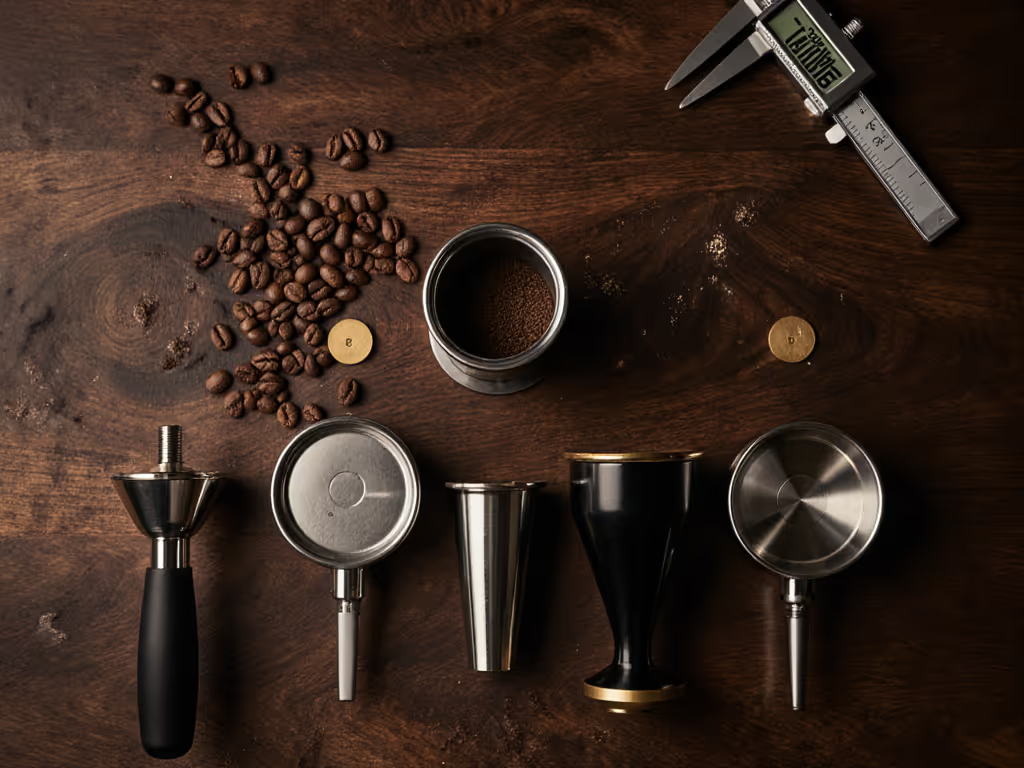
- 7:00 AM check: Flip your portafilter over and look for stamped numbers (typically 54mm, 58mm, or 53mm). This is non-negotiable: your portafilter size determines 80% of compatibility.
- 7:02 AM check: Research whether your brand uses proprietary sizing (like Breville/Sage's 54mm which actually needs 53.3mm tampers).
- 7:04 AM check: Note if your machine has stepped or stepless portafilters, as this affects basket compatibility.
I once watched a product manager lose 20 minutes trying to force a 58mm basket into a 54mm portafilter. Don't be that person. Your machine's manual often hides compatibility clues in the specifications section, not the glossy marketing copy.
Less fiddling, more sipping - your morning deserves frictionless espresso.
Step 2: Map Your Upgrade Path to Actual Pain Points
Most accessory guides bombard you with "must-haves," but family-friendly upgrades should solve your specific friction points. Forget "pro barista" recommendations that ignore your 8-minute window with two kids.
If-then guidance for your reality:
- If noisy pumps wake your household → then prioritize accessories that reduce operational sound (look for machines with updated pump mounting like the Gaggia Classic Evo Pro).
- If messy puck knockouts add cleanup minutes → then focus on compatible bottomless portafilters and knock boxes that create dry, intact pucks.
- If inconsistent shots derail your morning → then invest in precision baskets that match your machine's actual basket size (not the nominal size).
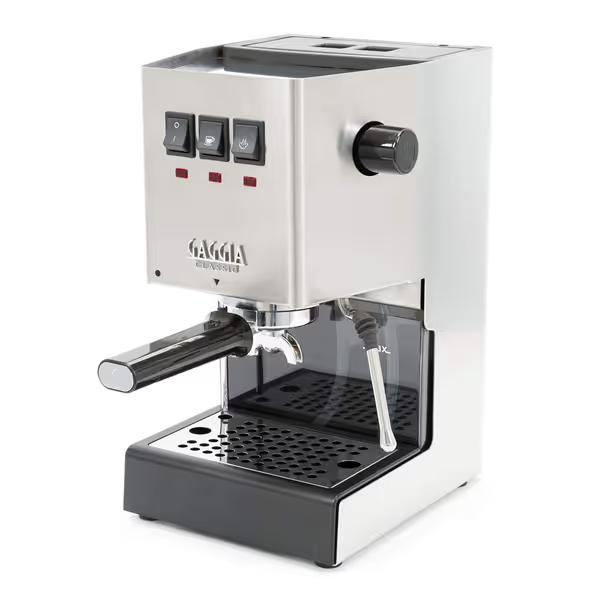
Gaggia Classic Evo Pro Espresso Machine
Café-quality espresso at home with robust Italian design and value.
$450.03
Portafilter58mm Commercial Stainless Steel
Portafilter58mm Commercial Stainless Steel
Pros
Consistent, quality espresso extraction (9 Bar)
Durable, easy-to-clean stainless steel housing
Excellent value for a pro-level home machine
Cons
Durability reports are mixed among users
Functionality might not satisfy all advanced users
It's not a ripoff like other dinky machines; extremely easy to set up and clean.
It's not a ripoff like other dinky machines; extremely easy to set up and clean.
The Gaggia Classic Evo Pro gets this right with its commercial 58mm portafilter system, a widely supported size with abundant aftermarket options. When you choose accessories aligned with established standards rather than proprietary systems, you're building an espresso machine upgrade path that actually lasts.
Step 3: Verify Compatibility with Noise and Mess Metrics
"Compatible" doesn't always mean "compatible for family life." I've tested accessories that technically fit but create unacceptable morning friction. A true compatibility check includes your household's non-negotiables. If noise is a top constraint in your setup, our espresso machine noise levels comparison outlines quieter platforms to pair with your accessories.
Family-friendly compatibility checklist:
- Quiet operation test: Does the accessory add noise during use? (Tamper clicking, basket rattling)
- Wet/dry puck test: Does it produce a puck that knocks out cleanly or creates sticky mess?
- Time-to-rinse metric: How many seconds does cleanup take with this accessory?
- Counter footprint check: Does it create clutter in your already tight space?
I recently tested a popular distribution tool that technically fit a Rancilio Silvia but required three hands to operate, definitely not compatible with my "one hand holding coffee, one hand herding kids" reality. True compatibility means the accessory disappears into your routine, not adds steps.
Rancilio's Silvia stands out with its standardized 58mm portafilter that accepts universal accessories. When you invest in a machine with widespread portafilter basket compatibility, you avoid the dead-end of proprietary ecosystems that limit your future upgrades.
Step 4: Decode the "Universal" Myth
Beware accessories claiming "universal compatibility." In my stress tests, these almost always compromise performance. True versatility comes from precision engineering for specific size standards, not one-size-fits-all approximations.
Smart shopping for genuine universality:
- Look for brands like Crema that publish detailed compatibility charts (not just "fits most machines")
- Verify whether "54mm" means true 54.00mm or Breville's actual 53.3mm requirement
- Check if the accessory accommodates your machine's specific rim design
- Confirm whether "fits all 58mm" includes stepped and stepless variants
When Crema lists their 53.3mm tamper specifically for Breville/Sage machines, that's not marketing; they're acknowledging the actual measurement your machine needs for optimal espresso accessory compatibility. Ignoring these nuances leads to donut shots and uneven extraction.
Step 5: Build Your Step-Efficient Workflow
Your accessories shouldn't just fit; they should create a seamless sequence that reduces cognitive load. The best compatibility creates invisible transitions between steps.
Time-stamped integration sequence:
- Pre-grind: Magnetic dosing funnel (attaches in 2 seconds) prevents counter mess
- Tamping: Weighted tamper with perfect size fit eliminates adjustment time
- Extraction: Precision basket that clicks securely into place (no rattling)
- Knockout: Bottomless portafilter with compatible puck screen creates dry, intact puck
- Rinse: One-motion wand wipe with contoured cloth holder
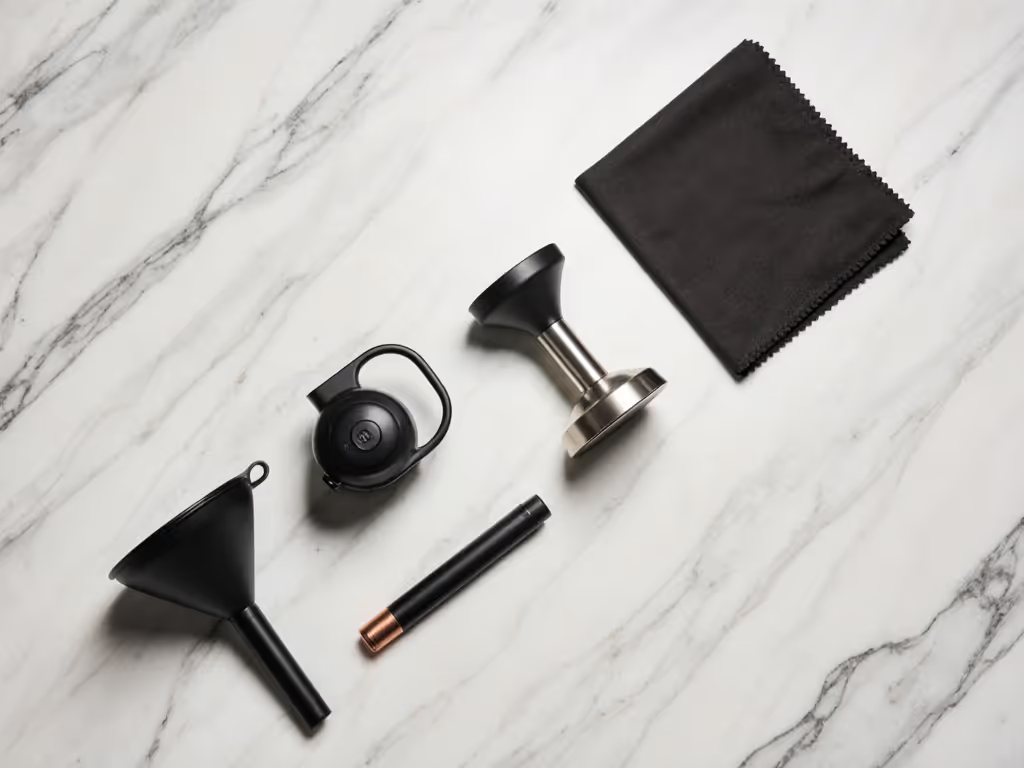
When I helped a physician streamline her pre-dawn routine, we focused on accessories that created "touch-and-forget" moments. She now has 90 seconds to sip before her hospital shift, not fighting with incompatible parts that demand constant correction.
The Real Compatibility Test: Your Morning Routine
Forget lab tests and influencer reviews. True espresso accessory compatibility is measured in mornings where your machine disappears into your routine. Does it work flawlessly when you're half-awake? Does it survive the "kid reaches for the steam wand" test? Does it deliver consistent results without demanding barista-level attention?
The goal isn't collecting accessories; it's eliminating steps. When your tamper fits perfectly, your basket installs smoothly, and your knock box catches messes without splatter, you've achieved the holy grail: less fiddling, more sipping.
Before you invest in another "essential" accessory, ask: does this genuinely reduce morning friction, or just add another thing to manage? Your perfect accessory ecosystem isn't about having the most parts: it's about having precisely the right parts that work together seamlessly in your kitchen, your routine, your life.
Ready to explore which accessories genuinely match your machine's language? Check manufacturer compatibility charts first, then verify with real-home testing metrics, not just marketing claims. Your future self, enjoying that first quiet sip before the household wakes, will thank you.
Related Articles