Espresso Machine Evolution Timeline: Key Innovations Explained
By Aisha Khan • 7th Dec
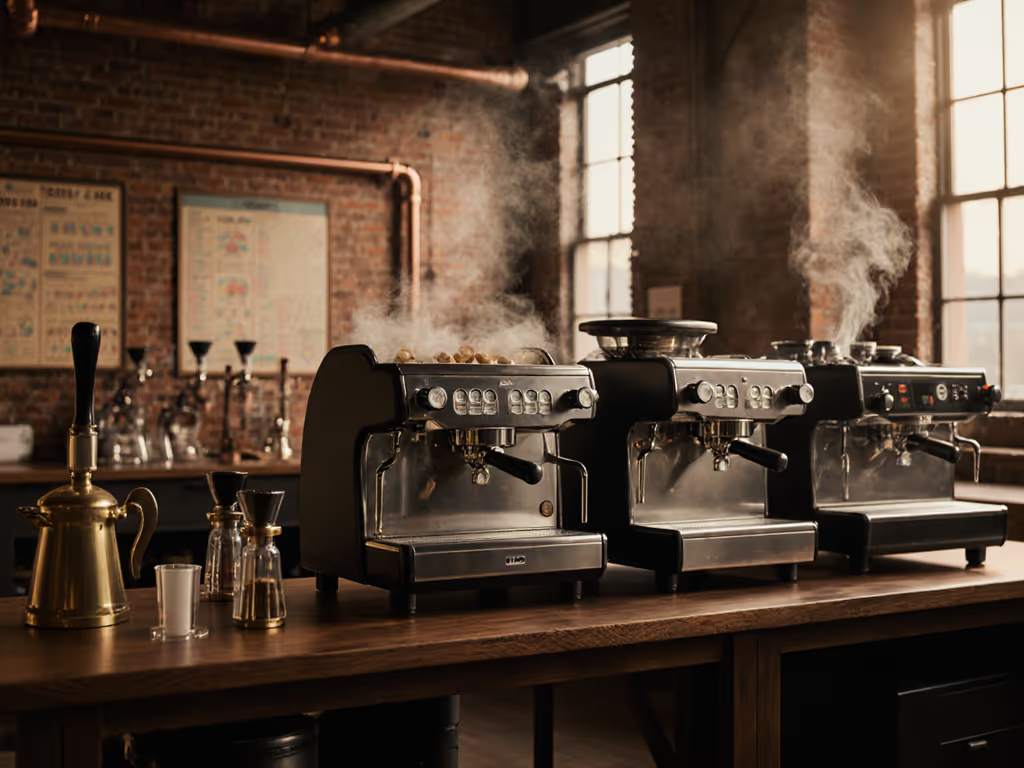
When your espresso machine fails to sync with family chaos, waking toddlers with its roar or demanding 15 minutes of cleanup before work, you're not just battling bad coffee. You're reliving the unresolved friction in the evolution of espresso technology. True innovation isn't about wattage wars or chrome finishes. It's about machines that vanish into your 7 a.m. ballet: silent, seamless, serving. Let's decode how historical breakthroughs transformed espresso from theatrical spectacle to frictionless ritual.
Why Your Morning Routine Dictates Machine History
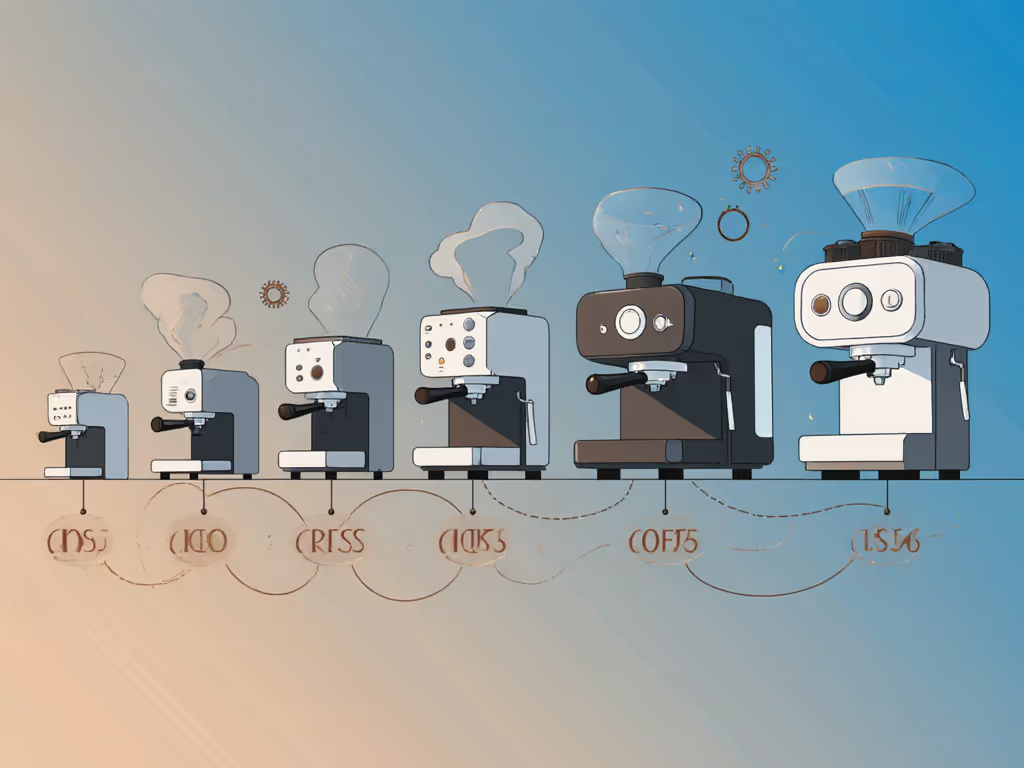
Most timelines recite patents like scripture. If you're choosing between machine types, start with our manual vs semi-automatic comparison to map features to your routine. But for parents juggling preschool drop-offs or apartment dwellers sharing thin walls, each innovation solved visceral pain points: scalding accidents, inconsistent shots, or cleanup that swallows precious minutes. Consider Moriondo's 1884 patent (not the "first espresso machine" myth), a steam-powered prototype born from Turin cafe queues. It used boiler pressure to brew fast, but required tending flames like a stove. Pain point unresolved: Dangerous manual operation during peak rush hours.
1901-1905: Bezzera and Pavoni - The Workflow Revolution Begins
Luigi Bezzera's 1901 patent (bought by Desiderio Pavoni in 1903) introduced the portafilter, the single-serve innovation that finally matched human pacing. No more double pulls for solo drinkers. Pavoni's 1905 Ideale added two quiet heroes: a pressure-release valve (preventing coffee eruptions during toddler meltdowns) and the steam wand (harnessing wasted boiler energy). Historical coffee innovations here were not about power; they were cognitive load reducers. Suddenly, baristas could reset between shots without frantic wiping. For home users, this meant repeatable output even when your kid spills cereal mid-extraction.
Less fiddling, more sipping - your morning deserves frictionless espresso.
1938-1947: Gaggia's Lever - The Crema Catalyst
Achille Gaggia's 1938 lever espresso patent shifted espresso from steam-dominated to spring-powered pressure. Why does this matter at 6:45 a.m.? Steam machines boiled water to 250°F, scalding coffee into bitter sludge. Gaggia's manual lever cooled water to 195°F during pull, unlocking crema and, crucially, consistent flavor day-to-day. No more recalibrating for humidity spikes. By 1947, his commercial lever machines delivered cafe-quality shots without barista gymnastics. Espresso timeline milestone: First taste stability enabling morning predictability.
1961: The E61 Heat Exchanger - Silence and Speed
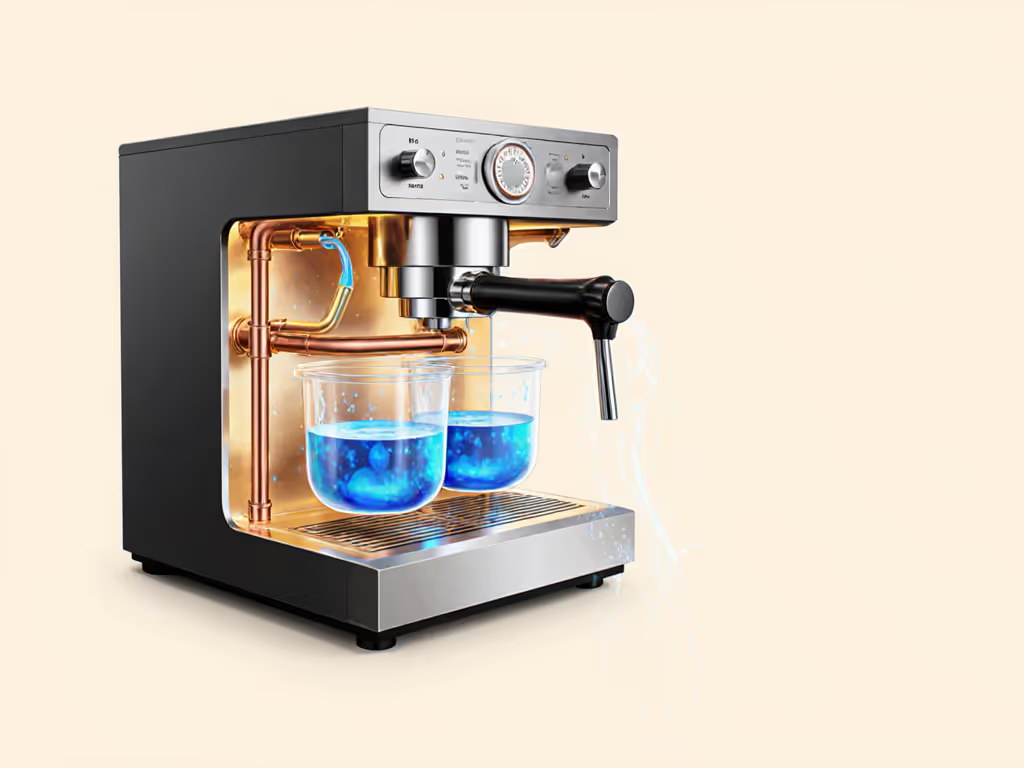
Enter Faema's 1961 E61. For a deeper dive into why it's revered, see our E61 group head explained guide. This wasn't just "better"; it solved apartment living. Its rotary pump (9 bars steady) replaced dangerous manual levers. The heat exchanger stabilized temps without dual boilers, which was critical for users with 10-minute drink windows. Noise and mess metrics dropped sharply: no clanging levers, no dry pucks shattering. Most importantly? It introduced pre-infusion: a 5-second water bloom that optimized extraction before pressure hit. Translation: fewer sour shots when your grinder's off-peak humidity throws a curve. This machine didn't just brew espresso; it fits the morning rhythm.
How Past Breakthroughs Shape Your Modern Machine Choices
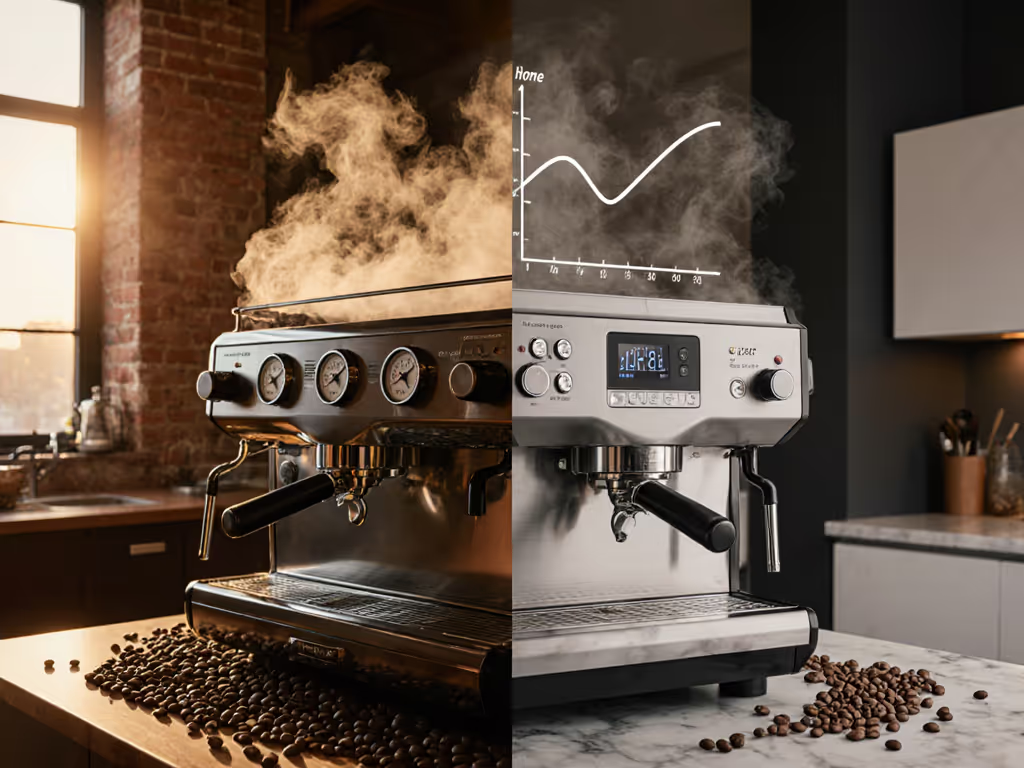
Today's traditional espresso machine inherits these lineage lessons. That's why dual boilers (La Marzocco, 1970) matter for steaming two milks back-to-back, but only if your routine needs it. Rotary pumps are quieter, but vibratory pumps (with proper insulation) now hit 45 dB, below refrigerator hum. We compare rotary vs vibratory pumps to help you pick the right balance of noise, stability, and cost. The real innovation? Modern espresso heritage demands ergonomic intelligence: intuitive controls, dry pucks, and drip trays you don't curse during sleep deprivation.
Critical Timeline Takeaways for Home Users
When evaluating machines, anchor to your workflow, not marketing hype. Use this time-stamped steps checklist:
- 1905 legacy: Does it have an automatic pressure release? (Prevents scalding during chaos)
- 1947 legacy: Can it hit 9 bars without steam? (Ensures stable crema in humidity swings)
- 1961 legacy: Is pre-infusion adjustable? (Critical for consistent extraction with budget grinders)
- 2000s legacy: How fast does steam recovery happen? (Back-to-back drinks need ≤ 30s recovery)
Remember: A machine's value isn't in its specs; it's in the minutes it returns to your morning.
Finding Your Frictionless Fit
The evolution of espresso technology reveals a pattern: each leap solved concrete human struggles. Your perfect machine isn't the one with the most bars, but the one that disappears into your life. Does it:
- Start brewing in ≤ 30 seconds? (Gaggia's lever demanded 3+ minutes of warm-up, unworkable today)
- Produce dry pucks for 2-second knockouts? (Pavoni's valve reduced splash, but modern filters prevent gummy messes)
- Operate below 50 dB? (E61's pump was 65 dB, loud enough to wake light sleepers)
If-then guidance: If your kitchen has 18-inch counter depth, then prioritize compact heat-exchanger models over dual boilers. If you pull two cappuccinos daily, then verify steam recovery time, not boiler size. These aren't trade-offs. They're checklists and quick wins for stress-free mornings.
The Quiet Revolution Continues
From Moriondo's steam boiler to today's micro-controllers, espresso's true heritage is reducing friction. Not wattage. Not "prosumer" jargon. The next time you see a machine promising "cafe authenticity," ask: Does this solve my 7 a.m. reality? Machines that demand attention fail. Machines that enable flow win.
Your next step: Audit your morning. Time each step for a week. Note where you curse the machine. That's where historical innovation met modern life, and where your perfect match waits.
Less fiddling, more sipping - your morning deserves frictionless espresso.
Related Articles