
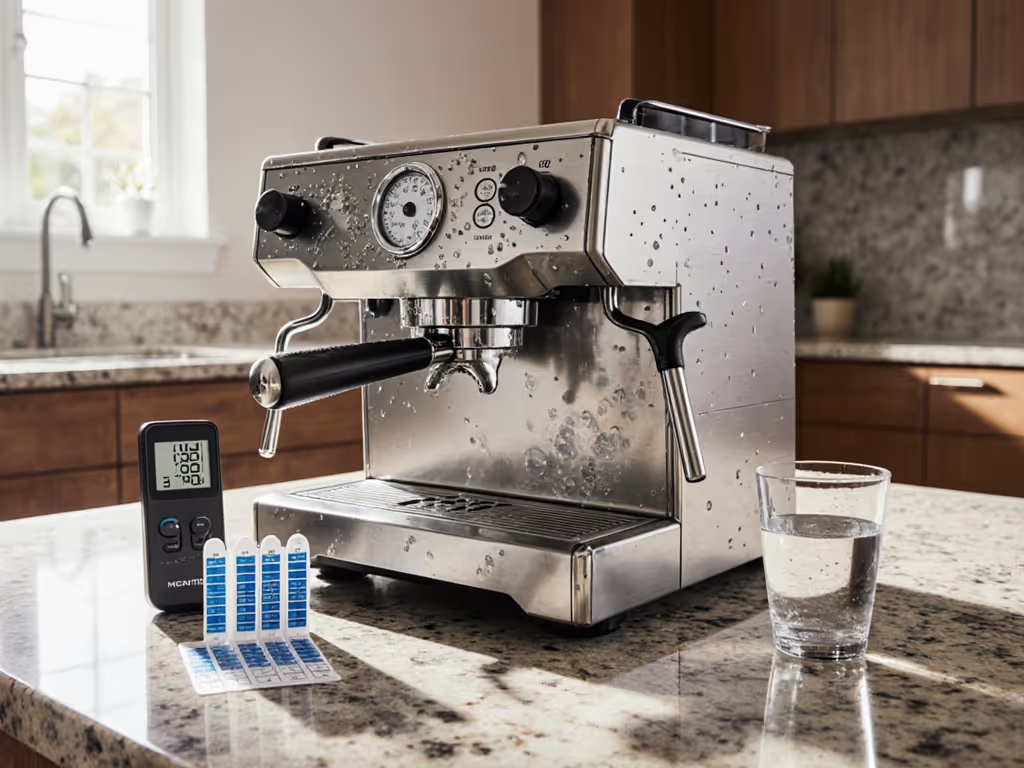
Espresso Machine Maintenance by Type: Clear Routines
By Aisha Khan • 21st Nov
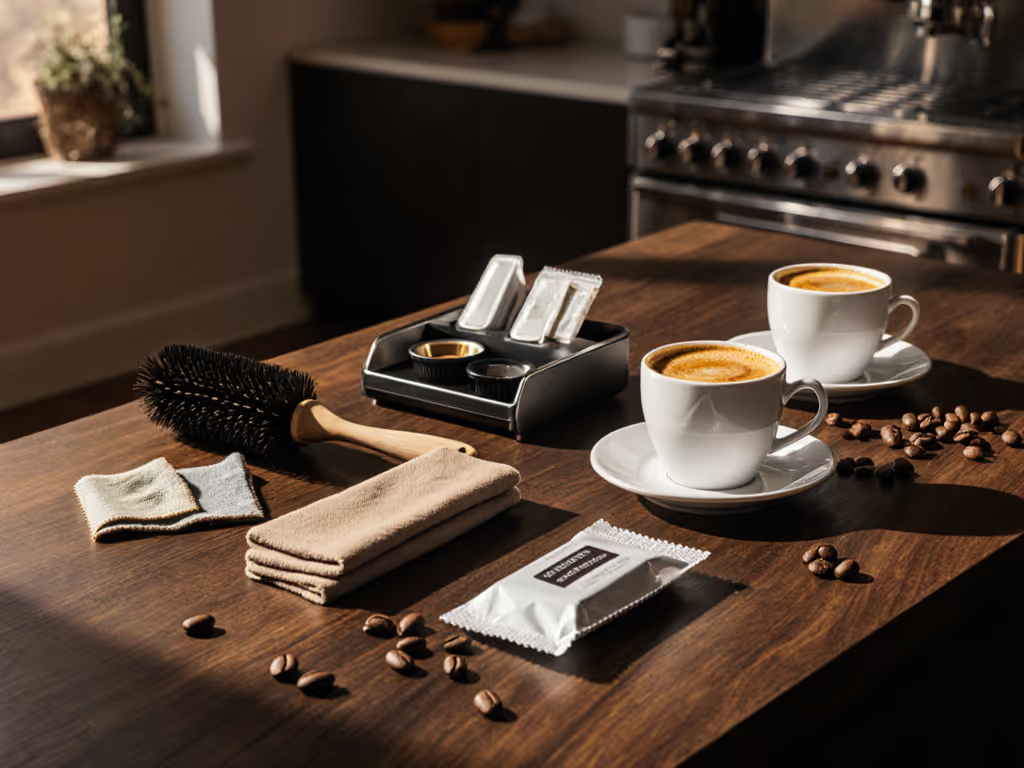
As someone who studies how espresso machine maintenance by type impacts real family mornings, I've found that generic cleaning schedules often create more friction than they solve. Tailored espresso maintenance acknowledges that your single-boiler machine has different needs than your neighbor's super-automatic, and both demand routines that work within your constrained morning window. When your cleaning schedule aligns with your specific machine's architecture and your household's rhythm, that 6:15am rush becomes noticeably smoother. Less fiddling, more sipping. Your morning deserves frictionless espresso.
Having stress-tested dozens of machines during peak family hours, I've learned maintenance shouldn't feel like another chore. Instead, it should seamlessly integrate into your existing workflow, reducing cognitive load and morning stress. One winter morning, I watched a family navigate their routine with two kids and back-to-back meetings, and what mattered wasn't the machine's peak pressure, but whether the maintenance routine fit their 8-minute window without waking the baby.
Why One-Size Maintenance Doesn't Fit All Families
Your machine's internal architecture determines its maintenance rhythm. That's why I measure noise and mess metrics alongside technical requirements, because what good is a perfect cleaning schedule if it violates your household's quiet hours or adds hidden cleanup minutes?
Consider these real-home constraints that influence your maintenance approach:
- Single-boiler machines (common in apartment kitchens) require careful timing between brewing and steaming functions
- Dual-boiler systems (popular with prosumer upgraders) have separate water paths that impact descaling frequency
- Super-automatic units (favored by time-pressed professionals) hide complexity behind push-button convenience
- Lever machines (beloved by ritual-driven enthusiasts) demand hands-on care that either enhances or disrupts the morning flow
Your machine should disappear into your routine, not dominate it. The right maintenance schedule becomes invisible, a natural extension of your existing habits rather than an additional burden.
Time-Stamped Maintenance: Machine-Specific Checklists
Single Boiler Maintenance Routine: The Morning Efficiency Play
Single-boiler machines (like popular entry-level models under $800) require strategic sequencing since they share one boiler for brewing and steaming. This architecture creates unique morning challenges when making multiple drinks.
Daily quick win (60 seconds):
- After last espresso shot: Switch to steam function for 10 seconds to clear residual water
- Wipe group head with damp microfiber cloth before temperature drops (prevents hardened coffee oils)
- Clean steam wand immediately after final use (never let milk dry inside the tube)
Weekly maintenance (3 minutes):
- Perform backflush before your first weekend coffee while the machine is fully heated
- Soak portafilter in warm water + mild detergent while you prepare breakfast
- Clean drip tray with designated 'steam wand cloth' to prevent cross-contamination
If-then guidance: If you regularly make two milk drinks back-to-back, add a 30-second boiler refill pause between drinks during the week. This reduces thermal stress and extends time between required descaling sessions.
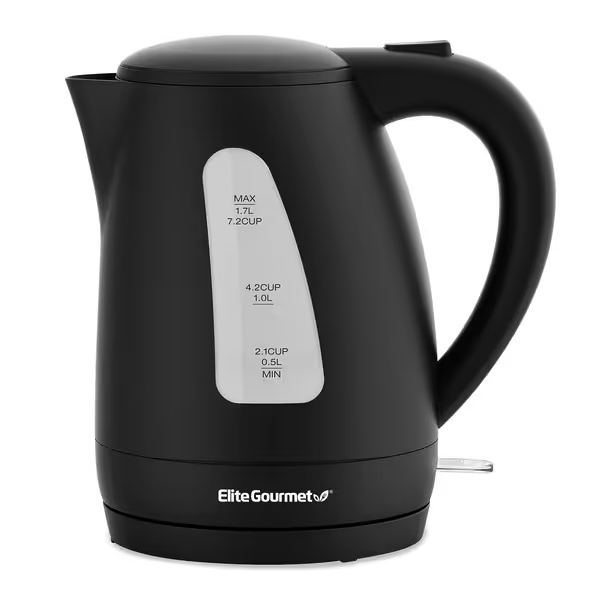
Elite Gourmet 1.7L Electric Kettle
Quickly boil water for drinks and meals with auto shut-off safety.
$17.99
Capacity1.7 Liters
Capacity1.7 Liters
Pros
Boils water rapidly with 1500W power.
Auto shut-off & boil-dry protection for safety.
Sleek design fits any kitchen aesthetic.
Cons
No 'Keep Warm' function for prolonged heat.
Customers find the electric kettle functional, noting it automatically turns off when water is boiling and heats quickly. They appreciate its perfect 1.0-liter size for making 2-3 cups of tea, and like its stylish blue LED interior that makes it attractive to leave on the counter.
Customers find the electric kettle functional, noting it automatically turns off when water is boiling and heats quickly. They appreciate its perfect 1.0-liter size for making 2-3 cups of tea, and like its stylish blue LED interior that makes it attractive to leave on the counter.
Dual Boiler Service Plan: Precision Without the Pressure
Dual-boiler machines (common in the $1,500+ range) offer independent temperature control but require balanced maintenance across both systems. These are often the choice for households making multiple specialty drinks daily.
Daily rhythm (75 seconds):
- Upon waking: Purge both boilers for 5 seconds while kettle heats (less noise than full steam)
- After final shot: Backflush only the brew boiler (steam boiler requires different cleaning chemistry)
- Evening reset: Empty drip trays before bed so morning cleanup takes 15 seconds
Bi-weekly checkpoint (4 minutes):
- Alternate weeks: Deep clean brew head OR steam wand assembly (never both simultaneously, preserves workflow rhythm)
- Check water hardness indicator while waiting for descaling solution to cycle For fewer descaling cycles and better flavor, see our espresso water guide.
- Document any inconsistencies in a simple log ("steam pressure drop on Tuesday morning")
Family-friendly tip: Keep maintenance supplies in a dedicated caddy that lives beside the machine, never hunting for the blind filter basket when kids are asking for breakfast.
Super-Automatic Cleaning Schedule: The Set-and-Forget Reality
Super-automatic machines promise convenience but often create hidden maintenance time sinks. The truth is, these units require consistent attention to prevent the very frustrations they're designed to eliminate.
Automated daily cycle (hands-off):
- Schedule cleaning cycle to run during your morning routine (not before). Many models have programmable timers.
- Position drip tray where it won't disrupt your breakfast workflow
- Use the machine's self-test function while you're pouring cereal
Critical monthly maintenance (5 minutes):
- Remove brew group while dinner cooks (washes easily in warm soapy water)
- Wipe grease traps with designated cloth (never skip, as this causes the most common failure mode)
- Check water filter status indicator during evening news
If-then guidance: If your machine chimes for maintenance before 7am, adjust the schedule via the app the night before. Your partner (and kids) will thank you for avoiding pre-dawn maintenance alerts. Comparing models? Start with our fully automatic espresso makers ranked to see maintenance trade-offs.
Lever Machine Upkeep: Ritual Meets Reality
Manual lever machines create beautiful espresso but demand hands-on care that must either enhance or disrupt your morning flow. If you're new to levers, our lever espresso technique guide can streamline your routine. For knowledge workers who appreciate ritual, this can be meditative, but not when the school bus is arriving in 4 minutes.
Post-shot sequence (45 seconds):
- Immediately wipe portafilter rim with dry cloth (prevents sticky residue between shots)
- Purge group head with fresh water before pressure drops completely
- Knock puck into designated container that fits your trash can size
Weekly deep care (6 minutes):
- Clean group gasket during your usual coffee break (requires only cloth and mild soap)
- Lubricate lever mechanism with food-safe grease while waiting for weekend coffee to brew
- Descale using citric acid solution during your normal coffee break (no harsh chemicals needed)
Family-friendly language: "This is how we care for our coffee friend so it makes us happy drinks every morning." Explain the routine to kids as part of your morning ritual rather than a chore.
The 90-Second Maintenance Mindset
After shadowing dozens of family coffee routines, I've discovered the most successful households don't schedule maintenance, they build it into natural pauses. When your espresso machine maintenance by type aligns with existing habits, you gain time instead of losing it.
Try these quick wins this week:
- The 5am test: Run a maintenance cycle while your first cup brews. Does it wake sleeping household members?
- Mess mapping: Track where cleanup happens. Are you walking to the sink three times per shot?
- Time-stamp reality check: Note exactly when maintenance tasks fit (or disrupt) your morning flow
Your ideal maintenance routine shouldn't feel like a separate task, it should fit the morning rhythm so completely that you hardly notice it's happening. The quietest machine I've tested doesn't have the lowest decibel rating, it has the maintenance schedule that disappears into the family's existing workflow. For apartment-friendly picks, browse our espresso machine noise comparison.
When maintenance becomes invisible, your machine finally fulfills its promise: delivering consistent, cafe-quality espresso that enhances rather than complicates your most precious time of day.
Ready to explore which maintenance approach aligns with your specific machine and household? Download my free Espresso Machine Type Assessment, just match your morning reality to the corresponding workflow patterns, no technical jargon required.
Related Articles