Espresso Machine Water Filters: Find Your Best Match
By Aisha Khan • 11th Mar
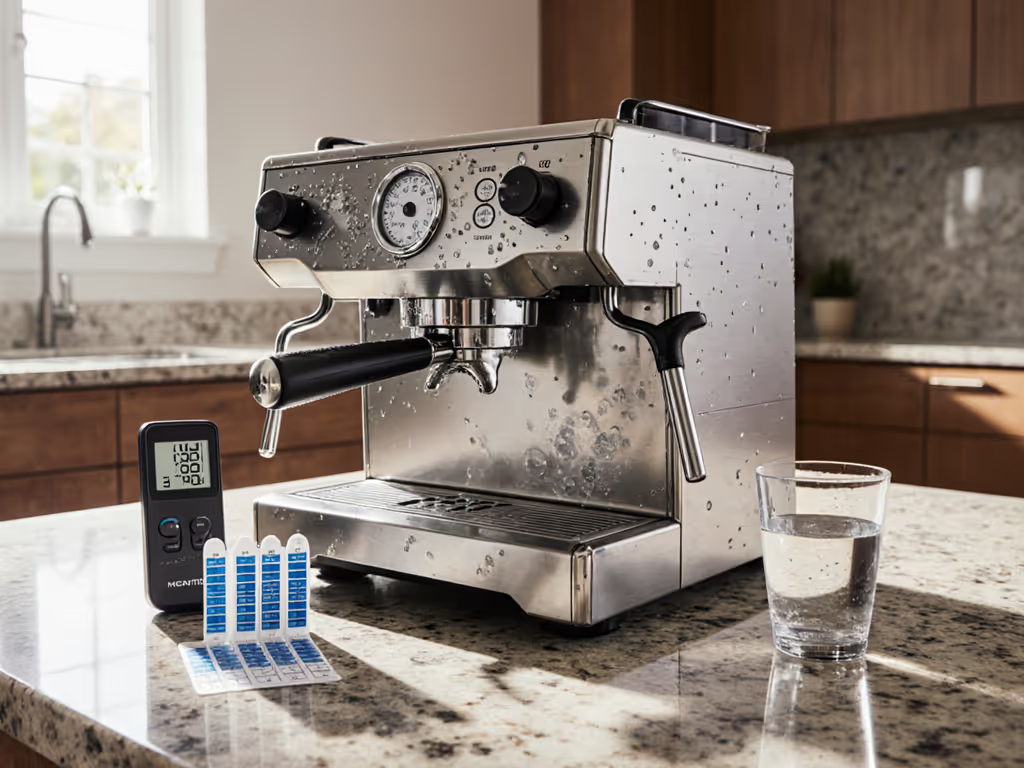
Your espresso machine is only as good as the water flowing through it. Espresso machine water filtration and home coffee water treatment aren't glamorous topics, but they directly shape your daily workflow, your machine's lifespan, and whether you're chasing scale buildup every month or sipping confidently through your morning routine. The right filter system removes the invisible friction that derails consistency, and it should vanish into your setup, not demand attention.
This guide cuts through the noise to help you match a filtration approach to your actual home situation, your water profile, and the time you have before the day takes over.
Why Water Treatment Matters More Than You Think
One winter, I watched a household with two kids and one 8 a.m. meeting grind through their morning. The espresso machine was a beauty, dual boiler, PID, the works. But the owner had skipped water treatment. By Wednesday, scale had begun clogging the group head. Each shot took longer to pull. The routine fractured. By Saturday, they switched to a quieter, simpler machine paired with a basic filter system and a tidy workflow. The result? 90 seconds saved, one less source of stress, and shots that tasted consistent every day. Workflow, not wattage, set the tone.
This is the hidden truth: water quality affects machine health, flavor consistency, and cognitive load. Hard water leaves mineral deposits that slow water delivery, restrict flow, and eventually force costly repairs. Poor taste stems from chlorine, sediment, and imbalances in dissolved solids. For target minerals, TDS ranges, and flavor impacts, see our espresso water guide. The right filtration reduces both problems at once, and it starts with understanding what's in your tap water and which filter type addresses it.
Understanding Your Water Profile
Before choosing a filter, answer these questions:
- How hard is your water? Ask your municipal water provider or test with a simple hardness kit. Hard water contains high levels of calcium and magnesium, the scaling culprits.
- What does it taste like? Chlorine? Musty? Flat? This hints at what needs removal.
- Do you rent or own? Renters often need portable systems; homeowners can invest in plumbed-in solutions.
- What's your daily volume? One cappuccino or four espressos before noon? Higher volume means higher filter demand.
Ask these questions once, and you eliminate the guessing game. Less fiddling, more sipping. Your morning deserves frictionless espresso.
Four Core Filter Types - And When to Use Each
Activated Carbon Filters: The Flavor Foundation
Best for: Chlorine, taste, and odor removal; budget-conscious first-time buyers.
Activated carbon works like a sponge, trapping chlorine and organic compounds before they reach your group head. If your water tastes clean but flat, or if you detect chlorine notes in your espresso, carbon is your entry point. Granular activated carbon (GAC) is economical; denser carbon block filters offer superior contaminant removal. Silver-impregnated carbon adds antimicrobial protection, useful if your reservoir sits idle on weekends. If you brew only a few times a week, follow our infrequent-use care guide to prevent stale water and surprise scale.
Time-stamped reality: A basic carbon filter adds zero complexity. Fill your reservoir, brew. No regeneration cycles, no monitoring. It reduces cognitive load before your first cup.
Ion Exchange Filters: Scale Prevention Without Sodium Compromise
Best for: Hard water areas; machine protection; maintaining mineral balance for extraction.
Ion exchange filters use specialized resin beads to swap calcium and magnesium ions for sodium or potassium. This technology can reduce water hardness by up to 90 percent, preventing scale buildup in pipes, valves, and group heads. The key advantage: machine-specific filtration that preserves the minerals espresso extraction needs. Some systems offer bypass controls, letting you blend treated and untreated water to maintain optimal mineral content.
The trade-off: Ion exchange systems require periodic regeneration with salt or potassium and more hands-on monitoring. In a household with limited time, this adds friction.
Reverse Osmosis (RO) Systems: Maximum Purity, Minimum Haste
Best for: Severe water quality issues; prosumer setups with time and space; espresso purists.
Reverse osmosis removes up to 99% of dissolved solids, producing ultraclean water. However, RO water is so pure it lacks minerals essential for extraction. You'll need a remineralization step, adding complexity and cost. Additionally, RO systems waste 2 to 4 gallons of water per gallon produced, and they require storage tanks and steady monitoring.
Consider RO only if your water is severely compromised or if you have space, electricity, and patience for a multi-stage setup. For most home baristas juggling morning routines, it's overkill.
In-Line and In-Tank Resin Filters: Convenience and Continuous Protection
Best for: Plumbed machines; hands-off convenience; scale control without daily thought.
In-tank resin filters sit inside your water reservoir, continuously transforming hardness minerals into machine-friendly sodium ions. They require no plumbing and work passively: fill, brew, forget until replacement time. In-line filters connect directly to your water source, offering continuous filtration with higher capacity than pitcher-style alternatives. Considering machines with integrated softeners? Read our built-in filtration overview to decide between internal and external solutions.
Both options excel at scale prevention solutions while allowing you to maintain a simple morning sequence. The downside: replacing cartridges costs money over time, and you won't know capacity until the machine begins to choke. Set a calendar reminder, order replacement cartridges before they're needed, and reduce cognitive load through automation.
Matching Filter Type to Your Situation
Quick decision tree:
If your water is soft and tastes acceptable → Activated carbon only. Move forward with confidence.
If your water is hard but your budget is tight → In-tank resin filter. Low upfront cost, passive operation, effective machine protection.
If your water is hard and you have plumbing access → Ion exchange or combination system. Better control, longer cartridge life, true mineral balance.
If your water is severely compromised (unusual taste, visible sediment) → Multi-stage system combining carbon, sediment, and resin. Only then consider RO if problems persist.
If you rent and move frequently → Pitcher-style carbon filter or in-tank resin. Zero installation required.
Installation and Maintenance: Time-Stamped Reality
Even the best filter adds friction if setup and upkeep are unclear. Here's the checklist:
Installation (one-time):
- Carbon filters: Fill reservoir, insert cartridge (60 seconds).
- In-tank resin: Drop into reservoir (60 seconds).
- Ion exchange or plumbed systems: Read instructions, consider professional help if needed (30 minutes to 2 hours).
Ongoing maintenance:
- Carbon filters: Replace every 1–2 months depending on volume and water quality.
- In-tank resin: Replace every 2–3 months (order early to avoid stock-outs).
- Ion exchange systems: Monitor capacity; regenerate or replace per manufacturer schedule.
Set phone reminders for replacement dates. This single habit reduces the surprise moment when your machine suddenly pulls slower than usual.
The Workflow Lens: Which Filter Fits Your Morning?
Consider water filter compatibility with your actual routine. If you brew two espressos in eight minutes before a 9 a.m. meeting, you need a filter system that:
- Doesn't impede flow. Overly dense filters can restrict water delivery, slowing your shot.
- Works passively. No regeneration cycles or monitoring during morning hours.
- Fits your counter. In-tank filters suit tight kitchens; plumbed systems need accessible access points. For design factors that influence water flow and heat stability, consult our espresso reservoir guide.
- Requires minimal maintenance reminders. Calendar-based replacements beat guesswork.
A well-matched filter system becomes invisible. You fill the reservoir, pull your shot, and the machine delivers consistent flavor day after day. That's the goal: reduce cognitive load so your espresso routine feels effortless even when everything else is chaos.
Making Your Choice
Test your water first. Call your local water provider or order an inexpensive hardness test kit. Spend 10 minutes understanding your baseline. From there, the path forward is clear:
- Soft water? Start with carbon filtration and re-evaluate after one month.
- Hard water with tight budget? In-tank resin filters deliver immediate machine protection with zero complexity.
- Hard water with plumbing access and time? Multi-stage systems or ion exchange offer the precision that taste-focused home baristas crave.
- Severe quality issues? Combination systems give you options without committing to RO's waste and cost.
The machine should disappear into your routine and reduce morning friction, not become a project. Choose the simplest system that solves your water problem, set calendar reminders for cartridge replacement, and trust the process.
Your next shot (and the hundred after it) will taste better, your machine will live longer, and your morning will hum along without a second thought.
Related Articles