High Altitude Espresso Guide: Dial In Perfect Shots Daily
By Luca Moretti • 5th Nov
If you're wrestling with inconsistent espresso at elevation, you're not alone. That frustrating cycle of sour shots one morning and bitter pulls the next? It's often altitude playing hide-and-seek with your extraction. For a quick fix when shots swing sour or bitter, see our espresso troubleshooting guide. A high altitude espresso guide isn't just helpful, it's essential when brewing espresso at high elevation. But here's the good news: you don't need complex science to fix it. Constraints create confidence; repeatability breeds better taste. Let me share a simple framework I've used with hundreds of home baristas (from Denver lofts to Alpine cabins) to achieve taste you can set a clock to.
Why Altitude Changes the Game (Without the Jargon)
At higher elevations, lower atmospheric pressure means water boils at cooler temperatures. For every 1,000 feet above sea level, your boiling point drops about 2°F (1°C). At 5,000 feet, you're losing 10°F off your ideal extraction range, like trying to bake a cake at 340°F instead of 350°F. This impacts pour-over more than espresso (since espresso uses 9-bar pressure to lift water beyond normal boiling), but subtle shifts still happen in your puck's final stages where pressure normalizes. The result? Thin, sour shots if you ignore altitude, or over-extracted bitterness if you overcompensate.
What This Means for Your Morning Ritual
- Low pressure espresso extraction isn't a flaw, it's physics. Your machine works harder, but the exit point of water from the puck feels ambient pressure.
- High elevation coffee temperature needs smart calibration: too cool = under-extracted sourness; too hot = scorched bitterness.
- Mountain coffee brewing isn't just about where you are, it's about how you adapt.
I've seen beginners freeze at grinders, overwhelmed by variables. So I brought a kitchen timer and a three-setting card. Three shots. One clear favorite. Locked settings. Next morning? Same card, same cup. Confidence brewed faster than the espresso.
Your 6-Step High Altitude Espresso Framework
Forget guesswork. This bounded system uses simple recipes and checkpoints to cut morning chaos. Focus on one adjustment at a time, never all three variables (dose, grind, time). Anchor to sensory feedback: is it flat, sweet, or bitter?
Step 1: Start With Baseline Settings (Your Safety Net)
Don't reinvent the wheel. Begin with these altitude-tuned defaults:
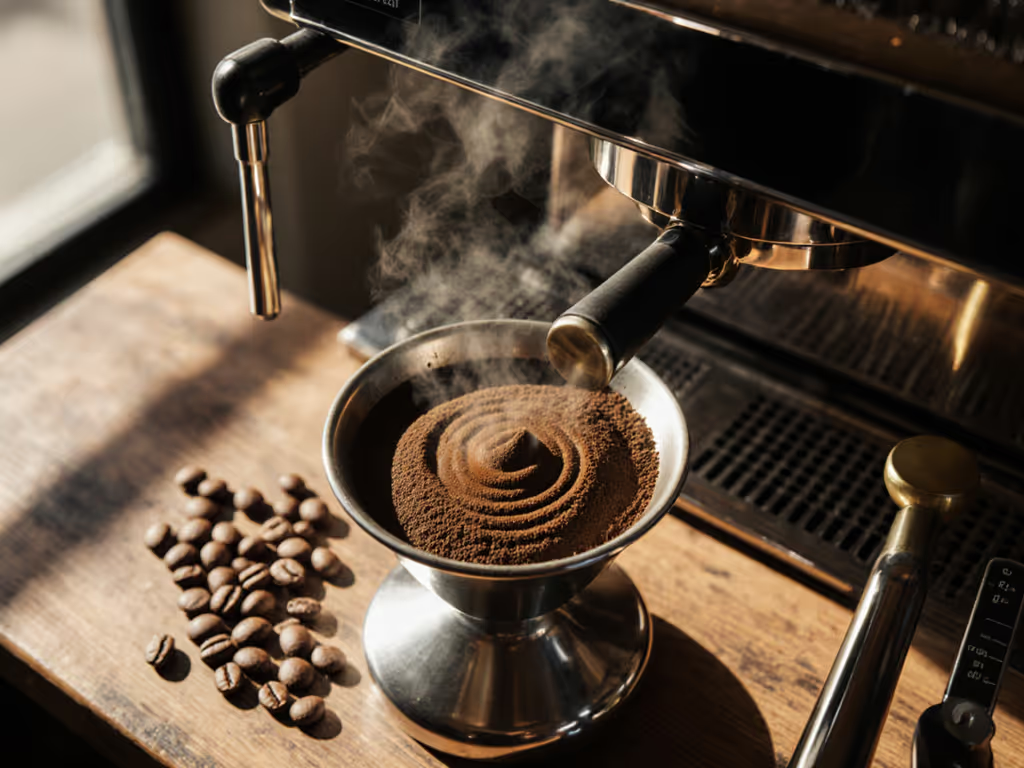
- Dose: 20g (1g more than sea-level standard)
- Grind: 1 setting finer than your usual
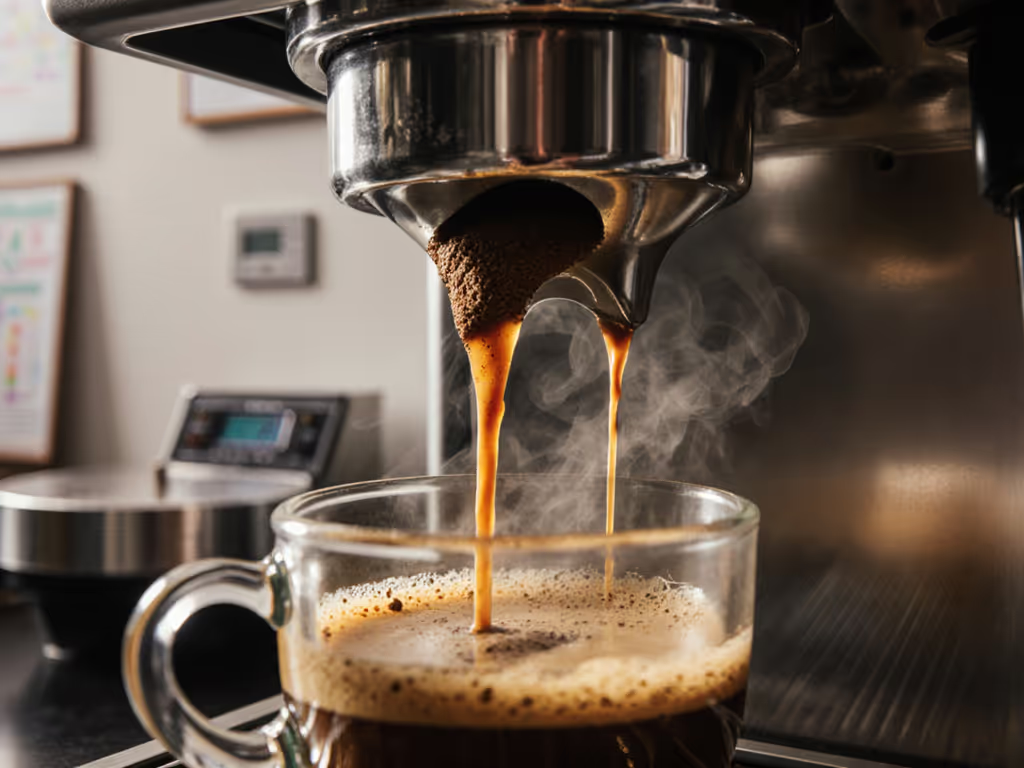
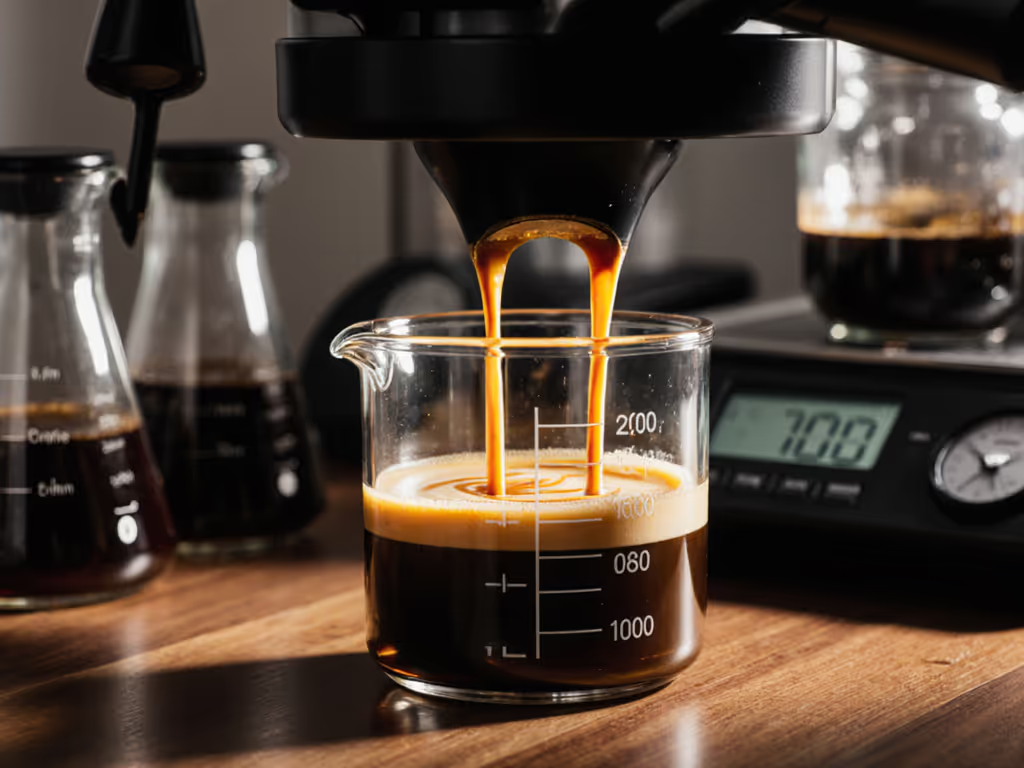
- Target Time: 25-28 seconds for 1.5 oz (44ml) yield
Why? The denser air at elevation slows water flow slightly. The extra 1g dose and finer grind compensate for reduced extraction efficiency. Write these on a card (bounded options and defaults) to eliminate paralysis.
Step 2: Adjust Grind Based on Time (The Critical Checkpoint)
Your shot timer is your truth-teller. If it's outside 25-28 seconds, only tweak grind fineness. Never dose or time first.
- Too slow (>30s)? Coarsen grind 1 click. Sensory anchor: If it's also bitter, you've overcompensated, so reset and go finer next time.
- Too fast (<23s)? Finer grind 1 click. Sensory anchor: If sour, keep adjusting finer; if flat, increase dose slightly.
Pro tip: At 7,000+ feet, you may need 2-3 clicks finer than sea level. But still, one adjustment per shot. For a step-by-step primer on dose, yield, and time, use our dial-in espresso guide.
Step 3: Calibrate Temperature for Altitude (The Silent Culprit)
Most home machines max out at 205°F (96°C), perfect for sea level but potentially low at elevation. For deeper control of brew heat, learn about temperature profiling on machines that support it. If your shots taste stale or papery despite correct time:
- Raise boiler temp by 2-5°F (if adjustable)
- Or, preheat portafilter 10 seconds longer
Why this works: Higher temps counteract lower boiling points in the puck's exit phase. But don't exceed 205°F, you'll burn delicate acids. High elevation coffee temperature tuning is subtle: 2°F shifts make or break brightness.
Step 4: Lock Your Winning Combo (The Confidence Builder)
Once you hit 25-28 seconds and balanced flavor (sweet center, clean finish), calibration prompt:
- Note settings: "20g dose, 2 clicks finer, 26s @ 203°F"
- Circle sensory notes: "sweet > flat > bitter"
- Tape card to your machine
This is where constraints kill doubt. No more dialing from scratch daily, just repeat. I've watched beginners light up when they realize elevation isn't their enemy; it's just a variable with rules.
Step 5: Clean Equipment for Consistent Pressure (The Hidden Fix)
Residual coffee oils in spouts or baskets create uneven flow paths (catastrophic when pressure is already delicate at altitude). Before dialing in:
- Purge grouphead for 5 seconds
- Backflush with blind basket (if machine supports it)
- Scrub portafilter basket with a dedicated brush like the Kitnish Espresso Brush to remove compacted fines
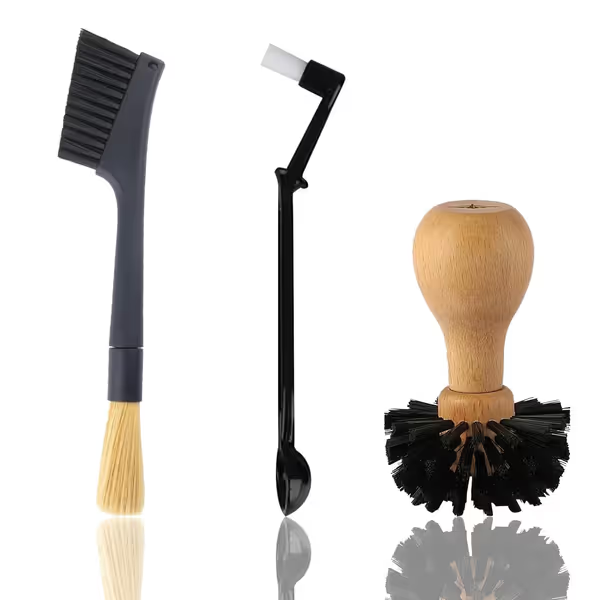
Espresso Machine Cleaning Brush Set
Keep your espresso machine spotless for consistent, great-tasting coffee.
$11.99
Includes3 specialized brushes
Includes3 specialized brushes
Pros
Targets all common cleaning needs
Ergonomic design for cool, dry hands
Soft bristles protect machine parts
Cons
Mixed feedback on overall quality
Customers find the coffee brush effective, with one mentioning it works perfectly with their Breville Oracle Touch Espresso Machine. However, the quality receives mixed feedback.
Customers find the coffee brush effective, with one mentioning it works perfectly with their Breville Oracle Touch Espresso Machine. However, the quality receives mixed feedback.
Step 6: Test Reliability (The Real-World Check)
True repeatable shots survive time and temperature swings. To verify:
- Pull 3 shots 1 hour apart
- Same settings, different ambient temps (e.g., morning vs. noon)
- Sensory anchor: If flavor drifts toward flat or sour, your grind is too fine for humidity changes
If all shots taste within 10% of each other? You've built a system. Not luck.
Why This Works: Less Variables, More Joy
Altitude espresso adjustments aren't about chasing perfection, they're about boundaries. When I hand a beginner that three-setting card, they stop fearing variables and start trusting patterns. You'll notice sweeter shots, faster recovery between drinks, and, critically, no more throwing out morning experiments while the kids wait for milk drinks.
Bounded choices, repeatable shots, taste you can set a clock to. That's the magic. You're not just adapting to elevation; you're leveraging it. High-altitude beans (often grown above 4,000 feet!) thrive with this structured approach, revealing the vibrant fruit and honey notes roasters intended.
Further Exploration Awaits
Try this framework for one week: same card, same sensory notes. Notice how quickly your hands remember the grind clicks, how your timer syncs with your morning rhythm. Then, if you're curious:
- Experiment only with dose (+/- 0.5g) for brighter or heavier body
- Compare espresso water basics (soft water may need coarser grinds, see source notes)
- Track how humidity shifts your grind needs (monsoon season = coarser)
But master the basics first. Elevation's gift isn't complexity, it's the chance to refine one thing at a time. When you lock in that 26-second sweet spot, you'll taste why repetition breeds confidence. And that's a cup worth celebrating, no matter how many feet above sea level you brew it.
Related Articles