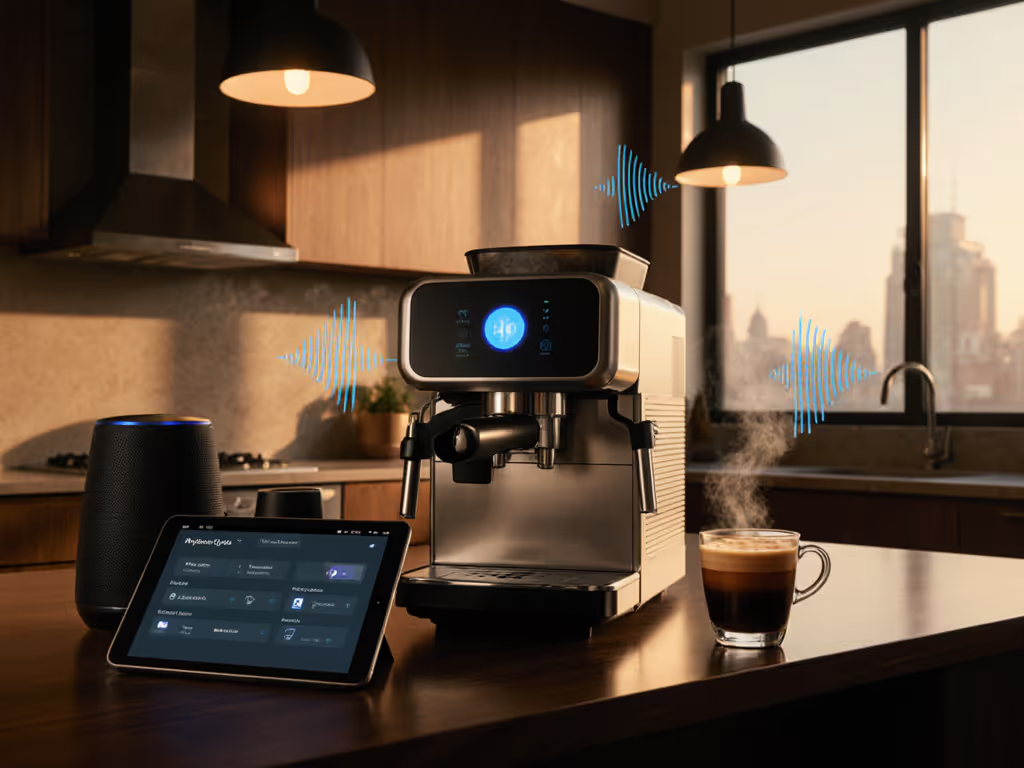
Best Home Espresso Machines for Quiet Remote Work
By Luca Moretti • 23rd Feb
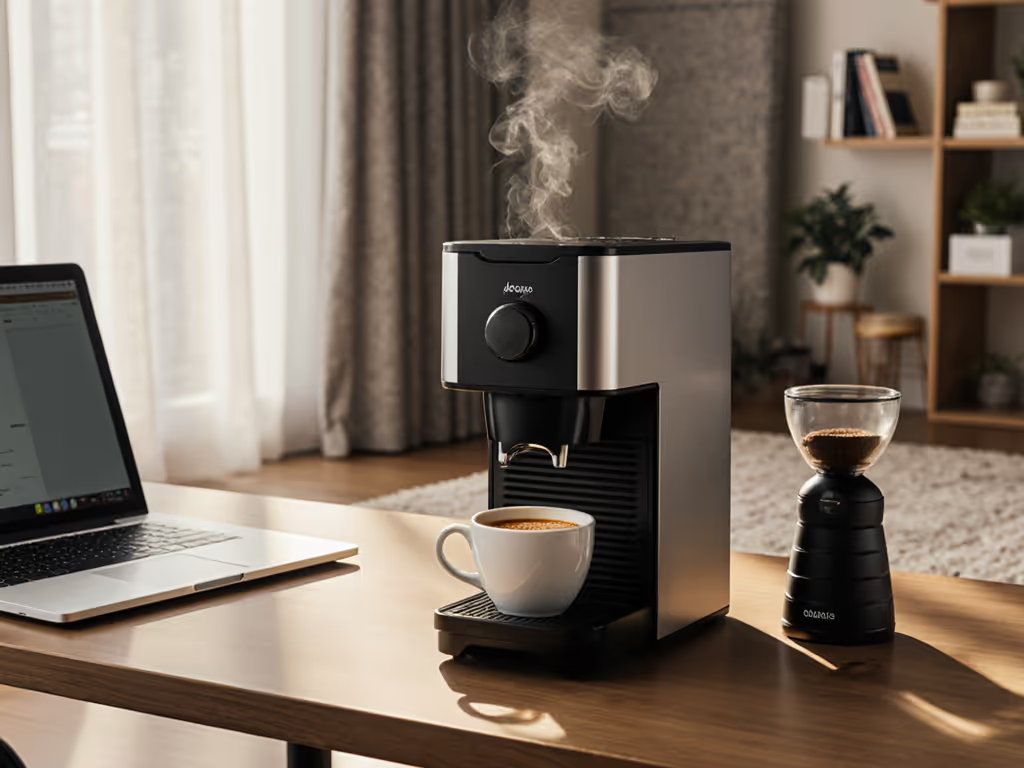
When you're building a home coffee espresso machine setup for remote work coffee, the stakes feel higher than they should. You're not just buying a tool; you're designing a morning ritual that supports focus, productivity, and sanity before the workday begins. For remote workers, silence matters as much as taste. So does speed. And repeatability. The machine that works for a café doesn't work when you're brewing three feet from your partner's desk or your first Zoom call.
I've watched remote workers freeze the same way I've watched beginners freeze at grinders: too many options, too much conflicting advice, too many compromises hiding in the specs. So let me give you what actually works: bounded options that deliver quiet coffee for office use, with workflows you can repeat without thinking.
1. Understand Your Quiet Operation Priorities
Noise isn't just annoyance; it's a productivity killer in shared spaces. Before you compare machines, know what you're actually trying to avoid.
Pump noise (the espresso extraction itself) is unavoidable: it's the hiss and gurgle of water forced through grounds. Most machines sit around 70-75 decibels here, roughly equivalent to a busy café. For model-by-model data and picks, see our espresso machine noise levels compared guide. You can't silence it, but you can accept it and time it strategically: brew while your partner's still asleep, or before your first meeting, not during calls.
Steam wand noise is louder and longer. If you're making milk drinks every morning, this becomes your bigger challenge. The steam valve releases pressure with a sharp, high-pitched whistle that travels through walls. Some machines feature pressurized steam wands (they're quieter because they operate at lower pressure, though they trade some microfoam finesse for peace).
Grinder noise often exceeds the machine itself. A noisy burr grinder can wake the whole house. If you're debating convenience vs performance, here's our take on built-in vs separate grinders for quieter, more consistent setups. If quiet mornings matter, budget for an espresso grinder separately; it's a single, solved problem and keeps grinding to a dedicated two-minute window.
Constraints don't kill your morning routine; they protect it. Choose one bottleneck (the grinder or the brewing window) and time everything around that single noise event.
2. Choose a Machine with Fast Heat-Up and Stable Temperature
Speed and consistency are the foundations of a repeatable morning routine coffee workflow, especially when your day is packed back-to-back. A machine that takes 15 minutes to warm up isn't just slow; it's a friction point that tempts you to skip the ritual altogether.
Look for machines with PID temperature controllers or rapid heat-up claims under 5 minutes. The Breville Bambino Plus, for example, claims a 3-second heat-up, which sounds almost absurd until you realize it means you can brew your espresso within seconds of flipping the power switch. That's not a luxury; that's the difference between a ritual that fits your schedule and one that doesn't.
Stable temperature matters because inconsistent shots force you to recalibrate daily. With a locked temperature and bounded brewing parameters, your 9 a.m. cappuccino tastes like your 9 a.m. cappuccino yesterday. Taste you can set a clock to (that's what reduces decision-making fatigue before you've had caffeine).
3. Prioritize Compact Footprint for Remote Work Spaces
Most home offices aren't designed for espresso machines. They're narrow, overstuffed with monitors and cables, and leave maybe 12 inches of counter depth. A bulky machine becomes visual clutter and a constant reminder of wasted space.
Compact machines like the De'Longhi Dedica EC685 are designed for this exact constraint. At roughly 6 inches wide, they tuck beside a laptop without dominating the workspace. They're not compromises; they're purposefully built for bounded environments. For small desks and narrow counters, start with our lab-tested compact espresso machines roundup.
When you evaluate compact models, check:
- Footprint dimensions (width, depth, height (measure your counter first))
- Reservoir position (side-mounted or top? Does it interfere with cabinet doors or wall space?)
- Cup clearance (can a full mug fit under the group head, or do you need to angle it awkwardly?)
- Drip tray depth (overflows create mess and stress; shallower trays need emptying more often)
4. Seek Machines with Pressurized Baskets or Fixed Settings
One of the biggest barriers to repeatability is grind-size anxiety. You adjust your grinder, brew, taste bitterness or flat notes, and immediately spiral into troubleshooting. Did I go too fine? Too coarse? Is it the dose? The tamp? The machine?
Pressurized (dual-wall) baskets remove this variable for beginners. They work with a wider range of grind sizes because they artificially maintain extraction pressure. You lose some microfoam potential compared to competition-level setups, but you gain stability and speed, and you avoid the day-one frustration that makes people abandon espresso altogether.
Alternatively, look for machines with fixed brew temperatures and OPV (Overpressure Valve) settings. These bounded choices force consistency. You're not endlessly tweaking; you're following a simple calibration: dose, grind, time. Brew. Taste. Circle your favorite and lock it. Next morning, same card, same cup.
5. Match Steam Power to Your Drink Volume
If you're making two cappuccinos back-to-back before work, your steam wand needs to recover between shots. Underpowered steam means you're waiting 2-3 minutes between milk froths, which destroys your morning timeline.
But "powerful steam" shouldn't mean loud steam. Look for machines with stainless steel brew components and commercial-style boilers. These typically offer better heat retention and faster recovery without necessarily cranking the decibel level.
If you're a single-drink person, this is less critical. If you're the household's café, check reviews specifically about steam recovery time and whether users report needing to wait between drinks.
6. Evaluate Long-Term Repairability and Parts Availability
Remote workers often buy machines expecting them to last. You're not casually replacing espresso equipment every two years. You want durability and confidence that parts are accessible if something fails.
Machines like the Rancilio Silvia and Gaggia Classic Pro are known for their commercial-style brass boilers and stainless steel housings, which means they're repairable and widely serviced. If your machine breaks, parts aren't a three-month wait; they're available through established retailers and repair shops.
Budget machines sometimes prioritize cost over repairability, which can mean proprietary components and limited service networks. That's a hidden ownership cost: if something fails, you're often buying a replacement rather than fixing it.
Durability and repairability are remote-work insurance. You're not traveling to a café if your machine fails; you're fixing it at home or working without it.
7. Create a Realistic Total Cost of Ownership Picture
The machine's sticker price is only the beginning. Factor in:
- Grinder: $150-400 (if buying separately)
- Descaling and cleaning supplies: $50-100/year
- Gaskets, screens, baskets: $15-50 per replacement
- Water filtration (optional but recommended): $50-200
- Repairs or unexpected parts: Unpredictable
Some machines are cheaper upfront but costly to maintain. We break this down across brands and price tiers in our true cost per year analysis. Others cost more initially but have widely available parts and lower repair friction. For remote workers, peace of mind is productivity (and durability costs less than anxiety).
8. Test Your Machine's Fit Before Committing
Once you've narrowed to two or three models, reach out to local barista shops or coffee communities. Many have demo days or allow hands-on trials. Brew a shot yourself. Listen to the noise level in a quiet space. Froth milk and time the recovery. Check the ergonomics: does the portafilter lock smoothly? Does the steam wand sit at a comfortable angle?
This isn't overthinking; it's calibration. You're matching the machine to your actual routine, not an ideal version of it.
Next Steps: Narrow Your Constraints
You now have a framework, but only you know your specific constraints: your budget, your kitchen space, your daily drink volume, and your tolerance for noise. The best machine for quiet remote work isn't the one with the fanciest features; it's the one you'll use reliably every morning without friction.
Seek out user reviews from other remote workers. Look for models tested in real homes, not just showrooms. Ask in coffee communities about noise levels and quiet-hour routines. The more specific your constraints, the faster your decision becomes clear.
The machine that fits your bounded choices will serve you far better than the one that promises everything to everyone.
Related Articles