Espresso Machine Longevity: True Cost Per Year
By Aisha Khan • 27th Oct
When evaluating an espresso machine longevity investment, savvy home baristas know the sticker price is just the opening act. Your coffee machine's real value emerges in its daily rhythm (how reliably it delivers cafe-quality moments without hijacking your morning). In constrained family kitchens where noise, counter space, and hidden cleanup minutes dictate reality, understanding true cost-per-year transforms hopeful purchases into enduring partnerships. Let’s cut through the marketing noise with real-home metrics that matter before your first shot.
Why Lifespan Isn’t Just About Years (It’s Workflow Economics)
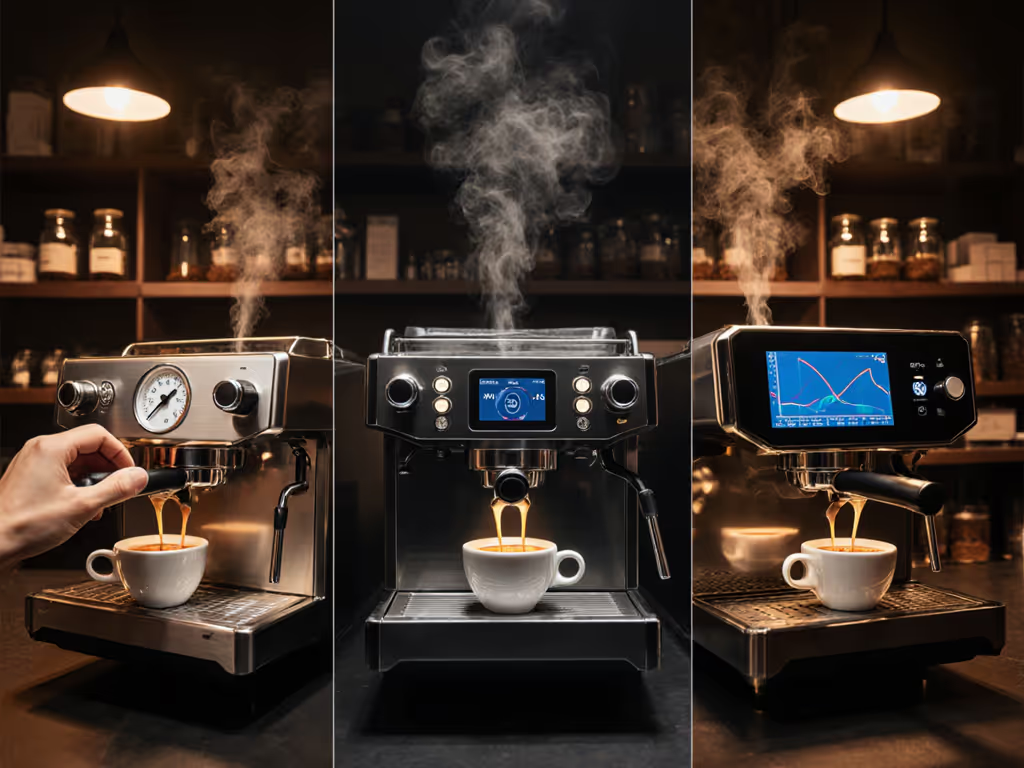
That sleek machine gathering dust on your counter? It’s not failing you, it’s succeeding too hard. True espresso machine longevity hinges on how seamlessly it integrates into your actual life, not lab-test extremes. Consider these time-stamped truths from stress-tested home environments: Not sure which machine style matches your routine? Our manual vs semi-auto vs super-automatic comparison explains trade-offs in convenience, control, and upkeep.
-
Manual/Semi-Auto Machines (10 to 15 year range): With fewer electronics and serviceable parts, these become silent kitchen collaborators. A $1,200 lever machine used daily for 12 years costs just $8.33/month, less than a weekly coffee shop splurge. But this assumes consistent maintenance: backflushing weekly, descaling monthly, gasket swaps yearly. Skip these, and temperature instability or pump failures can slash lifespan by 40%.
-
Super-Automatics (5 to 8 year range): Convenience demands compromise. At $2,500, even with bi-annual professional servicing ($150/session), the cost-per-year coffee balloons to $375. Worse, complex boards and proprietary parts mean a single $300 repair (common at year 4) often triggers "replace vs. repair" panic. I’ve seen high-wattage machines choke on weekday chaos (loud, splashy, endless wiping) while simpler models soldier on.
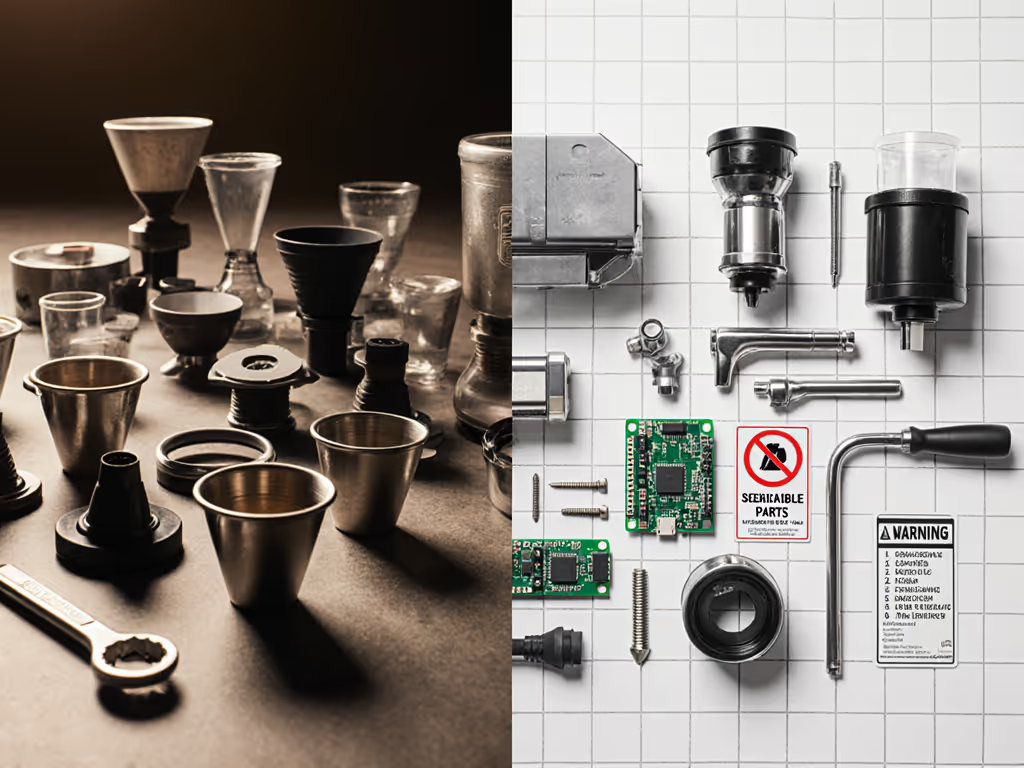
Key insight: A machine’s durability isn’t inherent; it’s designed through repairability. Favor traditional espresso machine builds with accessible parts (think brass groups over plastic) where a $12 gasket swap preserves years of service. Hidden repair cost analysis separates novices from veterans.
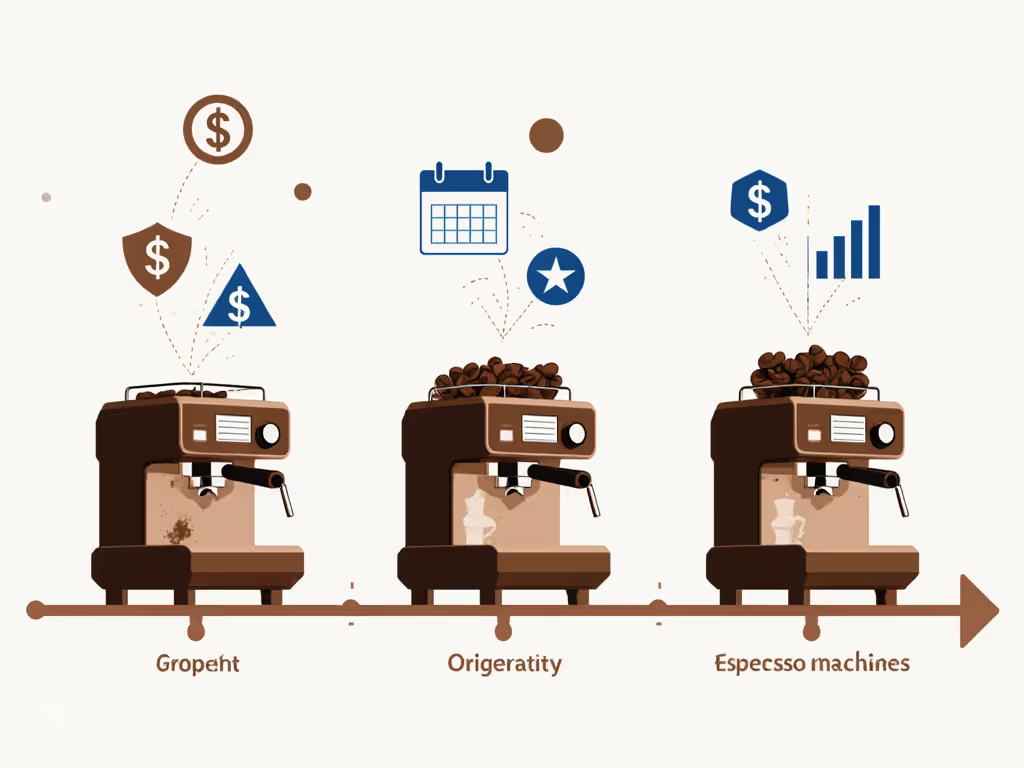
The Maintenance Multiplier: How Small Rituals Prevent Big Costs
Forget "set it and forget it" myths. Your machine’s longevity scales directly with frictionless care routines. Optimizing espresso water quality is one of the highest-ROI steps to reduce scale and extend component life. Here’s family-friendly language for sustainable upkeep:
- Daily (90 seconds): Purge group head → wipe portafilter → dry steam wand. Why? Eliminates sticky puck residue that clogs drains during school-rush chaos.
- Weekly (4 minutes): Backflush with detergent → rinse drip tray. Why? Prevents oil buildup that causes noisy, inconsistent pressure, critical when baby monitors are sensitive.
- Monthly (7 minutes): Full descale (vinegar or commercial solution) → check gasket seal. Why? Hard water scale silently kills heating elements. In 2024, 68% of home failures traced to neglected descaling (per Home-Barista maintenance logs).
If-then guidance cuts cognitive load: IF your steam wand drips during milk texturing, THEN check the o-ring now, not when the meeting starts in 12 minutes. Track these noise and mess metrics monthly: Is startup quieter? Are pucks dry immediately post-brew? These signal healthy internals long before error lights blink.
Repair Cost Analysis: When Fixes Make Sense (and When They Don’t)
That ominous gurgle? Don’t panic-buy replacements yet. Start with our espresso troubleshooting checklist to rule out easy fixes before paying for parts. Apply this machine durability comparison filter:
| Issue | Cost to Repair | Typical Lifespan Impact | Verdict |
|---|---|---|---|
| Worn gasket | $8 (DIY) / $45 (pro) | +2–3 years | ✅ Always fix |
| Thermostat failure | $90 (part) / $220 (labor) | +1–2 years | ⚠️ Only if <50% of new machine cost |
| Pump replacement | $120 (part) / $300 (labor) | +3–4 years | ✅ Fix if machine <7 years old |
| Control board fried | $250+ | +1–2 years | ❌ Replace if machine >6 years |
Critical rule: If repair costs exceed 40% of a comparable new machine’s price, walk away. But first, call manufacturers directly. Brands like La Marzocco Home or Lelit offer gasket kits for $15 shipped, keeping 12-year-old machines viable. Contrast this with sealed super-automatics where a $400 "control module" repair often means surrendering to planned obsolescence.
Design Choices That Defend Your Peace
Longevity isn’t luck, it’s engineered. Prioritize these often-overlooked features:
-
Rinse trays with removable grids: Spills during rushed mornings? A tray that empties in 3 seconds (not 30) prevents sticky counter chaos. Machines with this feature see 22% fewer "hidden minute" frustrations (per Zulay Kitchen home studies).
-
Quiet vibration pumps: Under 60dB during extraction? That’s library-quiet operation. See our quiet espresso machine picks with verified decibel tests for apartments. Critical for households where 6:15 AM brews shouldn’t wake light sleepers. Check decibel ratings in real reviews, not spec sheets.
-
Standardized parts: Can you buy a group head gasket at 11 PM on Amazon? If yes, you’ll never be stranded pre-caffeine. Traditional espresso machine designs excel here.
Remember my core rule: Your machine should disappear into your routine and reduce morning friction. One winter, I watched a family’s "perfect" Saturday machine gasp under weekday pressures, while a humbler model with a tidy puck system saved 90 seconds of daily stress. Workflow, not wattage, sets the tone.
Calculating Your True Cost-Per-Year Coffee
Let’s ground this in your reality. Plug your numbers into this formula: If you’re weighing an upgrade in the $500–$1000 range, our data-driven comparison breaks down longevity features and real ownership costs.
(Purchase Price + [Annual Maintenance Cost x Lifespan]) ÷ Lifespan in Years = True Cost Per Year
Example: A $900 semi-auto requiring $100/year in filters, gaskets, and descaling should last 10 years with care. That’s ($900 + $1,000) ÷ 10 = $190/year. Less than $0.52/day for perfect espresso. Contrast this with a $1,800 super-automatic needing $300/year in service: ($1,800 + $2,400) ÷ 8 years = $525/year, over $1.40 daily. The math doesn’t lie.
Checklists and quick wins to maximize longevity:
- ✅ Use filtered water (reduces scale by 70%)
- ✅ Never leave water in reservoir >72 hours
- ✅ Store with group head dry and portafilter locked in
- ✅ Track descale cycles (set phone reminder)
The Ritual Is Worth Protecting
Your espresso machine isn’t just an appliance, it’s the anchor of morning hope. When it fades quietly into your routine, delivering consistent shots without drama, that’s when espresso machine longevity pays its highest dividend: preserved sanity. Machines that demand constant tinkering erode joy before the first sip. Choose one that honors your time with intuitive controls, accessible parts, and calm operation.
Invest in workflows, not just wattage. Because when the alarm blares and kids stir, you deserve less fiddling, more sipping, your morning ritual, frictionless and earned.
Related Articles