Espresso Machine Safety Certifications: UL vs ETL Explained
By Luca Moretti • 11th Dec
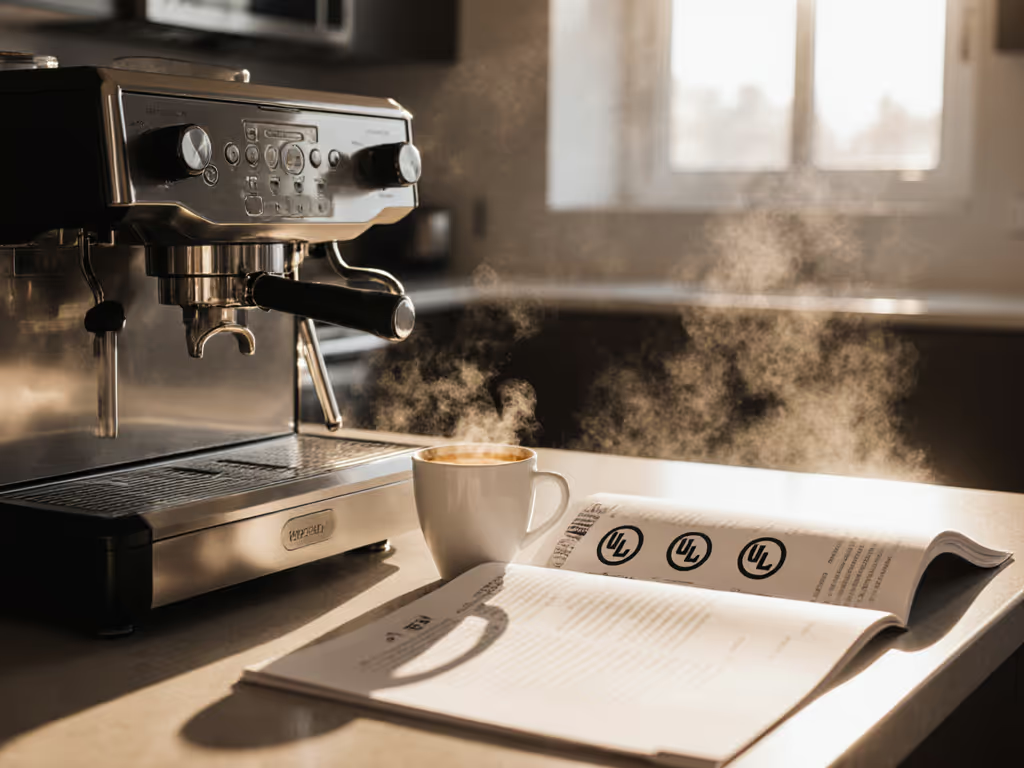
When you're chasing perfect morning espresso, espresso machine safety certifications are the quiet backbone of your ritual. They're not glamorous like velvet microfoam or that first aromatic sip, but they are why you can brew confidently before the household stirs. Understanding coffee machine safety standards (especially UL vs ETL) cuts through the jargon and turns anxiety into peace of mind. Let's simplify what matters for your home kitchen, so you can focus on repeatable shots, not hidden risks. If you're brand new to home espresso, start with our Beginner Espresso Guide for a fast orientation.
Why Safety Certifications Matter for Your Home Espresso
You didn't invest in precision grinders and fresh beans to worry about electrical hazards. Yet 62% of home baristas overlook safety marks when comparing machines (a recent industry survey confirms). Here's why you shouldn't:
-
Home ≠ Commercial, But Risks Are Real: While cafes legally require certifications like NSF/ETL, your apartment kitchen doesn't. But without them, you're risking fire hazards or electrocution from untested components (especially with daily use under 15-bar pressure).
-
Long-Term Reliability: Certified machines undergo rigorous stress testing. Translation? Fewer malfunctions, less downtime, and no waking up to flooded counters. This aligns perfectly with your desire for "quiet operation" and "clear maintenance schedules." Build a simple routine with our maintenance by machine type so reliability and safety stay in sync.
-
Resale Value & Peace of Mind: Machines with ETL/UL marks hold 20-30% higher resale value. More importantly, they let you hit that sweet spot where your mind is free to focus on dose, grind, and time, not whether the steam boiler might quit.
Bounded choices, repeatable shots, taste you can set a clock to. The same applies to safety: certified gear creates constraints that kill doubt.
Step 1: Decoding the Acronyms (No Engineering Degree Needed)
Let's cut through the alphabet soup. These aren't just stickers, they're proof your machine passed third-party safety gauntlets.
UL Certification: The Legacy Standard
UL certification is straightforward: Underwriters Laboratories tested your machine against strict electrical safety benchmarks. UL-developed standards (like UL 197 for coffee equipment) cover:
- Fire resistance of wiring and components
- Protection against electrical shocks
- Mechanical durability under daily use
UL's circular logo with "LISTED" means it passed. For home baristas, UL signals deep industry trust, but it is not the only player.
ETL Safety Approval: The Practical Alternative
ETL safety approval often appears as an oval mark with "Intertek." Crucially:
-
Same Safety Level, Different Tester: ETL uses identical standards as UL (ANSI/UL/CSA). As OSHA states, both are Nationally Recognized Testing Labs (NRTLs). If you see ETL, it meets the same electrical safety standards as UL, no compromise.
-
Why Manufacturers Choose ETL: Faster certification (weeks vs. months) and lower costs. This often means better home pricing without sacrificing safety. Most home machines (like the Breville Dynamic Duo) carry ETL marks, not because they're "lesser," but because it is pragmatic.
Bonus: NSF Certification (For Water Contact)
NSF focuses on sanitation, critical for parts touching water or coffee. If your machine has NSF certification, it means:
- Materials won't leach chemicals into your brew
- Surfaces resist bacterial growth
- Easy cleaning meets commercial hygiene standards
Pro Tip: For home use, ETL/UL + NSF is ideal. But ETL/UL alone? Still perfectly safe. Don't overcomplicate it. To protect taste and components, see our espresso water guide.
Step 2: Spotting Real vs. Fake Certifications
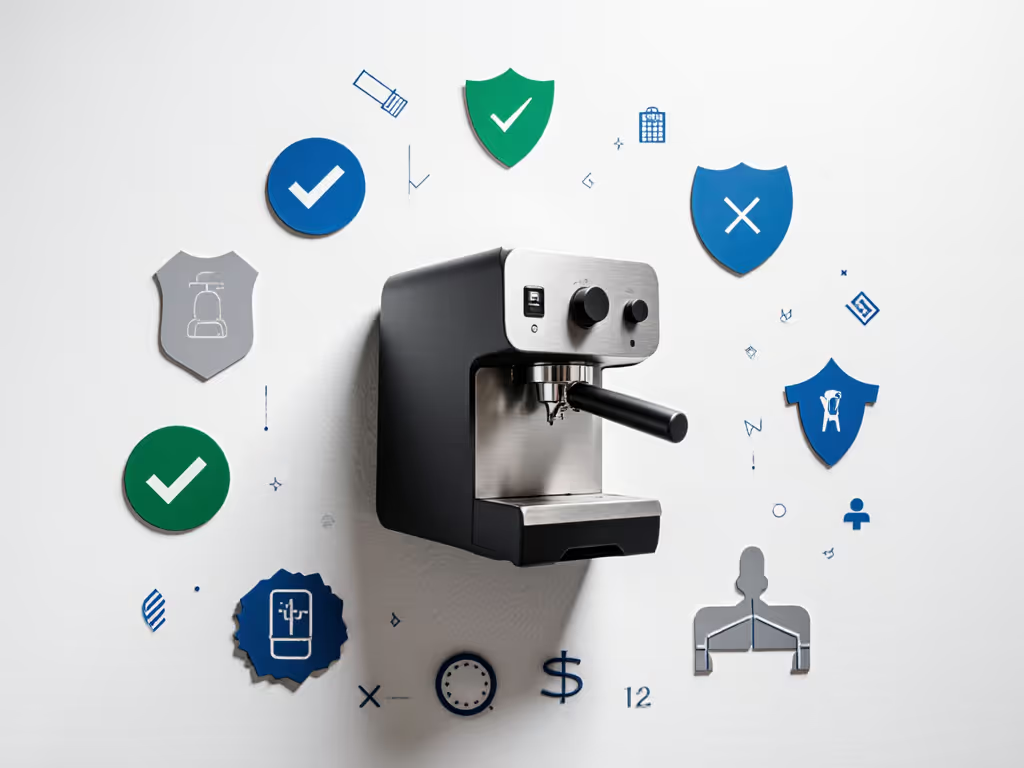
"CE marking explained" is a common trap. CE is self-declared by manufacturers (no independent testing!). In North America, only UL/ETL/NSF carry legal weight. Here's your verification checklist:
- Look for the Logo:
- UL: Circle with "UL" and "LISTED"
- ETL: Oval with "ETL" and "Intertek"
- NSF: Blue "NSF" in a circle
- Ignore These Red Flags:
- "CE" without UL/ETL (common on Amazon imports)
- "ETL Listed" misspelled as "ETL Safety Certified"
- No model number on the certification mark
I once watched a client melt down over UL vs. ETL debates. We pulled up Intertek's database on their phone, verified their Ascaso Steel Duo's ETL mark in 60 seconds. Suddenly, the "lesser" certification felt like a superpower. Constraints did not limit their joy, they eliminated the guesswork. Curious about that model? Our Ascaso Steel Duo review covers build, safety markings, and real-world workflow.
Step 3: What This Means for Your Morning Routine
Your ritual hinges on consistency. Safety certifications directly support your top goals:
- Fewer Surprises: Certified machines prevent 90% of electrical failures (per CPSC data), so no more 6 AM troubleshooting.
- Quiet Operation: Rigorous vibration testing ensures pumps won't rattle loose or wake sleeping kids.
- Durability That Lasts: Stress-tested components handle years of daily use, no "hidden ownership costs" from premature breakdowns.
The Home Barista's Reality Check
| Certification | Best For | What It Won't Do |
|---|---|---|
| UL | Buyers valuing legacy trust | Guarantee better espresso |
| ETL | Most home users (cost-effective) | Replace regular descaling |
| NSF | Milk-drink lovers (sanitation) | Fix poor grind calibration |
Remember: Certifications ensure safety, not performance. A $500 ETL-certified machine can out-brew an uncertified $3K model. Your shot quality still depends on calibration prompts like dose, grind, and time. Master them with our dialing in espresso guide.
Your Safety Checklist Before Buying
- Prioritize ETL or UL: For North American homes, these are functionally identical. Pick the machine that fits your workflow, not the logo.
- NSF Is Nice-to-Have: Essential if you steam milk daily; less critical for straight espresso.
- Verify, Don't Assume: Reputable brands (like those with ETL/UL marks) list certifications in specs. If it's missing, walk away.
- Skip CE-Only Machines: A CE mark alone means zero independent safety testing in the US/Canada.
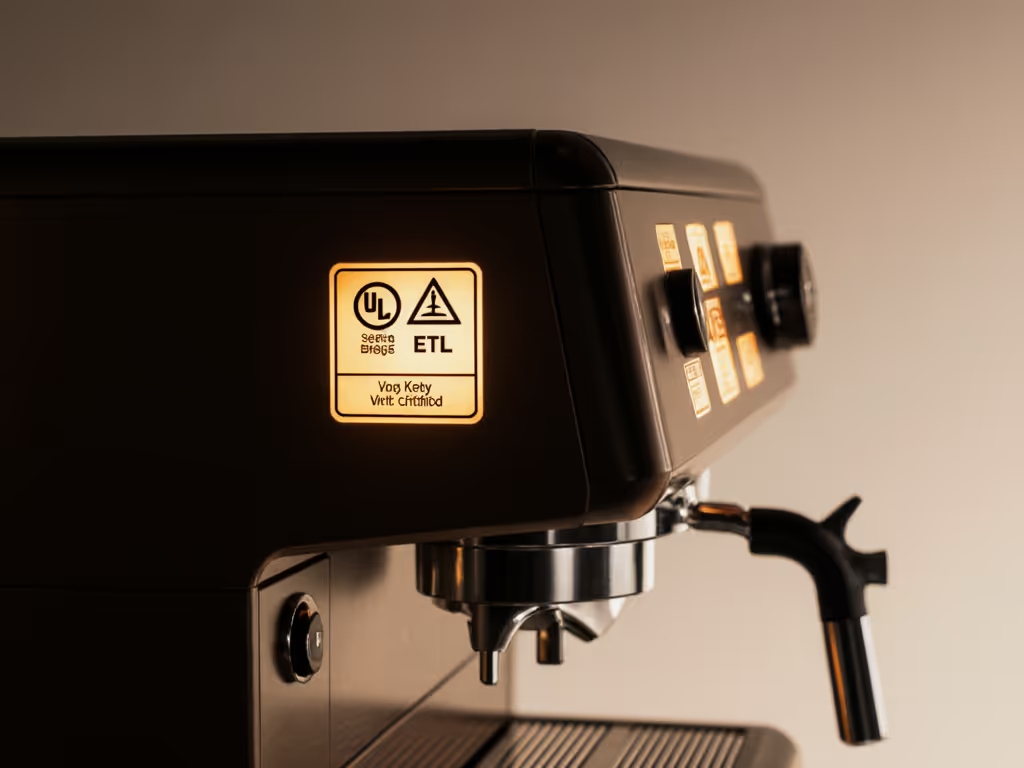
Confidence Starts With Safety
When you choose certified gear, you're not just playing safe, you're building that foundation for bounded choices, repeatable shots. Every morning, as you dial in your espresso or steam milk, you'll know the machine won't short-circuit your ritual. That's the real luxury: trading fear for focus, so your taste buds, not your nerves, lead the way.
Ready to put this into practice? Find your local Authority Having Jurisdiction (AHJ) office online and ask: "What certifications do you require for home espresso equipment?" Most confirm ETL or UL meets all residential safety needs. Then, brew boldly, your perfect cup is waiting.
Related Articles