Portable Espresso: Pod Machine vs Manual Review
By Luca Moretti • 2nd Dec
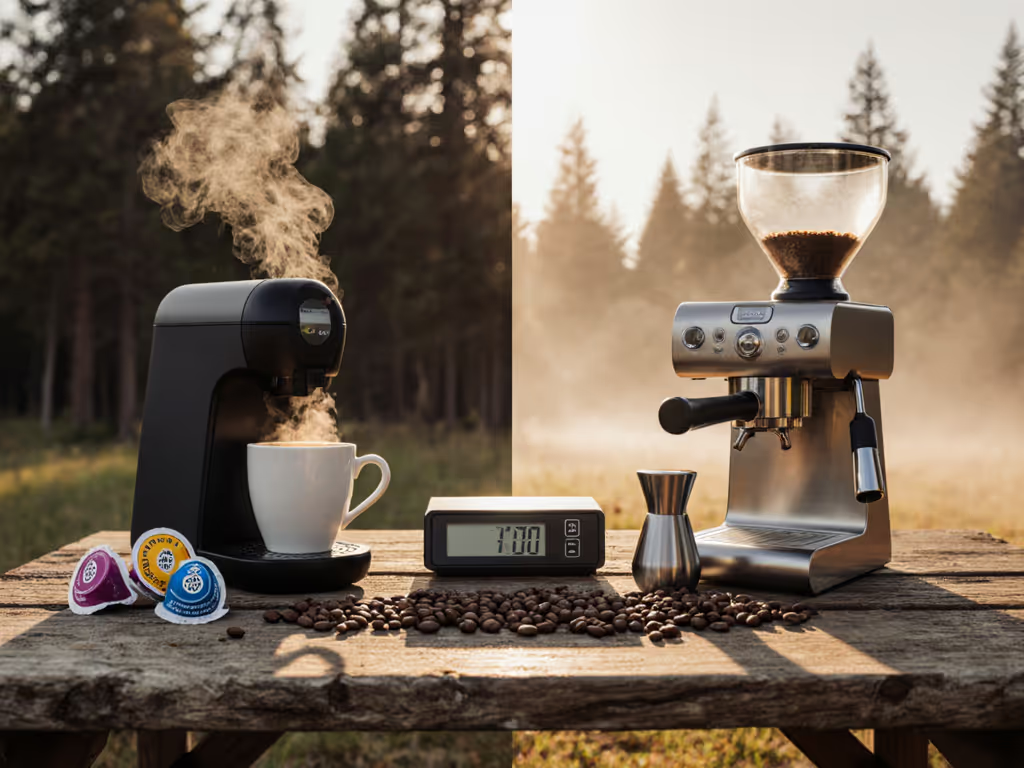
When your morning sanity depends on a perfect espresso but your kitchen space is tighter than a puck after a firm tamp, the choice between a portable espresso machine and a pod espresso coffee machine becomes critical. I've been there, watching beginners freeze at grinders, overwhelmed by variables before their first sip. That's why I brought a kitchen timer and a three-setting card: dose, grind, time. We brewed three shots, circled favorites, and locked settings. Next morning, same card, same cup. That's how constraints create confidence; repeatability breeds better taste. Let's cut through the noise with a practical comparison that respects your time, counter space, and coffee standards.
Today's portable solutions fall into two distinct camps, each with its own rhythm and ritual. Whether you're a busy professional racing against the clock or a coffee enthusiast seeking café-quality moments on the go, this numbered listicle delivers the clear boundaries you need to make your choice without second-guessing. Let's explore what really matters when espresso meets mobility. For a broader overview of machine categories and who they suit, see our manual vs semi-auto comparison.
#1: The Morning Rush Reality Check
Let's be honest, your pre-coffee brain isn't equipped for decision fatigue. When your alarm goes off, you need coffee, not a coffee laboratory.
Pod machines excel here with their one-button operation: insert pod, press, done. This bounded simplicity means you're extracting within 30 to 60 seconds, ideal for those "can't function before coffee" mornings. Perfect for office pantries or tiny apartments where every second counts. If you're eyeing Nespresso, learn how Original vs Vertuo differ in capsule styles, drink sizes, and long‑term flexibility.
Manual portable espresso makers demand more engagement (grinding, dosing, tamping) but reward you with complete control. Models like the WACACO Minipresso GR require 3 to 5 minutes of active involvement but give you freedom to experiment with different beans and profiles. The trade-off? You're trading immediacy for craftsmanship.
The best choice isn't about which is "better", it's about which aligns with your morning reality. If you're measuring usable time in single-digit minutes before work, pod simplicity might save your sanity. If you cherish the ritual as part of your wake-up process, manual gives you a mindful coffee moment before the day begins.
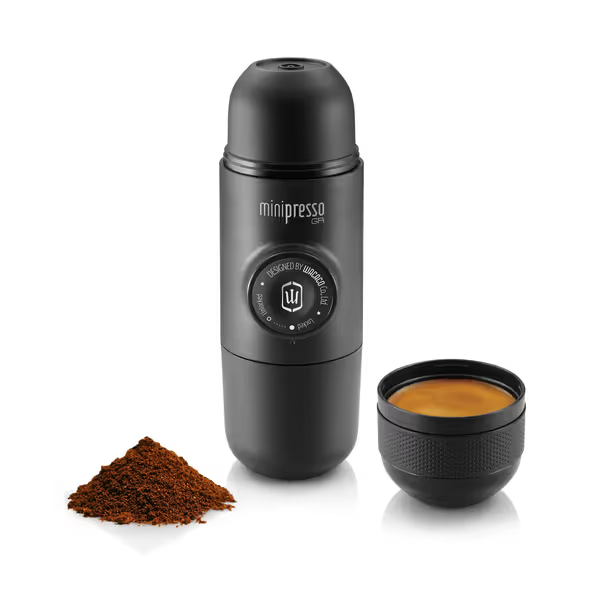
WACACO Minipresso GR
Authentic espresso anywhere, anytime, with ground coffee and no electricity.
$43.92
OperationManual, no battery/electricity needed
OperationManual, no battery/electricity needed
Pros
Ultra-portable for travel and outdoor use
Uses your preferred ground coffee for flavor flexibility
Produces quality espresso with rich crema quickly
Cons
Requires pre-heated boiling water (cannot heat water)
Cleaning can be perceived as time-consuming by some
Customers praise the espresso machine's quality, noting it makes a great shot in under 3 minutes, and appreciate its portability as a travel device. The machine is simple to use and produces superior results, with one customer mentioning it works better than expensive electric models.
Customers praise the espresso machine's quality, noting it makes a great shot in under 3 minutes, and appreciate its portability as a travel device. The machine is simple to use and produces superior results, with one customer mentioning it works better than expensive electric models.
#2: Taste Test: What Your Palate Actually Wants
Let's cut through marketing fluff, expert blind taste tests consistently show manual machines produce superior flavor. According to industry testing, manual machines average 87% on taste scores versus 72% for pod machines. Why? Fresh beans for espresso ground immediately before brewing release volatile compounds that create complex flavor notes that pre-ground pods simply can't match.
The pod espresso coffee machine delivers consistent, but limited, flavor. Each pod offers identical taste, which is comforting but eventually becomes predictable. You'll rarely experience that "wow" moment when variables align perfectly for exceptional sweetness.
Manual portable espresso makers require practice but open the door to sensory exploration. With simple calibration prompts, you can develop sensory anchors: Does your shot taste sweet, bitter, or flat? That quick assessment becomes your compass for adjustments. Bounded choices, repeatable shots: taste you can set a clock to.
I've watched beginners transform their morning ritual by focusing on just three checkpoints: dose (17g), time (28 to 32 seconds), and sensory feedback (sweetness). Within a week, they're extracting consistently better shots than most pod machines deliver.
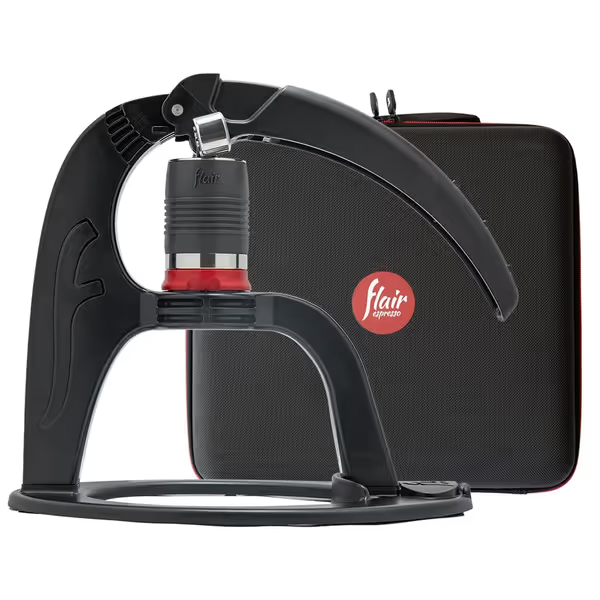
Flair NEO Flex with Carrying Case
Portable manual espresso for beginners, consistently great taste anywhere.
$119
4
Pressure6-9 BAR
Pressure6-9 BAR
Pros
Produces professional-quality, 9BAR espresso with crema.
Dual portafilters allow beginner ease or advanced control.
Integrated pressure gauge and no-preheat brewing cylinder for consistency.
Cons
Mixed feedback on durability, particularly plunger and gauge.
Some users find cleaning and functionality inconsistent.
Customers find it produces amazing strong shots with crema, great for beginners, and offers good value. However, durability receives mixed feedback.
Customers find it produces amazing strong shots with crema, great for beginners, and offers good value. However, durability receives mixed feedback.
#3: The Learning Curve: From Frustration to Flow
Let's address the elephant in the room: manual machines look intimidating. But what if I told you the learning curve flattens dramatically with structured guidance?
Pod machines require zero learning curve, and you're competent from day one. But that "competence" comes with a ceiling: you'll never extract more quality than the pod allows. No room for growth, just consistency within narrow boundaries.
Manual portable espresso makers have a steeper initial climb, but with the right framework, you'll find your groove faster than you think. Focus on bounded options and defaults:
- Start with these simple recipes:
- Dose: 17g (use the provided scoop as your default)
- Grind: Medium-fine (like table salt)
- Time: Target 28 to 32 seconds for your first 5 shots
- After each shot, ask:
- Was it sweet, bitter, or flat? (your sensory anchor)
- Did it run too fast or too slow?
This checkpoint system turns overwhelm into actionable feedback. For a step-by-step process, follow our dialing-in guide to get reliable shots fast. I've seen beginners dial in satisfying shots within three mornings by following these simple steps (not perfect shots, but good enough shots that improve with practice).
#4: Hidden Costs You're Not Considering
Price tags tell only part of the story. Let's talk about what you're really paying for:
Pod machines cost less upfront ($50-$200) but more long-term. Premium pods can cost up to $100 per kilo of coffee (significantly more than quality beans). You're also locked into a single brand's ecosystem with limited flavor options. And let's not ignore the environmental impact: mountains of non-recyclable pods accumulating in landfills.
Manual portable espresso makers require a higher initial investment ($50-$150) but deliver dramatic long-term savings. Quality beans cost about $20 to $30 per kilo (less than a third of pod costs). Models like the Flair NEO Flex with its dual portafilters let you grow your skills while controlling variables: start with the Flow Control for consistency, then switch to the Bottomless for full control when you're ready.
Consider also maintenance costs: pods create zero cleaning burden, while manual machines require regular cleaning after use. But with proper care (a quick rinse takes 30 seconds), these devices last for years, unlike pod machines whose internal components often fail after 1 to 2 years.
#5: Space, Noise & Cleanup: The Real-Life Factors
Your kitchen isn't a café: space, noise, and cleanup time matter more than espresso purists admit.
Pod machines win on compactness and quiet operation. Most fit in a small cabinet and operate silently, perfect for shared living spaces where waking others is unacceptable. Cleanup is virtually nonexistent: eject the pod and you're done. No wet pucks, no messy grounds, no water drips.
Manual portable espresso makers require more space and generate more noise (the pump action can be loud) but offer superior cleanup flexibility. The Aeropress Clear, for example, cleans in seconds, just pop out the used grounds and rinse. No complicated parts, no water reservoirs to empty. Models with removable brewing heads (like the Flair NEO Flex) make thorough cleaning simple.
Consider your specific constraints: Do you live in a studio apartment with a sleeping partner? Pod machines might be worth the trade-offs. Do you have a dedicated coffee nook where morning noises won't disturb others? Manual could be your perfect match.
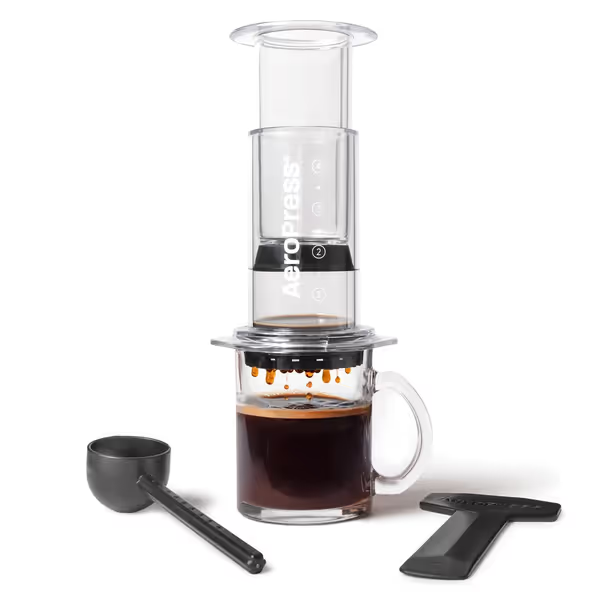
AeroPress Clear Coffee Press
Versatile, fast, and consistent coffee anywhere, without bitterness or grit.
$37.46
Brew Time2 Minutes
Brew Time2 Minutes
Pros
3-in-1 brewer: French Press, pour-over, espresso style.
Shatterproof Tritan, ideal for travel and camping.
Patented air pressure for less bitterness, more flavor.
Effortless cleanup: just pop and rinse.
Cons
Manual brewing requires active participation.
Optimal results benefit from freshly ground beans.
Customers find this coffee maker produces excellent results, noting it's better than a French press and less bitter than traditional methods. The device is simple to use and clean, and customers appreciate its quick brewing time, with one mentioning it works best with freshly ground beans. They value its portability for travel and camping, and consider it well worth the price.
Customers find this coffee maker produces excellent results, noting it's better than a French press and less bitter than traditional methods. The device is simple to use and clean, and customers appreciate its quick brewing time, with one mentioning it works best with freshly ground beans. They value its portability for travel and camping, and consider it well worth the price.
#6: Your Perfect Match: Which Machine Fits Your Life
After coaching hundreds of home baristas, I've found three clear scenarios where one choice clearly outperforms the other:
Choose a pod espresso coffee machine if:
- You're incredibly time-poor and need coffee in under 60 seconds
- You have limited counter space and zero tolerance for morning noise
- You're genuinely happy with the taste of pod coffee (no "I wish it tasted more like...")
- You prioritize convenience over customization and don't mind higher per-cup costs
Choose a manual portable espresso maker if:
- You want café-quality espresso with control over taste variables
- You're willing to invest 10 to 15 minutes to learn basic technique
- You value sustainability and lower long-term costs
- You see coffee as a ritual worth mastering rather than just caffeine delivery
Here's the sweet spot many overlook: Start with a manual machine that offers bounded choices, like the Flair NEO Flex with its dual portafilters. Begin with the Flow Control for immediate success, then graduate to the Bottomless portafilter as skills develop. This approach gives you the best of both worlds: beginner-friendly simplicity that grows with your expertise. Need help matching daily habits to a machine? Use our routine-based selection guide.
Finding Your Confidence Through Constraints
The perfect portable espresso solution isn't about having the most features: it's about having the right constraints for your life. Constraints create confidence; repeatability breeds better taste. Whether you choose a portable espresso machine or a pod espresso coffee machine, focus on creating a simple, repeatable workflow that fits your reality.
I've watched beginners transform their coffee experience not by chasing perfection, but by locking in three simple variables and building from there. Start small, master the basics, then expand your boundaries when you're ready.
Remember Luca's mantra: lock the recipe, enjoy the routine. Your perfect morning cup isn't about having the most expensive gear, it's about creating a reliable ritual that makes you smile, sip after sip.
If you're still weighing your options, I recommend trying both approaches: borrow a friend's manual device for a weekend, or pick up a pod machine from your local store to test the one-button convenience. Sometimes the best way to choose is to experience both rhythms and see which one syncs with your life. The most important ingredient isn't the machine, it's your commitment to showing up for the ritual, day after day.
Related Articles