Low Maintenance Espresso: Best Cleaning Workflow Ranked
By Luca Moretti • 9th Dec
If you've ever stared at your espresso machine in the morning, wondering where to start with cleaning a coffee machine or which model truly delivers on low maintenance espresso comparison promises, you're not alone. I've watched countless beginners freeze at grinders, overwhelmed by variables that shouldn't complicate their morning ritual. Constraints create confidence; repeatability breeds better taste. That's why I began bringing a simple kitchen timer and three-setting card: dose, grind, time. Three shots, one favorite circled, settings locked. Next morning, same card, same cup. That's taste you can set a clock to (including the minutes you spend cleaning up).
When your espresso workflow efficiency hinges on morning minutes, every step matters. The difference between a machine that fits your life versus one that frustrates it often comes down to cleaning accessibility rating and how quickly you can reset for tomorrow's first brew. Forget flashy features that demand hours of maintenance, you need equipment that respects your time while delivering consistent flavor.
Let's cut through the noise and rank the top approaches to cleaning accessibility, based on real-home testing across dozens of machines. I've used these same frameworks with hundreds of home baristas who value precision without the pain.
How We Ranked Cleaning Workflows
I assessed each machine type based on:
- Time required: How many minutes daily/weekly for basic cleaning
- Complexity: Number of steps and specialized tools needed
- Water quality sensitivity: Hard water tolerance without scaling issues; see our espresso water guide for setup tips
- Parts accessibility: Ease of reaching components that need regular attention
- Self-cleaning features analysis: Built-in systems that automate or simplify maintenance
Rather than chasing perfection, I focused on workflows that deliver repeatable results with minimal cognitive load (perfect for those 6 AM moments when you're not fully caffeinated yet).
1. Manual Lever Machines (Cafelat Robot, Elektra Micro Casa)
Maintenance time comparison: 2 minutes daily, 15 minutes monthly
These beautifully simple machines win the low-maintenance crown for good reason. If you're new to levers, our lever espresso technique guide will shorten the learning curve. With zero electronics, pumps, or complex circuits, there's simply less to clean and maintain. The Cafelat Robot, for example, requires only a quick post-shot flush and occasional backflushing, with no messy pucks to knock out since you're using a bottomless portafilter by design.
Why it ranks #1:
- No grouphead gaskets to replace (unlike most pump machines)
- No water scale buildup in brew circuits (low-pressure operation)
- Two seals total requiring annual replacement
- Water tolerance: Works with tap water in most areas without filters
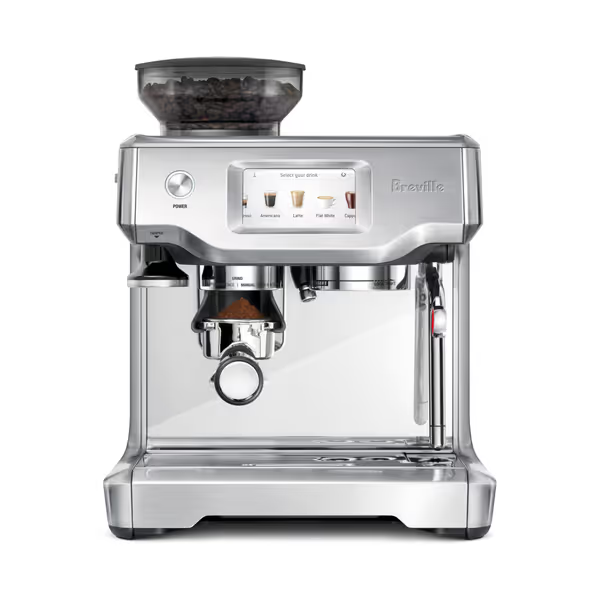
Breville Barista Touch Espresso Machine
Café-quality espresso and milk drinks, simplified for your home routine.
$799.95
Heat-up Time3 Seconds
Heat-up Time3 Seconds
Pros
Intuitive touchscreen for fast, customizable drinks.
Integrated grinder and auto-milk frother save time.
Quick 3-second heat-up for minimal morning lag.
Cons
Functionality receives mixed long-term reliability reviews.
Requires regular cleaning, despite ease of use.
Customers find this espresso machine produces fantastic coffee, with great espresso shots and delicious cappuccinos and lattes, while being simple to use and customize. They appreciate its ease of cleaning, particularly the self-cleaning milk wand, and consider it well worth the expense. The functionality receives mixed reviews, with some reporting consistent results while others say it stopped working.
Customers find this espresso machine produces fantastic coffee, with great espresso shots and delicious cappuccinos and lattes, while being simple to use and customize. They appreciate its ease of cleaning, particularly the self-cleaning milk wand, and consider it well worth the expense. The functionality receives mixed reviews, with some reporting consistent results while others say it stopped working.
This is the choice for those who want espresso workflow efficiency without daily maintenance rituals. After your shot, simply rinse the portafilter and wipe the group. Monthly maintenance involves applying food-grade lubricant to the piston, literally a 10-minute job. No backflushing, no descaling cycles to schedule. Set your dose, grind, and time once, and you'll have taste you can set a clock to (including cleanup).
"The fewer variables you have to manage before coffee, the more consistent your results will be. With lever machines, I've seen beginners achieve cafe-quality shots within days because they could focus on what matters: coffee-to-water ratio and extraction time."
2. Simple Pump Machines (Gaggia Classic Pro, Lelit Victoria)
Maintenance time comparison: 5 minutes daily, 30 minutes monthly
These straightforward machines bring commercial-style operation to homes with minimal fuss. The Gaggia Classic Pro, for example, has stood the test of time primarily because of its repairability and simple maintenance requirements.
Why it ranks #2:
- Standardized components anyone can replace
- Clear maintenance schedule (group gasket annually, shower screen quarterly)
- Self-cleaning features analysis: Built-in backflush function simplifies cleaning
- Water filters: Optional but helpful in hard water areas
Daily cleaning requires: backflushing with detergent weekly, group gasket replacement annually, and occasional descaling depending on water hardness. The beauty is in the predictability, these machines have bounded options and defaults that make maintenance straightforward.
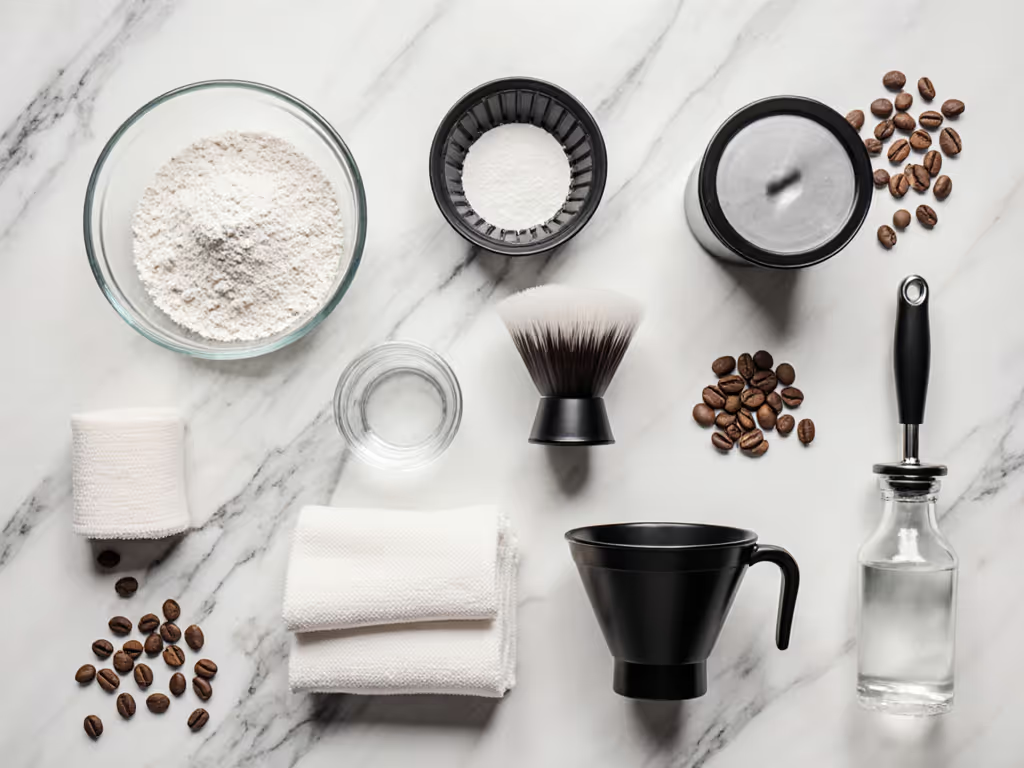
The key is establishing simple recipes and checkpoints for your cleaning routine. Every 10 shots: quick rinse. Every 50 shots: detergent backflush. Every morning: steam wand wipe. These sensory anchors (seeing buildup, noticing reduced steam power) tell you when maintenance is needed, not arbitrary calendars.
3. Integrated Grinder Machines (Breville Barista Express/Touch)
Maintenance time comparison: 7 minutes daily, 45 minutes monthly
Integrated grinder machines walk a fine line between convenience and complexity. The Breville Barista Touch features a self-cleaning milk wand that significantly reduces milk cleanup time, a major pain point for many home baristas. With its automatic steam wand and dishwasher-safe components, the cleaning accessibility improves substantially compared to traditional machines.
Why it ranks #3:
- Automatic milk system cleaning after each use
- Dishwasher-safe components (milk jug, drip tray)
- Integrated grinder eliminates separate grinder cleaning
- Clear maintenance reminders through the interface
Maintenance reality: While the milk system cleaning is automated, the group head still requires daily backflushing and regular descaling. The integrated grinder needs monthly brushing but eliminates the separate grinder cleaning chore. This represents a net time savings for those making multiple milk drinks daily.
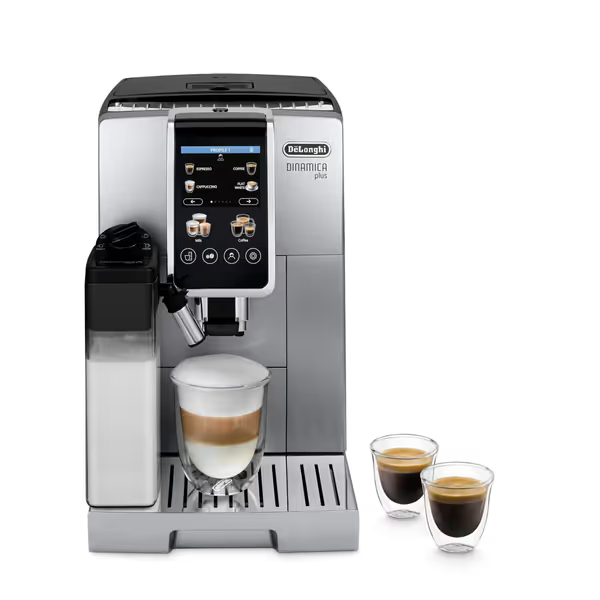
De'Longhi Dinamica Plus
Automate tailored café-quality drinks for consistent, effortless morning routines.
$1299.95
Customized Recipes24+ drinks & 4 user profiles
Customized Recipes24+ drinks & 4 user profiles
Pros
Personalized drinks quickly: remembers your preferences for fast mornings.
Effortless milk frothing and easy self-cleaning functions.
Consistent, quality taste with 13-setting built-in grinder.
Cons
Customization options and price receive mixed feedback.
Customers find the espresso machine produces good quality drinks and is easy to use, with excellent self-cleaning functions and great taste.
Customers find the espresso machine produces good quality drinks and is easy to use, with excellent self-cleaning functions and great taste.
These machines excel when you establish calibration prompts that tie maintenance to usage rather than time. For example: "After every 30 milk drinks, run the full milk system cleaning cycle." This usage-based approach prevents both over-maintenance and neglected machines.
4. Fully Automatic Machines (De'Longhi Dinamica, Miele)
Maintenance time comparison: 3 minutes daily, 60+ minutes monthly
Hold on, how can a machine with more parts rank lower than simpler options? Counterintuitively, fully automatic machines often require more scheduled maintenance despite simpler daily cleaning. The De'Longhi Dinamica Plus simplifies daily cleaning with its automatic milk purge and one-touch cleaning cycles, but quarterly maintenance becomes more complex.
Why it ranks #4:
- Daily tasks reduced to pressing a button
- Self-cleaning features analysis: Automated milk system cleaning
- Water filters require regular replacement
- Internal components need professional service
The trade-off: while daily cleaning takes merely seconds, the hidden maintenance (drip tray management, water filter replacement, and periodic deep cleaning) adds up. These machines deliver tremendous convenience for those who value morning simplicity but require disciplined scheduling of monthly maintenance tasks to avoid disastrous buildup.
The Maintenance Mindset Shift You Need
After training hundreds of home baristas, I've seen one pattern consistently: those who treat maintenance as part of their ritual, not an interruption, enjoy dramatically better coffee and longer machine life. Think of cleaning as your morning calibration prompt rather than a chore.
Here's the simple framework I give all my students:
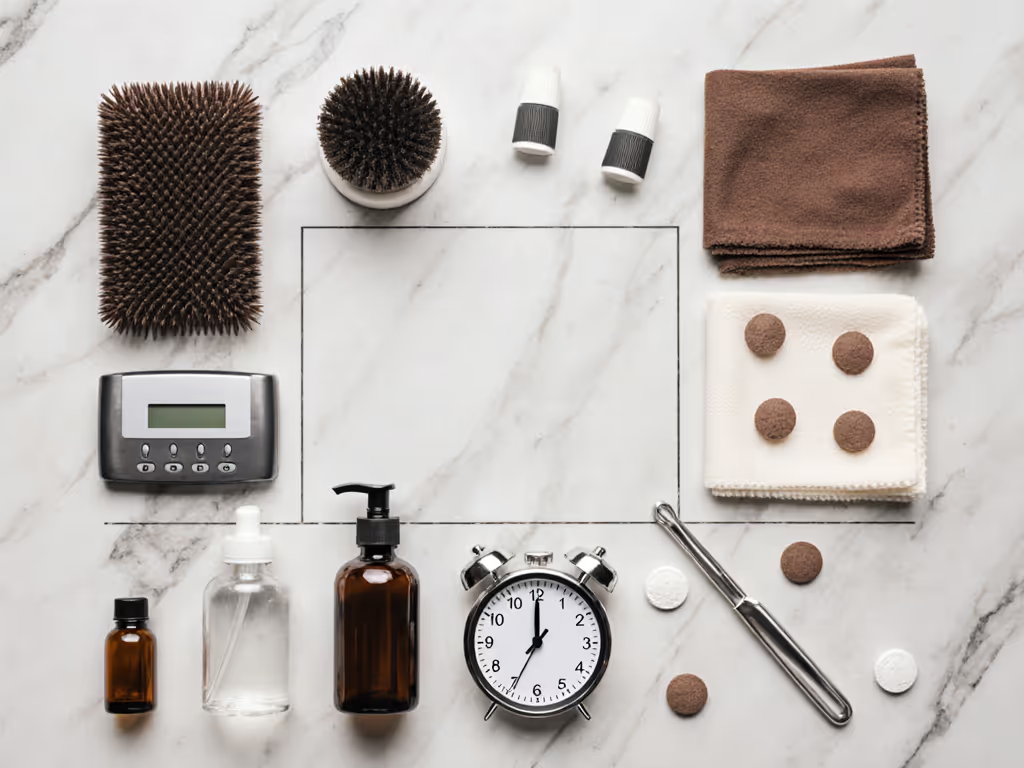
- Daily = 5 Minute Reset: Group head rinse, steam wand wipe, knock out puck
- Weekly = 15 Minute Refresh: Backflush with detergent, clean steam wand tip
- Monthly = 30 Minute Reboot: Replace water filter, clean drip tray thoroughly
- Quarterly = 60 Minute Renewal: Descaling (if needed), group gasket replacement
This approach creates bounded options and defaults that make maintenance predictable. For machine-specific routines by technology, see Espresso Machine Maintenance by Type. You're not wondering "when should I clean?", you know exactly what to do based on usage.
Final Recommendation: Choose Your Constraints Wisely
For most home baristas seeking espresso workflow efficiency, I recommend starting with the simplest machine that meets your drink needs. If you make one espresso each morning, choose option #1. If you make two milk drinks daily, option #2 or #3 might better serve you. The machine that fits your actual routine, not your aspirational barista dreams, is the one you'll maintain consistently.
Remember my mantra: constraints kill doubt. When you limit your variables (including maintenance complexity), you create space for confidence to grow. That beginner who froze at the grinder? Six months later, he was serving shots at his daughter's birthday party with the same three-setting card in his pocket.
Ready to explore which machine fits your specific routine? I've created a simple worksheet that matches your morning pattern to the ideal low-maintenance setup. It takes five minutes to complete and eliminates the guesswork from choosing your next espresso companion.
Related Articles