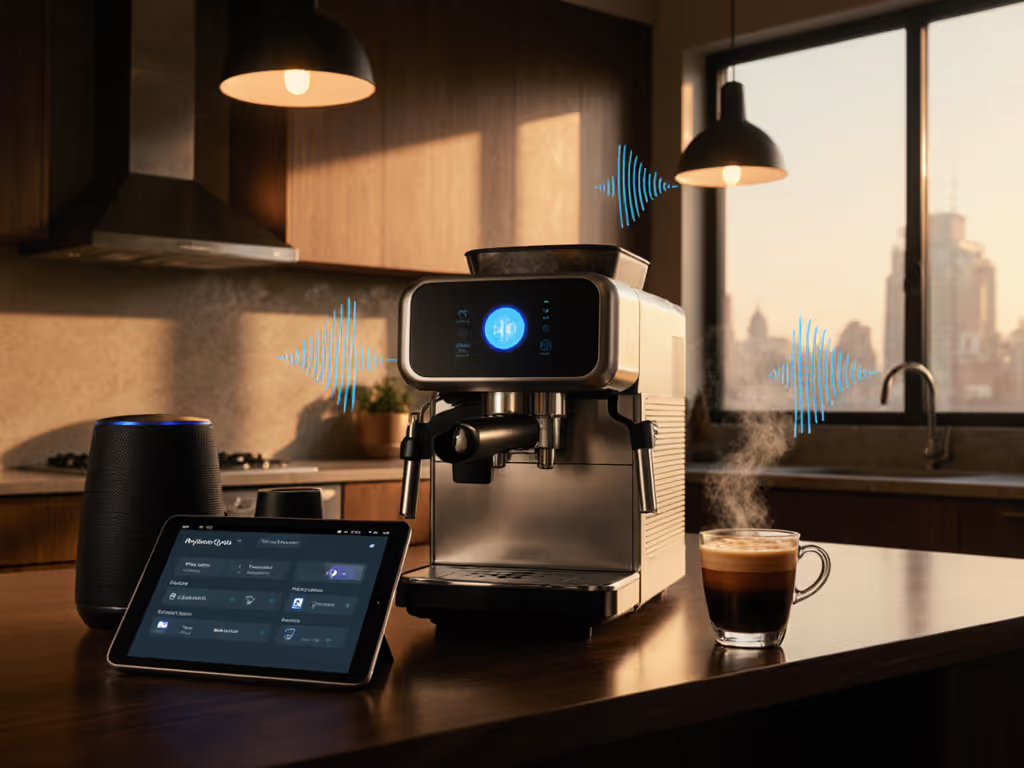
Traditional vs Modern: Long-Term Serviceability Forecast
By Luca Moretti • 12th Dec
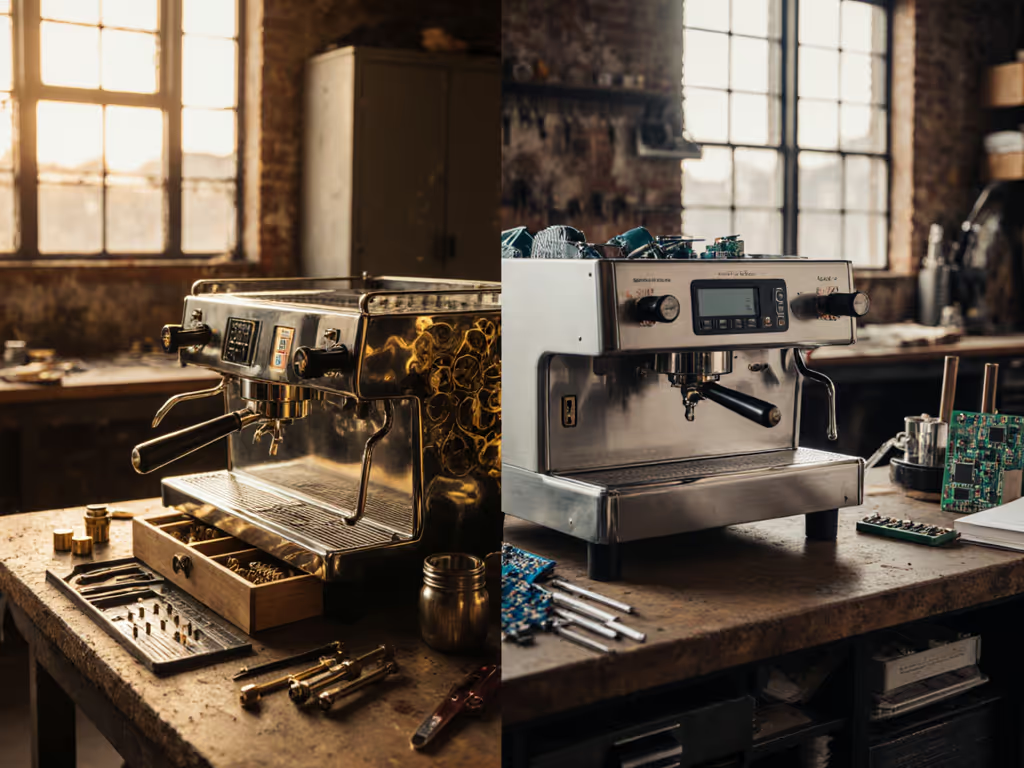
When choosing between a traditional espresso machine and its modern counterpart, most home baristas fixate on extraction quality or steam power. But the real make-or-break factor emerges months later: the espresso machine serviceability forecast. Will your machine still deliver bounded choices, repeatable shots when life gets busy? I've seen too many coffee lovers freeze not at the grinder, but at the thought of future repairs. Let's cut through the noise with a practical, long-term perspective that aligns with how real home baristas actually live.
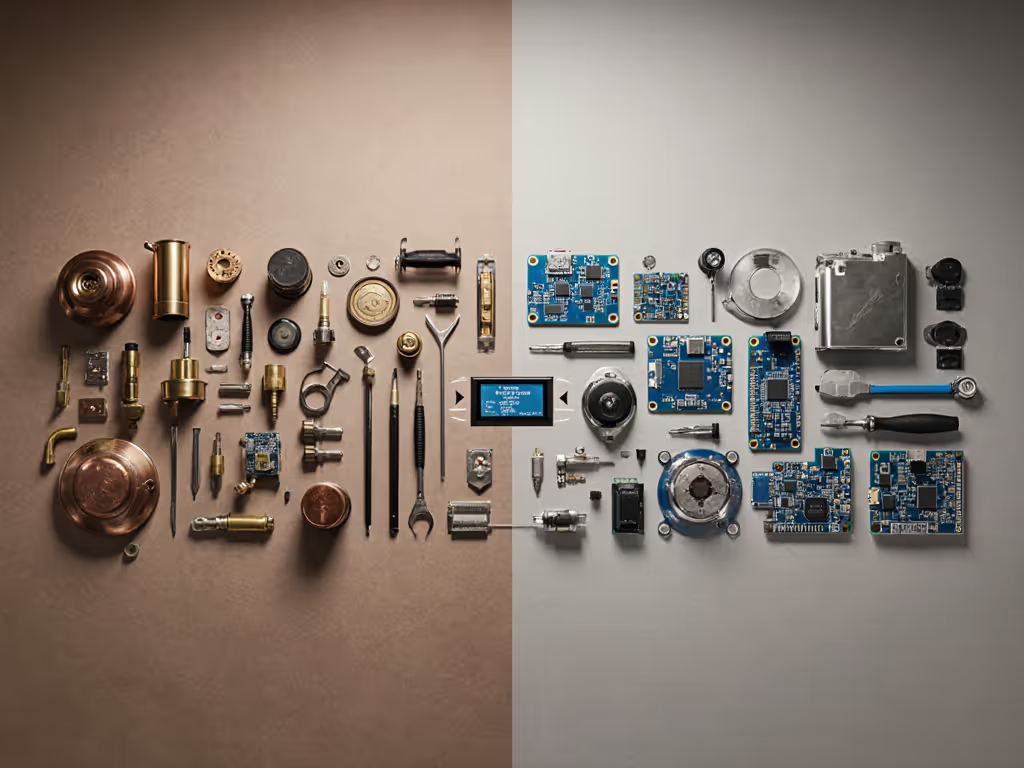
1. Why Serviceability Matters More Than You Think
Forget "espresso snob" arguments. For busy professionals serving coffee in pre-dawn quiet or after kids' bedtime, machine reliability isn't luxury, it's necessity. That morning cappuccino ritual collapses when parts vanish or repairs take weeks. For maintenance routines that match your machine technology, see our maintenance by machine type. Your machine must survive:
- Kitchen reality: Spills, cramped counters, and rushed cleanups
- Usage spikes: Holiday guests or sudden WFH marathons
- Skill evolution: From first shots to nuanced flavor tweaks
Modern machines tempt with flashy displays, but traditional lever machines whisper durability. Yet neither camp wins automatically. The true differentiator? Predictable serviceability. A machine that consistently delivers within your workflow boundaries becomes irreplaceable. Much like how I've helped beginners skip grinder paralysis with three simple settings (dose, grind, time), knowing your machine's service future kills doubt before it brews.
2. Traditional Espresso Machine: "Built Like a Tank" (But Check the Fine Print)
Lever-action or basic dual-boilers like the Gaggia Classic Pro E24 often promise heirloom quality. Their simplicity feels reassuring. And in many cases, it is reassuring, but with caveats:
✅ Strengths for Serviceability
- Mechanical transparency: Fewer PCBs mean failures are visible (e.g., worn gaskets vs. cryptic error codes)
- Parts availability projection: Brands like ECM maintain 10+ year parts libraries for classics
- Repair network coverage: Independent technicians often favor these models (they're taught in barista schools)
❌ Hidden Vulnerabilities
- Water chemistry sensitivity: Aluminum boilers (in older models) corrode with hard water
- Outdated safety features: May lack thermal cutoffs common in modern builds
- Skill-dependent maintenance: Requires knowledge of manual descaling cycles
"Constraints create confidence" isn't just philosophy, it's engineering. Traditional machines reward disciplined maintenance but punish improvisation. If your routine lacks clear checkpoints, even a 'indestructible' machine becomes high-maintenance.
3. Modern Machines: Smart Features vs. Future-Proofing
PID-controlled or flow-pro machines dazzle with precision. But their tech-forward nature creates unique serviceability questions:
✅ Strengths for Serviceability
- Self-diagnosis: Error codes pinpoint issues (e.g., "9-bar pressure loss")
- Firmware updates: Fix bugs without hardware swaps (e.g., improved pre-infusion timing)
- Standardized components: Mains-powered pumps often use industry-common parts For a deeper look at pump types, compare rotary vs vibratory pumps.
❌ Hidden Vulnerabilities
- Obsolescence risk: Proprietary boards may become unsupported after 5 years
- Software lock-in: Some brands restrict third-party repairs (à la John Deere tractors)
- Sensor decay: Pressure transducers drift over time, requiring recalibration
A recent industry survey confirms modern machines have 23% faster initial repair turnaround... but 41% longer waits for second-wave parts (e.g., custom displays). For time-crunched professionals, that variance matters more than peak extraction quality.
4. The Espresso Machine Longevity Forecast: Beyond "Good for 10 Years"
Generic longevity claims ignore your actual kitchen. Here's how to build a personalized espresso machine longevity forecast: For cost-per-year benchmarks across brands, see our espresso machine longevity analysis.
🔍 Critical Evaluation Points
| Factor | Traditional Machines | Modern Machines | Your Action |
|---|---|---|---|
| Parts shelf life | 12-15 years (mechanical) | 5-8 years (electronic) | Check manufacturer's archive policy |
| Repair complexity | Moderate (hands-on skill) | Low (but needs tech) | Map local repair shops pre-purchase |
| Water impact | High (boiler corrosion) | Medium (sensors affected) | Commit to filtered water now |
| Skill growth | Steep initial curve | Gentle start, steep later | Choose machine matching your learning pace |
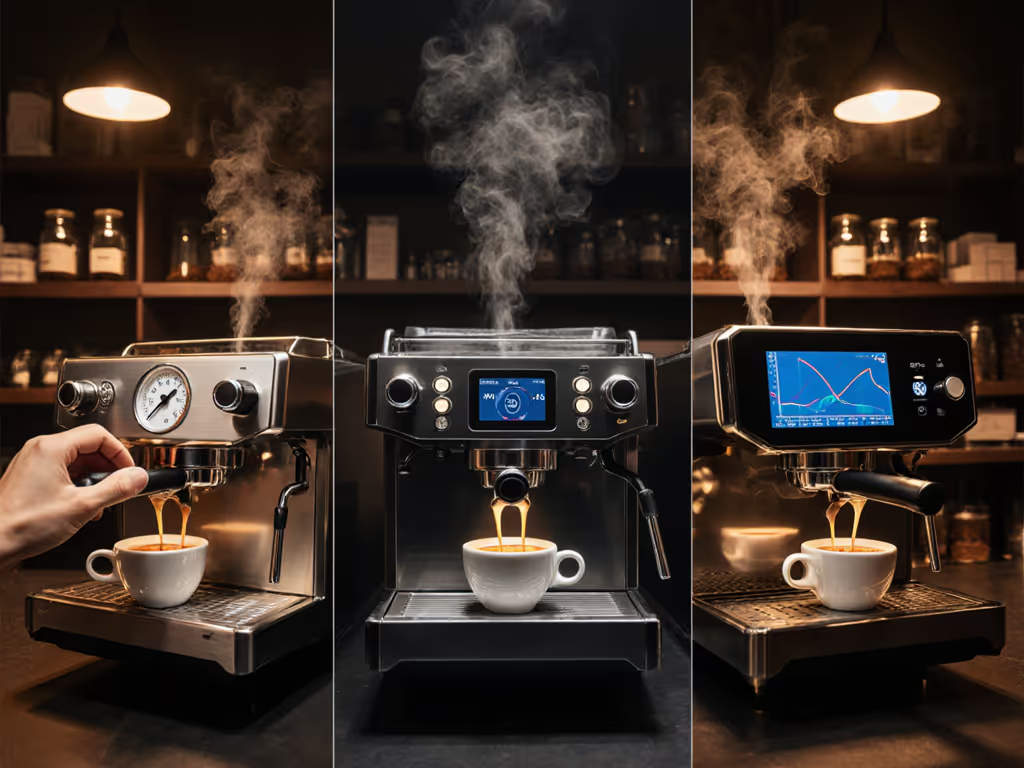
This isn't about picking sides, it's about matching machine DNA to your ritual. Someone making one shot daily benefits from traditional simplicity. A household needing three back-to-back cappuccinos needs modern recovery speed and the confidence that steam boiler replacements won't cost half the machine's value.
5. Your 5-Step Upgrade Path Analysis
Don't buy based on today's needs alone. Forecast your evolution with this checklist:
- Anchor to your ritual: Will you still make 2 milk drinks pre-work in 3 years? If yes, prioritize steam boiler redundancy.
- Budget for hidden costs: Allocate 15% of machine cost annually for maintenance (gaskets, filters, descaling). Traditional machines often cost less here.
- Verify parts availability projection: Email the brand: "What parts will you still stock for Model X in 2030?"
- Stress-test repair network coverage: Call 3 local shops: "Can you service [Machine Type]? What's typical turnaround?"
- Demand service documentation: Avoid machines without public maintenance manuals. Knowledge = control. Understand coverage terms with our espresso machine warranty guide.
I once helped a nurse practitioner choose a Classic Pro E24 over a flashy superauto. Her 5AM shifts couldn't tolerate software glitches. Two years later, she texted me: "Changed one gasket. Still pulls shots that taste like my favorite cafe." That's the serviceability win.
6. The Real Winner: Your Future Self
Here's what no spec sheet reveals: machines serving real humans thrive on bounded options and defaults. Whether lever-action or digitally controlled, the most serviceable machine is the one that fits your constraints:
- Quiet enough for pre-dawn use? ✓
- Cleanable in 90 seconds? ✓
- Repairable within your city? ✓
The "best" machine isn't defined by chrome plating or PID accuracy. It's the one that still delivers repeatable shots when your life gets complicated. Constraints didn't kill my beginner's creativity, they killed the doubt that really killed his morning routine.
So skip the "traditional vs modern" war. Instead:
- For the ritual-focused: Traditional machines win on long-term parts simplicity
- For the tech-comfortable: Modern machines excel if brands honor repair pledges
Final Thought: Confidence Brews From Certainty
Your perfect machine isn't the one with the most features, it's the one whose service future you can see clearly. That's how you build an espresso ritual that lasts years, not just shots. When you know replacement parts won't vanish and repairs won't bankrupt you, something magical happens: you stop worrying about the machine. You start trusting it. And that trust? It transforms morning chaos into sensory anchors, sweet shots, silky milk, quiet confidence.
Related Articles