
Espresso Machine Hard Water Solutions: Scale Prevention Strategy
By Kenji Tanaka • 29th May
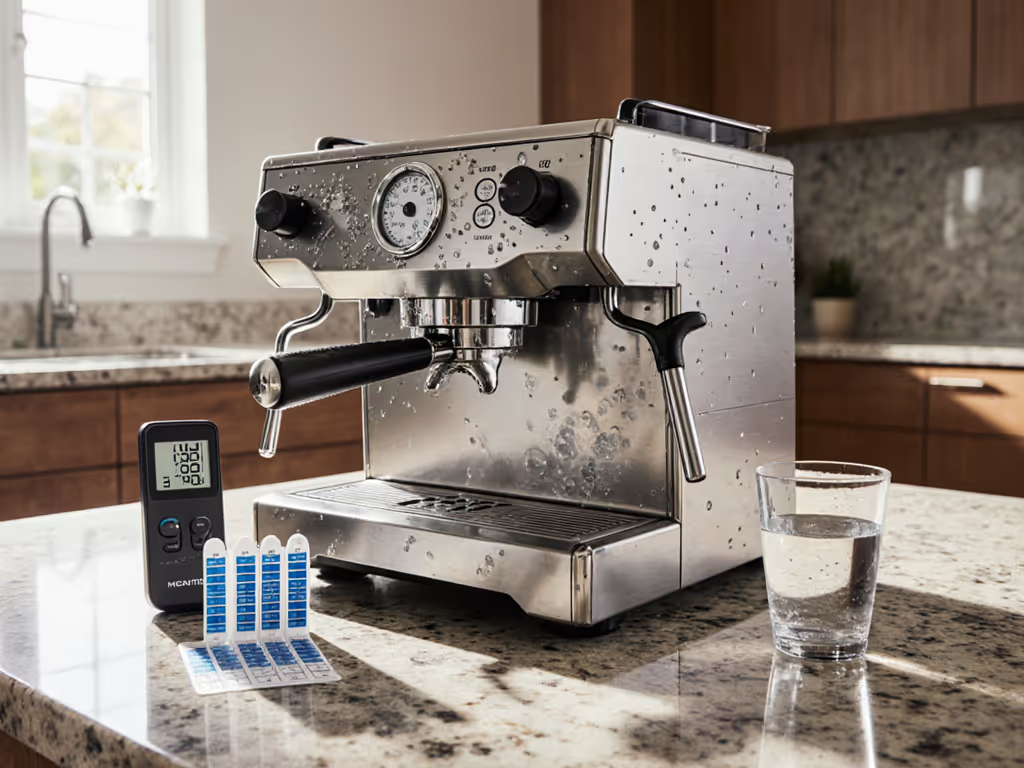
Espresso machine hard water solutions start with knowing your numbers and then building a scale prevention strategy that you can follow on autopilot. With a bit of espresso mineral management up front, you protect taste, uptime, and repair budgets for years.
Tools and basics: what you need before changing your water
Before you tweak anything, set up a simple, repeatable kit.
Tool list up front
- Water hardness test strips (general-purpose aquarium or coffee-focused are fine)
- Clear glass or cup for testing
- Small pitcher or bottle dedicated to machine fill water
- Notebook or notes app to log hardness readings and dates
- Optional: handheld TDS meter (for trend tracking, not as your only metric)
- Optional: countertop filter or under-sink softener/filter, if your setup allows[1]
Safety warnings and lockout notes
- Always unplug the machine and let it cool fully before removing panels or touching internal plumbing.
- Do not open boilers or work around mains voltage unless you're qualified; we'll stay with user-safe tasks here.
- Follow your manufacturer's descaling instructions exactly; mixing products or improvising acid strength risks seals and metals.
- Any time you disturb fittings or hoses, watch for leaks on the next heat cycle rather than walking away.
Good water management is about making a few small, consistent moves. Fix the workflow bottleneck; longevity follows with fewer surprises.
FAQ 1: What does "hard water" mean, and why does it matter for espresso?
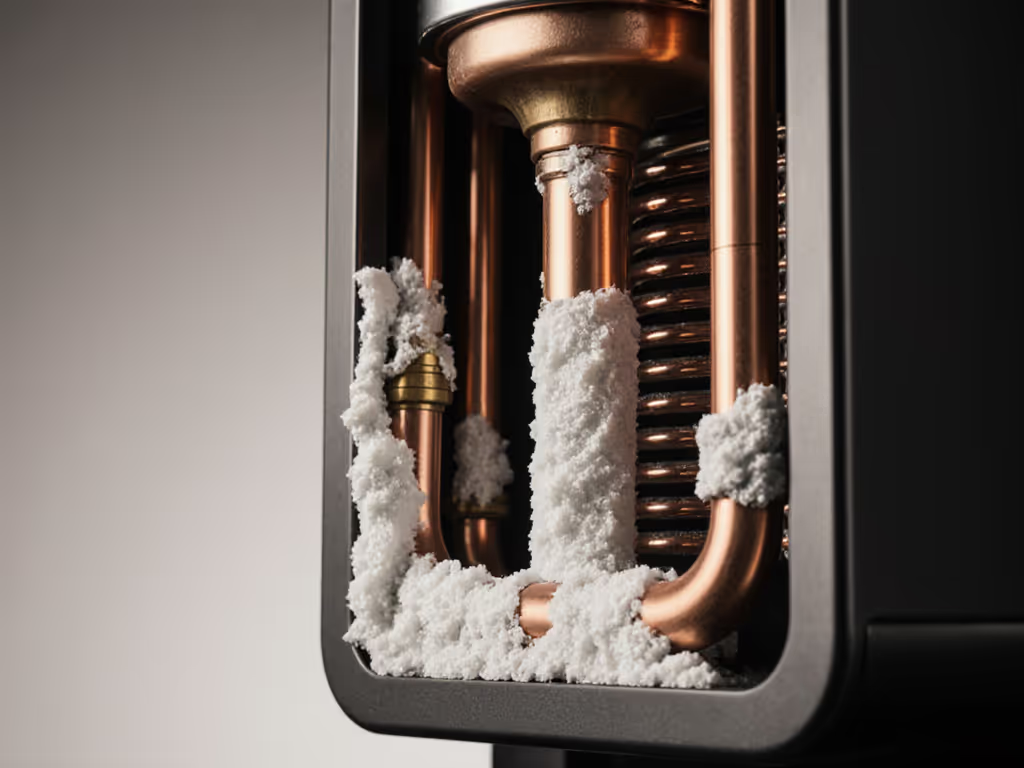
Hard water contains higher levels of dissolved calcium and magnesium. When you heat that water inside a boiler or thermoblock, those minerals precipitate out as limescale on metal surfaces.[10] Over time, scale:
- Narrows passages and jets, slowing flow
- Insulates heating surfaces, reducing efficiency
- Can jam valves and flow meters, leading to strange pressures or error codes
This is the core of any water hardness impact analysis: every degree of extra hardness is extra solid material left behind in your machine.
On the taste side, those same minerals help extract coffee. Very low-mineral water can give you flat, hollow shots, while very hard water tends to produce harsher, more astringent cups and heavy chalky aftertaste, a pattern widely noted in espresso water guidelines.[10]
The goal is not "no minerals," but controlled minerals: enough for good extraction, not so much that they rapidly cement your machine from the inside.
FAQ 2: What hardness range should I target?
Several espresso-focused maintenance guides recommend keeping total hardness roughly in the 35-85 ppm range (as CaCO3), often aiming near the middle as a good compromise between taste and scale risk.[1][10]
If you remember only one number, aim for about 50-70 ppm total hardness unless your machine's manual specifies otherwise.[1][10]
A few practical bands, as working rules of thumb:
- Under ~25 ppm: Very soft; can taste flat and may be slightly more corrosive over the very long term.
- 35-85 ppm: Sweet spot many espresso guides recommend for home.[1][10]
- ~100-150 ppm: Usable, but you'll want stronger softening or more aggressive hard water maintenance protocols (frequent testing, filter changes, and possibly scheduled descaling).[1][10]
- Above ~150-200+ ppm: High scale risk. Running this straight into a boiler is inviting frequent service.
Always cross-check with your machine's manual; some manufacturers publish their own target hardness window.
FAQ 3: Which machine components are most vulnerable to hard water?
From tear-downs and field repairs, machine component vulnerability to scale tends to cluster around parts where hot water slows or stagnates:
- Boilers and heat exchangers: Internal walls and level probes collect thick, rock-like deposits.
- Thermoblocks: Their narrow passages can choke with fine scale much faster than large boilers.
- Solenoid valves and expansion valves: Small clearances; scale flakes jam them partly open or shut.
- Flow meters: Mineral buildup interferes with the spinning rotor, causing dose errors.
- Group passages and jets: Scale constricts flow, giving uneven shots and odd pressure behavior.
Early warning signs:
- Slower heat-up than when the machine was new
- Pump sounds strained or changes pitch during extraction
- Random low-volume shots with the same grind and dose
- Steam power fading even though the machine reports temperature as normal
Once you see these, water is the first variable to tame. Electronics often get blamed, but a lot of "mysterious" behavior is just scale in mechanical parts.
FAQ 4: What are the main espresso machine hard water solutions?
4.1 Start with measurement
Before choosing any espresso machine hard water solutions, measure what you actually have:
- Fill a clear glass with cold tap water.
- Dip a hardness strip and wait the specified time.
- Compare the color to the chart and record the ppm value.
- If you already have a filter or softener, also test water after treatment (e.g., from the pitcher or under-sink system).[1]
Many home owners assume a whole-house softener or municipal supply guarantees safe hardness, but espresso guides explicitly recommend testing your water regardless, then adjusting from there.[1]
Repeat this check at least every few months; some maintenance guides suggest quarterly hardness checks at the outlet of your softening system.[1]
4.2 Treat at the source (preferred when possible)
Treating water before it ever reaches the machine is cleaner than trying to undo damage later: If you're choosing between cartridges and pitchers, see our espresso water filter comparison to match filtration to your local hardness and machine type.
- Under-sink or plumbed softener + filter: Compact cartridges that both soften and filter are widely recommended for plumbed-in machines or for filling pitchers.[1][10] These typically use ion-exchange resin to reduce calcium and magnesium, plus carbon to remove chlorine and off-flavors.[10]
- Countertop pitchers rated for limescale reduction: Some pitchers include specific resin blends targeting carbonate hardness; they can bring moderately hard water into a safe zone if you respect their capacity and replacement schedule.
- Low- to medium-mineral bottled water: If filtration is not an option (rental constraints, travel), choosing a bottled water with known moderate hardness is a simple, repeatable strategy.
The main idea is to make it hard to do the wrong thing on a busy morning. Pick one source treatment approach and standardize on it (fix the workflow bottleneck; longevity follows with fewer surprises). If you're considering machines with integrated softeners, our built-in filtration guide explains when it's worth it versus external filters.
4.3 Treat in the reservoir
If you have a tank-fed machine and no access to plumbing changes, in-reservoir treatments are common:
- Drop-in softening cartridges/pouches: Small ion-exchange resin cartridges that sit in the water tank can meaningfully cut hardness when sized correctly for your usage and regenerated or replaced on schedule.[10]
- Bypass on filter heads: Some systems allow dialing how much raw water mixes with softened water; setting this correctly lets you hit the 35-85 ppm window rather than oversoftening.[10]
Log installation dates and expected capacities so you are not running exhausted cartridges for months.
4.4 Blending and mineral recipes (for precise control)
For users who want fine-grained espresso mineral management, a common approach is:
- Start with distilled or reverse osmosis (RO) water (almost zero minerals).
- Add a measured amount of a mineral concentrate or a carefully chosen proportion of harder water.
- Aim for your target hardness and alkalinity, often around 50-70 ppm hardness with moderate alkalinity for buffering.[10]
This method gives highly stable water from day to day, which improves shot consistency and protects the machine. Just avoid the temptation to run pure zero-mineral water long term; industry water guidance cautions that completely demineralized water can be more aggressive to metals and can produce thin, unbalanced shots.[10]
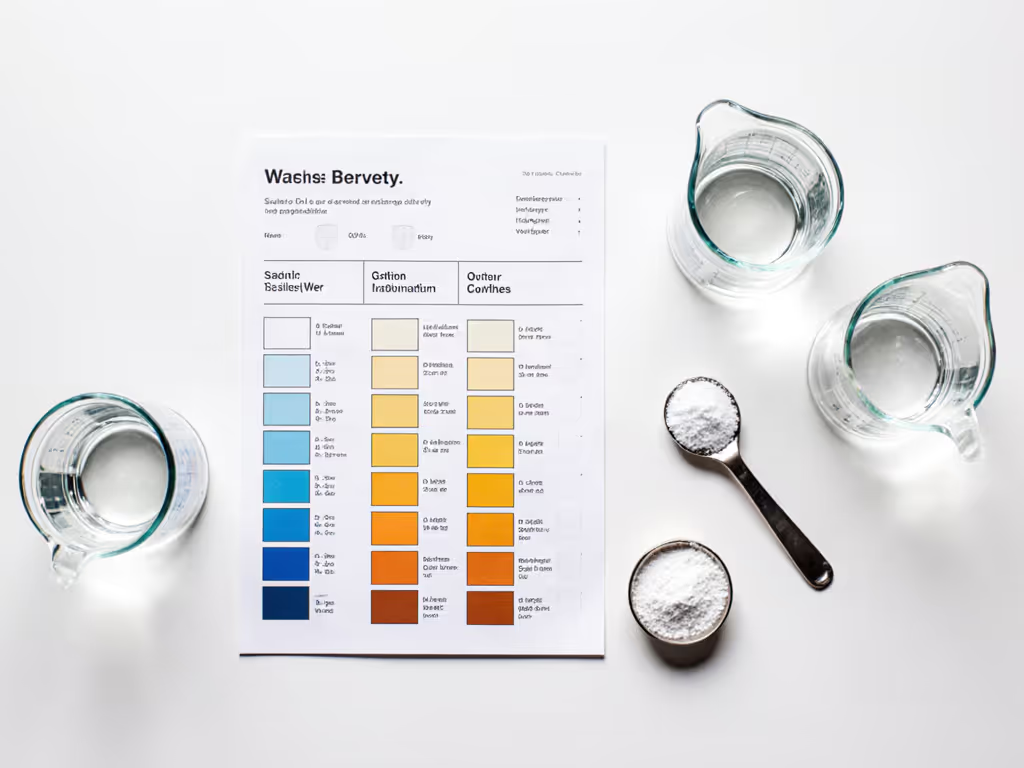
FAQ 5: How do I build a scale prevention strategy for my situation?
Think in terms of current hardness -> treatment -> maintenance interval.
Scenario A: You are already in the safe range (35-85 ppm)
- Confirm readings a couple of times over different days to ensure stability.[1]
- Use a simple carbon filter (pitcher or inline) mainly for taste and chlorine removal.[10]
- Test hardness every 3-4 months to catch seasonal changes or utility adjustments.[1]
- Descaling may be rare; follow your manufacturer's schedule and only when signs of scale appear.
Scenario B: Moderately hard water (~100-150 ppm)
- Add a softening step: under-sink cartridge, pitcher with limescale reduction, or drop-in tank softener.[1][10]
- Target treated water hardness around 50-70 ppm.[1][10]
- Put a reminder to test hardness quarterly at the filter outlet or reservoir and adjust/replace cartridges as needed.[1]
- Expect that you may still need occasional descaling, but far less often than with untreated water.
Scenario C: Very hard water (150-300+ ppm)
- Strongly consider either:
- A robust under-sink softener dedicated to your espresso water, or
- Blending RO/distilled with a precise mineral recipe.[10]
- Avoid running raw tap water into the machine "just for a while"; that "while" is often enough to coat boilers.
- Treat descaling as risk management, not routine: heavy scale removal is when seals and fittings are most stressed, especially if acids are too strong or contact time is too long.
In all scenarios, keep the strategy simple enough that half-asleep you still reach for the right pitcher. If you brew only on weekends, follow our infrequent-use care guide to prevent scale and stale water issues between sessions.
FAQ 6: Do I still need to descale if I manage hardness?
With water consistently managed into the recommended range and filters maintained, many machines will run for years with minimal internal descaling beyond what manufacturers specify for long-term service.[1][10]
However, you may still need to descale when:
- You inherit a machine with unknown water history.
- You had a period of using raw hard tap water.
- You start noticing classic scale symptoms: slower flow, weaker steam, hotter-than-usual surfaces, or noisy fills.
Maintenance guides typically include descaling as a deeper periodic task, alongside backflushing and gasket replacement, especially when scale is suspected.[1] For step-by-step routines tailored to your machine type, see our maintenance by type guide.
User-safe rules of thumb:
- Use only descaling products and concentrations endorsed by your manufacturer.
- Never run strong acids through components not designed for them (e.g., some rotary pumps and certain metals).
- After any descale, inspect externally visible joints and fittings during the first few heat cycles for small weeps (this is where torque and seal cautions matter).
- If issues persist after a careful descale, it is safer to have a technician open boilers and replace heavily scaled parts than to keep cycling stronger chemicals.
I once watched a tired, leaking three-year-old machine come back to full pressure with nothing more exotic than new o-rings and basic cleaning on a kitchen table. That kind of recovery only happens when scale is kept in check and parts are accessible (another argument to fix before replace).
FAQ 7: What's a simple recurring checklist I can follow?
Here is a practical hard water maintenance protocol you can drop into your calendar:
Every week
- Confirm you are filling the reservoir only from your chosen treated water source.
- Empty and rinse the reservoir; refill with fresh treated water rather than topping off.
- Note any changes in taste, shot time, or steam power in your log.
Every month
- Measure hardness of both tap and treated water to catch drift.[1]
- Clean and purge the steam wand thoroughly; milk deposits plus minerals are a bad combination.[1]
- Wipe accessible metal surfaces near vents or wands where dried droplets may leave early scale traces.
Every 3-6 months
- Test hardness from the outlet or bleed line of your softening system and replace or regenerate cartridges if readings creep up.[1]
- Follow your machine's deeper cleaning routine (backflush with detergent, clean dispersion screen, inspect gaskets).[1]
- If your water is on the harder end of your target, plan a cautious descale according to the manual.
Yearly
- Reassess your entire setup: water source, filters, and machine behavior.
- Check whether local water reports or your living situation have changed (new building, different plumbing, etc.).
Your next step: a 30-minute weekend plan
To turn all this into action without adding mental load, block 30 minutes this weekend and:
- Test your tap water hardness with strips and write down the ppm.[1]
- Test your current machine feed water (pitcher, reservoir, or filter outlet) the same way and log it.
- Compare your readings to the 35-85 ppm target range, adjusting coarse strategy: no change, add softening, or move to blending.[1][10]
- Pick a single, repeatable way to supply water (specific pitcher, filter, or recipe) and label it clearly.
- Set calendar reminders for: quarterly hardness tests, filter changes, and any recommended descaling.
That short session gives you a living scale prevention strategy. Once it is in place, daily operation is just "use the right water" and enjoy the shots, exactly the kind of stable, low-friction workflow that keeps your machine reliable and your mornings focused on coffee, not repairs.
Related Articles