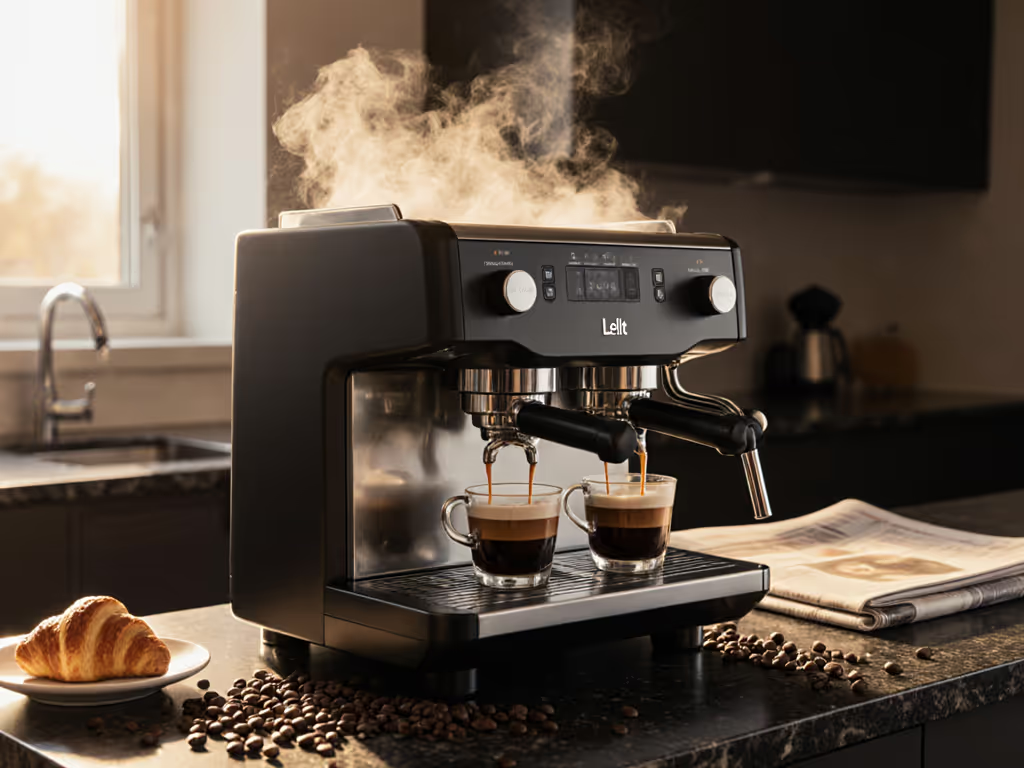
Rancilio Classe 9: Commercial Grade, Home Value
By Kenji Tanaka • 19th Feb
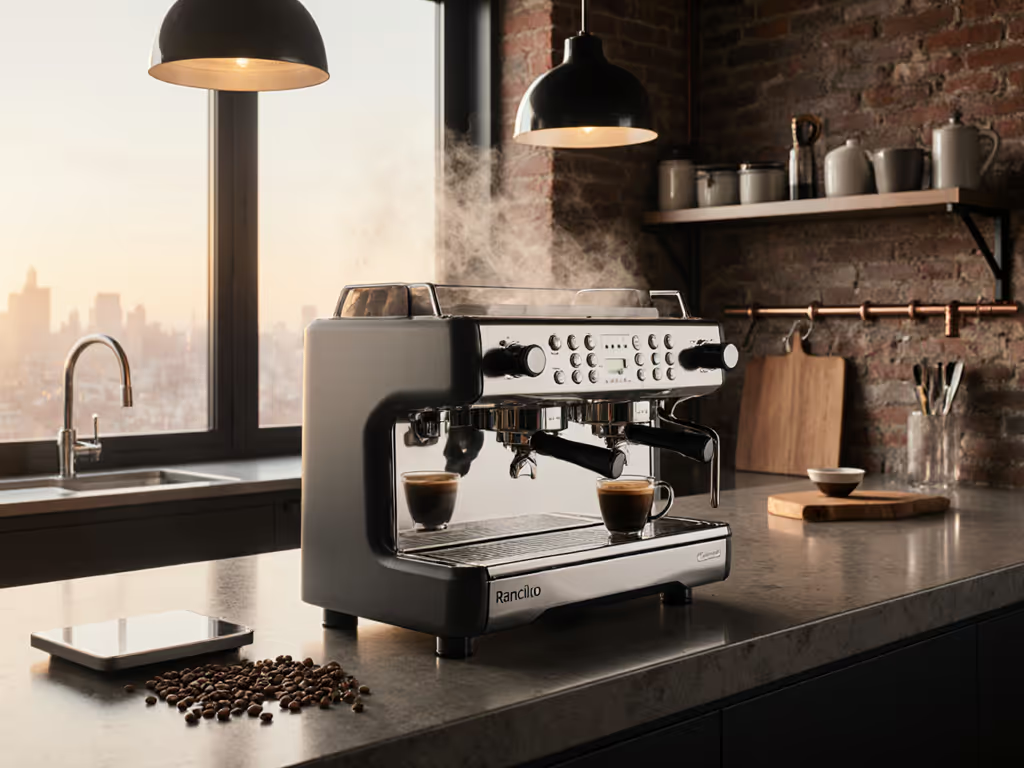
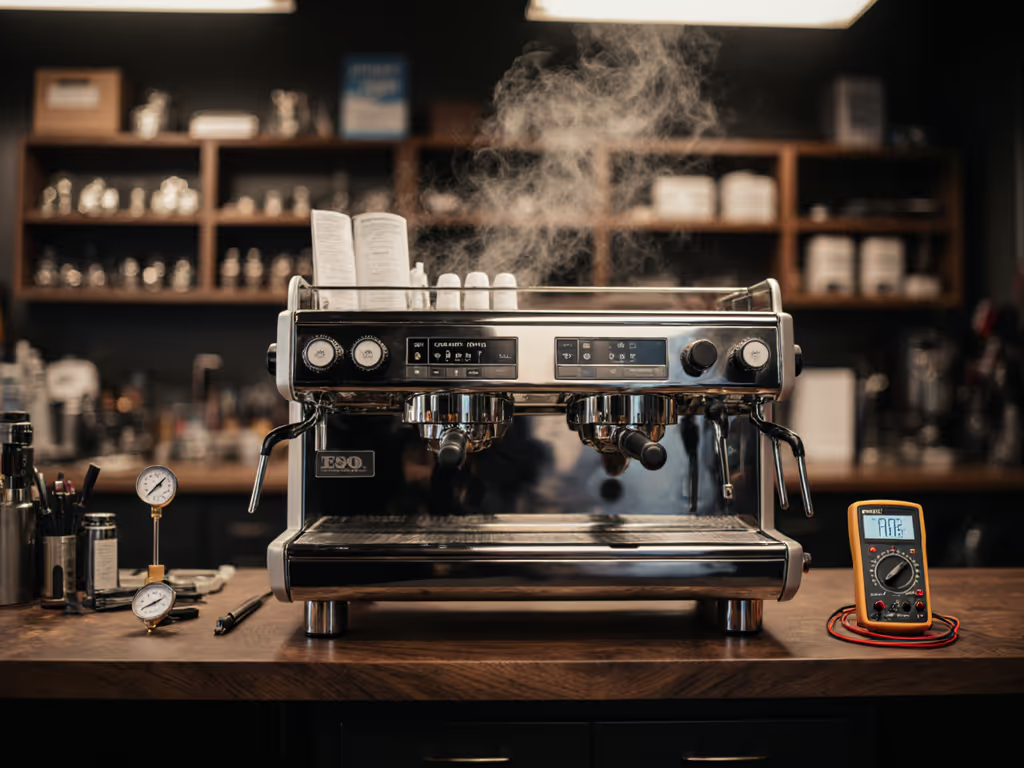
When evaluating a Rancilio Classe 9 review, you're looking at a machine built for high-volume café environments, but its engineering teaches an important lesson about what professional home espresso machines should actually deliver. The Classe 9's design philosophy reveals why commercial-grade durability and serviceability matter far more than flash, even for home users stretching into prosumer territory.
I learned this years ago when a neighbor's machine wheezed and leaked after three years of careful use. We opened it on a kitchen table: standard screwdriver, new o-rings, accessible routing, no drama. Thirty minutes later, pressure recovered and drips vanished. That afternoon shaped how I evaluate any machine: serviceability is a feature, not an afterthought. The Classe 9 embodies this principle. Let me walk you through how to unpack what commercial engineering means for real-world longevity, and why that matters even if you never pull 300 shots a day.
Step 1: Understand the Boiler Architecture and Why It Outlasts Consumer Designs
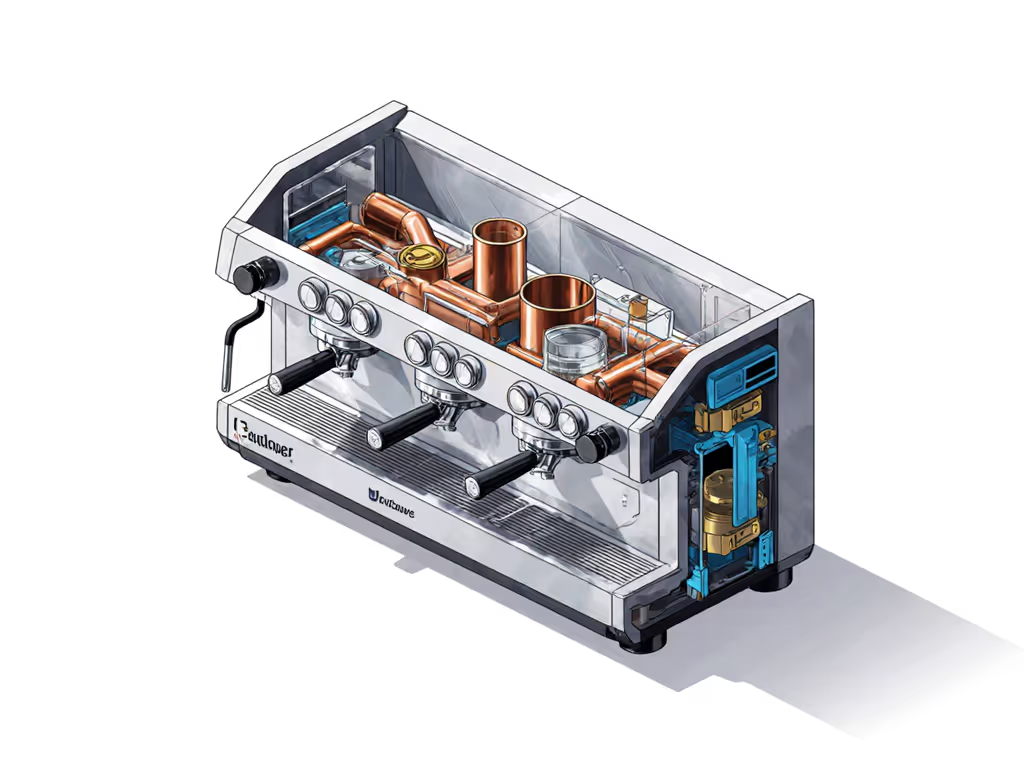
The Classe 9 comes in three versions: a 2-group with an 11-liter boiler, a 3-group with 16 liters, and a 4-group with 22 liters. Each runs 6000 watts and 30 amps on 220-240V. These aren't arbitrary numbers, they are engineered ratios between thermal mass, heating power, and recovery speed.
Here's what separates commercial from home machines: boiler insulation and independent heat exchangers. For a deeper dive into how HX boilers work and why they stabilize temperature, read our heat exchange espresso guide. The Classe 9 wraps its boiler in insulation and houses independent heat exchangers per group. That means each group can flash-heat incoming water through the boiler without pulling thermal energy from brew water already in the group. In plain terms, you can brew espresso and steam milk simultaneously without temperature swings that ruin the next shot.
Home machines typically use smaller thermal blocks or single boilers that cook down under heavy load. The Classe 9's architecture costs more to manufacture but survives sustained abuse, and that same stability makes dialing repeatable. Once your grind, tamper, and pull routine stabilizes, shots land the same way morning after morning.
Why Boiler Size Matters for Real-World Use
A 16-liter boiler (3-group) holds eight times the thermal mass of a 2-liter home machine. That means it can absorb the temperature shock of pulling back-to-back espressos or steaming a large pitcher without the heating element cycling on and off visibly. Temperature swings happen, but they're small and gradual. For someone juggling two cappuccinos before work or running a small in-home service, that stability is the difference between predictable milk texture and guessing whether the water's hot enough.
Step 2: Audit the Control Architecture and User-Serviceable Features
The Classe 9 USB's "U" stands for Advanced Boiler Management (ABM.07) software. It watches simultaneous brewing, steaming, and water dispensing, then pre-fires the heating element to prevent temperature dips. This is commercial automation, but it's built on a principle that serves home users too: take variance out of the human loop.
The machine offers four programmable brew buttons per group, each with independent time and volume settings. You set button one to 27 grams in / 1.5 seconds pre-infusion / pull until 2.1 ounces out. Button two stays blank. Button three is your lungo. Now your muscle memory locks in. To set those volumes intelligently, follow our dial-in espresso checklist. No decisions at 6:45 a.m., just press and go.
But here's where commercial design earns its keep: every control is soft-touch and backlit. The LCD screen logs shot counts and brew metrics. The C-lever steam wand is mounted transversely, not inline, so your wrist doesn't rotate to feather pressure, it pivots like a crane. Ergonomics matter when you're pulling 50 shots a week, but they matter at home too. Repetitive strain compounds over years.
USB Parameter Storage and Serviceability
The USB port isn't a gimmick. It lets you save drink parameters to a file, move them between machines, or hand-load firmware updates without calling service. For a home user, this means you can document your baseline settings, experiment safely, and restore your dialed-in recipe if something shifts. It's remote serviceability baked in.
Tool list for basic Classe 9 maintenance:
- Hex key set (2-6 mm) for group handle fasteners
- Flathead screwdriver for discharge insert locking
- Backflush cleaning disc kit (Rancilio part number dependent on group type)
- Standard rubber O-ring assortment (sourced from supplier; consult manual for millimeter spec)
- Brass cleaning brush for group seat
Safety warning: Always close the water supply valve and verify power is off before servicing any internal component. Never attempt to remove the boiler or heating element without professional training.
Step 3: Evaluate Drainage, Grouphead Access, and Daily Cleanup
One hidden cost of owning any espresso machine is the cognitive load of cleanup. Wet drip trays, milk-fouled wands, stuck pucks, these aren't technical problems, but they add 5-10 minutes to your morning and breed resentment.
The Classe 9 addresses this with an automatic group-cleaning cycle and an extractable drain insert. After your last shot, you flip a switch and the machine automatically backflushes the group, ejecting grounds and water into the drip tray. An LED indicator on the control panel tells you when the group needs deeper cleaning. Build a simple routine with our machine-specific maintenance guide. That feedback loop is commercial thinking applied to sanity.
The drip tray itself is a removable, dishwasher-safe polymer insert. You don't have to dismantle the machine to empty grinds and condensation, you pop out a tray, rinse it, and slot it back in.
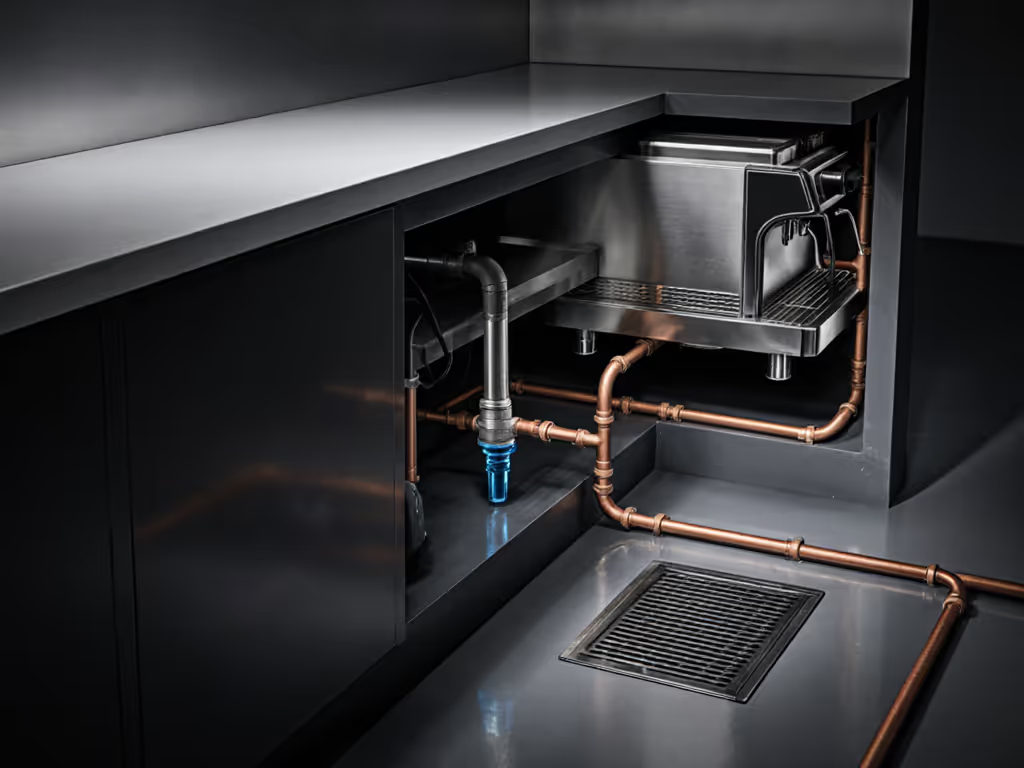
Drainage requires planning: the Classe 9 needs an open gravity drain with a 2-inch internal diameter within 4 feet of the machine. That's tighter than a home sink, but it's non-negotiable. Water that pools under the machine rots wood and corrodes supports. If your kitchen can't accommodate that, the Classe 9 isn't the answer, no matter how good it is.
Step 4: Calculate True Cost of Ownership and Hidden Expenses
The Classe 9 USB starts around $20,000 and climbs to $28,000+ for the 4-group. That sticker shock makes sense only if you understand the long-game economics.
A good home machine, say a Gaggia Classic or Rancilio Silvia, costs $300-$600 new. You'll replace gaskets and seals every 18-24 months ($50-$100), descale every 2 months ($20 in chemicals), and face a heating element failure or pump seal around year five ($300-$600 service).
Over 10 years, that's roughly $1,500-$2,500 in consumables and repairs, plus a machine that may feel tired by year three and won't hold resale value. See our data-backed espresso machine longevity and cost-per-year analysis for realistic budgeting.
A Classe 9 runs longer per cycle and, critically, parts are standardized and documented. Rancilio publishes spec sheets. A replacement group seal from a distributor costs the same whether you own a home machine or a café. There's no planned obsolescence; there's just scheduled maintenance.
Here's the classe 9 value analysis:
- Initial cost: $20,000-$28,000
- Service contract (if available): ~$1,500-$2,000 / year for professional maintenance
- Consumables per year: Seals, cleaning media, blind baskets, descaler (~$500-$800)
- Projected lifespan: 15-20+ years with preventive maintenance
- Resale value (year 5): 40-55% of purchase price (commercial gear holds value better than home machines)
- Cost per shot (assuming 200 shots/week, 10-year ownership): ~$0.20-$0.35 in wear and overhead
For context, a café spending $15 per day on espresso drinks gets those from machines that recover costs in 3-4 years. A home prosumer pulling 50 shots a week (that is 2,600 shots a year) will own the machine for 4-5 years before they've "paid for it" in avoided café visits.
Step 5: Assess Workflow Integration and Practical Reality
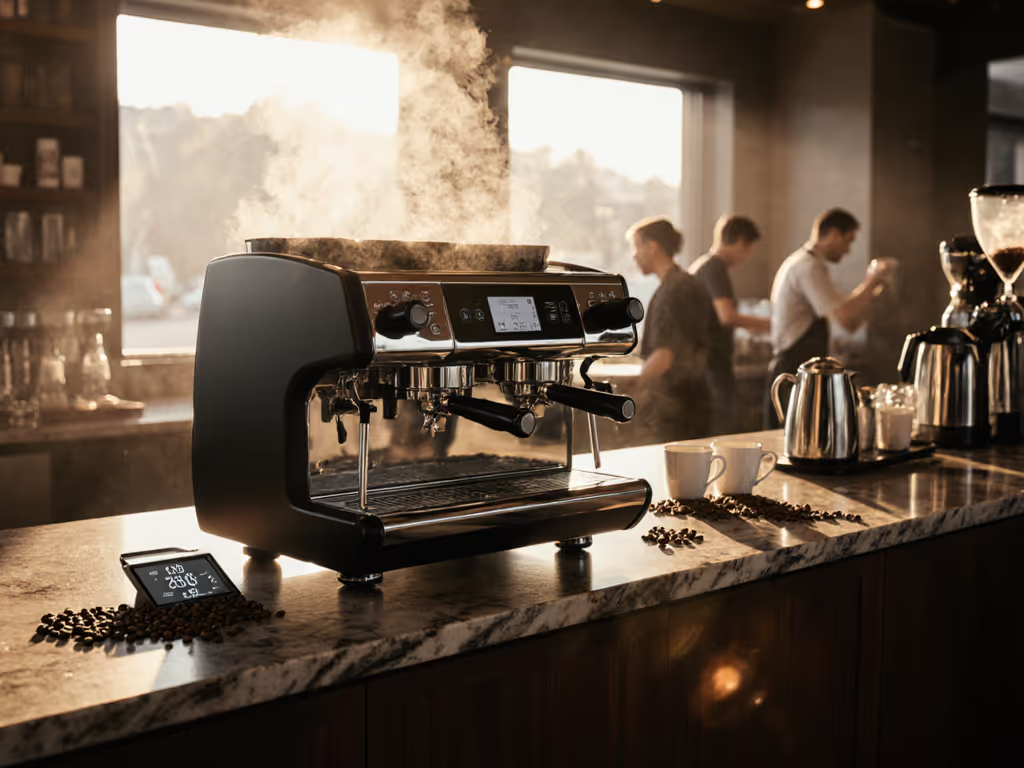
Now, the hard truth: the Classe 9 is a commercial espresso machine. Its dimensions are 30-49 inches wide (depending on group count), 21 inches tall, and 22 inches deep. It weighs 200 pounds. It demands 30 amps, 220V service (not a standard US kitchen outlet). You'll need an electrician and a plumber.
These aren't dealbreakers if you have the space and budget, but they define who the Classe 9 serves. A home hobbyist in an apartment will max out with a compact prosumer machine (Rancilio Silvia, Lelit Victoria, or Gaggia Classic Pro, all under $500 and 2-3 pounds). A semi-professional, say someone selling espresso drinks at a farmers' market or running a small office café, might stretch to a mid-tier prosumer like a Rancilio Classe 9 S (the semi-automatic sibling). The full USB automatic lives in spaces with serious infrastructure and throughput.
But here's the valuable lesson: even if you never own a Classe 9, studying its home commercial machine review teaches you what durability looks like. Independent heat exchangers, insulated boilers, documented service points, standardized parts, firmware updates: these are the features that separate machines that age gracefully from machines that tire. When evaluating any prosumer espresso machine, ask yourself: Can I access the group? Are seals listed by millimeter? Is there a service schematic? Does the manufacturer publish part numbers? Those questions come directly from the Classe 9's philosophy.
Step 6: Make the Go/No-Go Decision Based on Your Real Routine
A prosumer espresso evaluation isn't about the fanciest machine or the loudest brand, it's about matching machine capability to your actual use case. If you're unsure which category fits, start with our manual vs semi-auto comparison to narrow the field.
Choose the Classe 9 (or aspire toward one) if:
- You pull 50+ shots weekly
- You need simultaneous brewing and steaming without temperature compromise
- You have the space, electrical infrastructure, and plumbing
- You want predictable, low-drama maintenance over 15 years
- You value machines that help avoid surprises
Choose something else if:
- You pull fewer than 20 shots per week
- Your kitchen can't accommodate a 30-amp, 220V appliance
- You're still learning and might change your workflow
- You prefer lower initial investment and don't mind replacing the machine in 5-7 years
The Classe 9's real gift isn't power or automation: it's architectural transparency. Every inch is designed to be inspected, serviced, and understood. That's what commercial-grade truly means. Fix the workflow bottleneck; longevity follows with fewer surprises.
Once you've decided the Classe 9 fits your life, contact a Rancilio distributor for a detailed site survey (electrical load, water supply, drainage, venting) and a demo pull. Ask to backflush the group yourself. Inspect how cleanly water drains. Pull three shots in a row and feel how the steam wand recovers. A machine you'll live with for 15 years deserves that level of deliberation (the same care you'd give to hiring a contractor or choosing a car).
Serviceability is a feature, and now you know what to look for.
Related Articles