Pressure Profiling Comparison: Machine Capabilities
By Aisha Khan • 3rd Mar
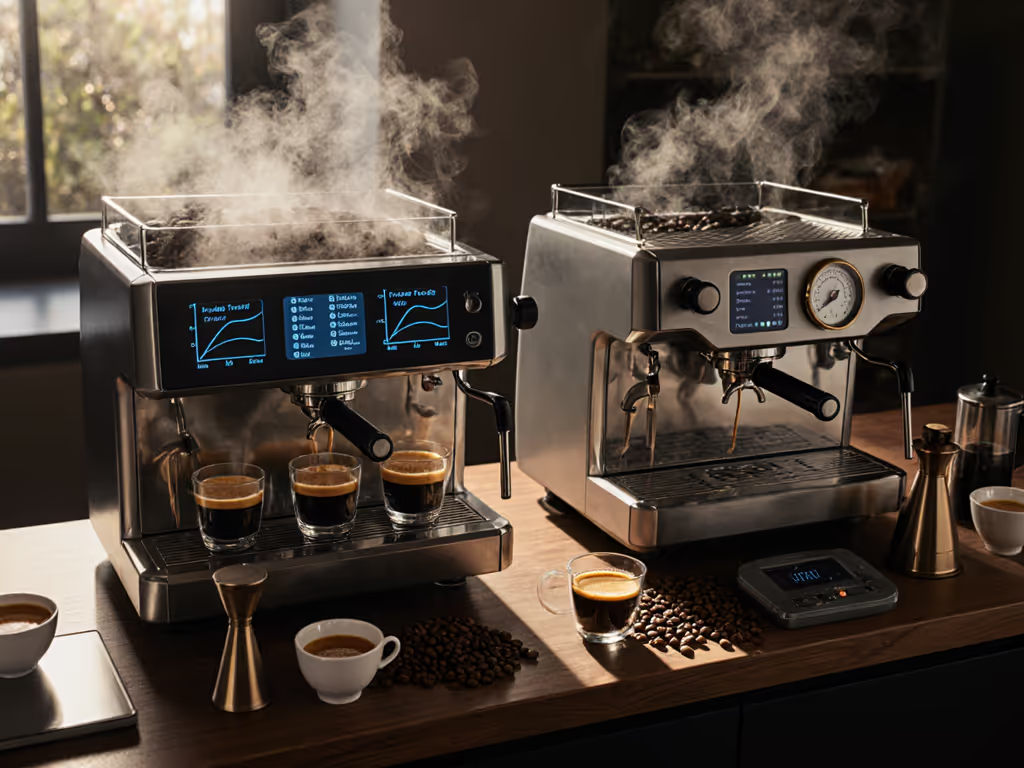
Pressure profiling comparison matters most when you're standing in your kitchen at 6:45 a.m., needing two consistent shots before the day spirals. The real question isn't whether your machine can produce exceptional espresso, it's whether it does so reliably without swallowing your morning time or waking the household. Understanding espresso machine extraction control options helps you find the machine that disappears into your routine instead of demanding constant fidgeting.
For years, espresso machines operated at a fixed 9 bars of pressure throughout extraction (predictable, but rigid). Machines with pressure profiling capabilities now let you vary that pressure dynamically, adjusting when the water contacts the puck, how fast the extraction progresses, and which flavor compounds dissolve into your cup. But here's where most buyers get lost: not all pressure-profiling machines work the same way, and the difference between manual and automatic control has real consequences for your morning workflow.
What Pressure Profiling Actually Does
Pressure profiling is the process of controlling the amount of pressure applied to the coffee puck throughout the brewing process, rather than accepting a constant pressure from start to finish. Instead of the machine simply pushing water at 9 bars for 25 seconds, a pressure-profiling machine lets you architect the shot in stages.
The Three-Stage Workflow
Most pressure profiles follow a time-stamped sequence:
Pre-infusion (Low Pressure): The puck receives gentle hydration at 2-6 bars before high pressure kicks in. This prevents channeling (those frustrating tunnels where water races through instead of evenly saturating the grounds). Result: balanced sweetness without bitter edges.
Rising Phase (Ramp Up): Pressure gradually climbs toward 8-9 bars as the grounds swell and provide increasing resistance. You're not shocking the puck; you're coaxing extraction.
Hold or Taper: Some profiles maintain steady pressure; others gradually ease off near the end. This final stage controls whether the shot finishes clean or sluggish.
The payoff is straightforward: more control over flavor consistency and less day-to-day guesswork. To complement profiling, learn the fundamentals in our dial-in guide so dose, yield, and grind work with your pressure curve.
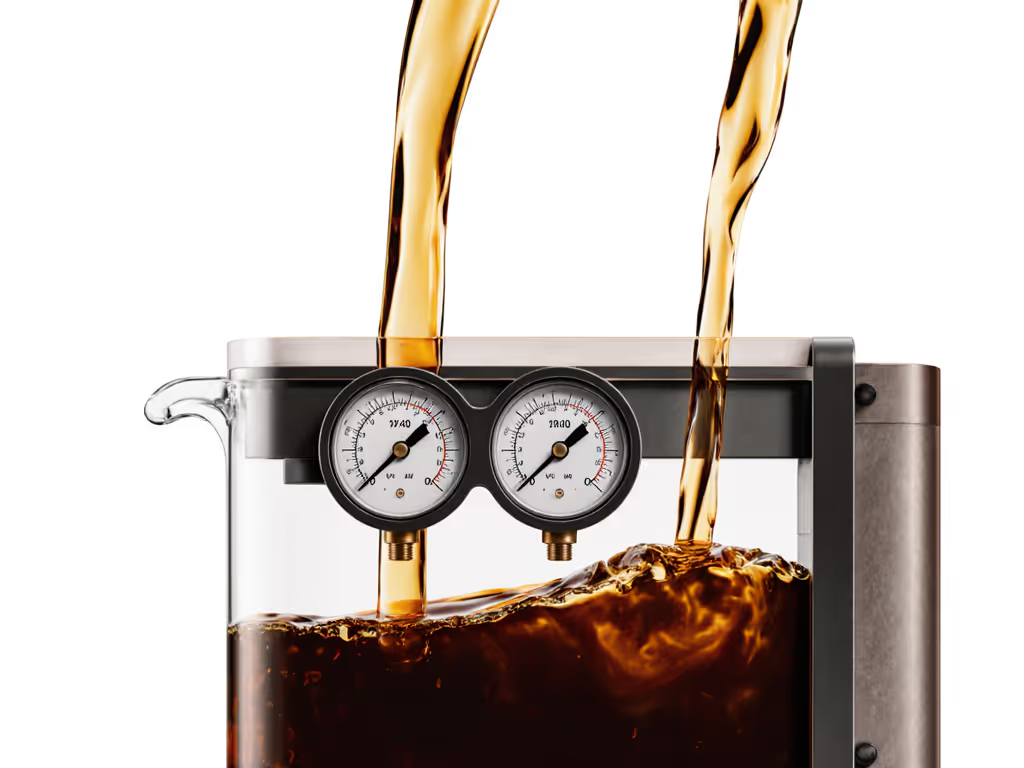
Why Pressure Profiling Matters in Real Routines
That winter I shadowed a family's morning (two kids, one critical Zoom meeting, eight minutes to espresso), I saw the difference pressure consistency made. Their 'premium' machine choked on weekdays because the workflow didn't account for time or noise. A quieter model with simpler controls and faster warm-up didn't need pressure profiling; it just needed to vanish from the decision tree.
Yet for other households, pressure profiling solves a real problem: inconsistent shots day to day despite identical grind and dose. Water temperature swings, pump wear, or changing coffee beans mean 9 bars feels right one morning and produces sour, thin shots the next. If your shots swing between sour and bitter, use our espresso troubleshooting checklist to isolate non-profile variables first. Pressure profiling lets you dial in once, then automate that curve so your machine repeats it reliably. That's worth the complexity if it saves you the cognitive load of re-dialing between milk drinks or when you switch bags of coffee.
Less fiddling, more sipping. Your morning deserves frictionless espresso.
Manual Extraction Control: The Hands-On Approach
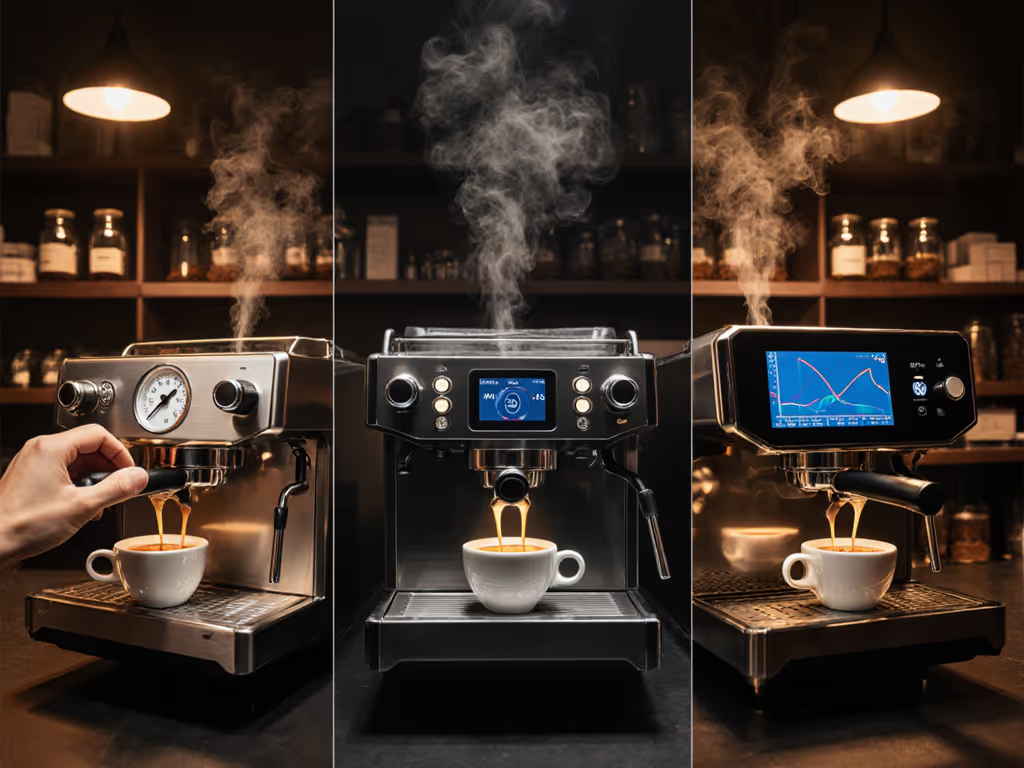
Manual extraction control means you adjust pressure in real time, using a paddle, lever, or dial while the shot flows. The most common example is flow control, which indirectly influences pressure by restricting water flow to the grouphead, forcing pressure to build gradually.
How Manual Flow Control Works
If-then guidance for paddle machines (e.g., ECM Synchronika II or Lelit Bianca V3): For deeper background on paddles and valve behavior, see our ECM Synchronika II flow control FAQ.
If you restrict the paddle for 5-6 seconds at low position → then gentle pre-infusion at 2 bars, no channeling.
If you slowly open the paddle over 5 seconds → then pressure ramps from 2 to 9 bars smoothly.
If you hold the paddle full open for 10 seconds → then steady 9-bar extraction.
If you ease the paddle closed in the final 3 seconds → then pressure tapers, controlling late-shot flow and reducing bitter compounds.
Trade-offs of Manual Control
Pros:
- Highly intuitive once muscle memory builds (no screen, no buttons)
- Real-time feedback: if a shot chokes, you open the paddle; if it gushes, you close it
- Tactile, meditative for baristas who enjoy tinkering
Cons:
- Requires active attention during every shot; you can't program and walk away
- Steep learning curve; early attempts rarely match late-shot consistency
- Repeatability depends on your hand muscle memory, not the machine's electronics
- Adds 30-60 seconds of extra cognitive load when time-stamped steps matter most
For busy weekday mornings in a shared kitchen, manual control often means you'll default to "paddle full open" to reduce decision complexity. That's fine, but it's not leveraging the machine's capability.
Automatic Pressure Adjustment: The Programmed Path
Programmable machines let you define a pressure curve once, then repeat it with a button press. Examples include the Rocket Espresso R Nine One, Decent Espresso DE1+, La Marzocco GS3 AV/MP (with pressure profiling module), and Dalla Corte Mina.
How Programmable Profiling Works
Step 1 (Experiment): Dial in a shot using the machine's app or interface, adjusting pressure at each phase until flavor is balanced and notes are clear.
Step 2 (Save): The machine stores your exact pressure curve, including pre-infusion pressure, ramp duration, hold pressure, taper rate, and total shot time.
Step 3 (Repeat): Tomorrow morning, select the saved profile and press brew. The machine executes the identical pressure curve every time, eliminating hand-to-hand variance.
Real-World Example: Decent Espresso DE1+
The DE1+ lets baristas see pressure, flow, and temperature curves in real time during extraction, then adjust and reprogram. You can program pre-infusion to end based on time or pressure target, whichever arrives first. For a single-origin light roast, you might set: pre-infuse at 4 ml/s flow until 15 seconds or 6 bars (whichever hits first), then rise to 8.2 bars and hold for 10 seconds, then taper to 5 bars over 30 seconds.
Once saved, that profile is repeatable to the tenth of a bar.
Trade-offs of Programmable Control
Pros:
- Removes hand variance; every shot matches your dial-in
- Faster morning workflow: one button replaces 30 seconds of paddle adjustment
- Easier to manage multiple coffee profiles (light roast, medium roast, espresso blend)
- Data visibility (pressure, flow, temperature graphs) accelerates learning
- Ideal for shared kitchens where one person is the coffee operator
Cons:
- Higher entry cost ($2,500-$5,000+)
- Initial dial-in requires tasting iterations and patience
- Screen-dependent; adds one more connected device to your kitchen
- Less tactile feedback; some baristas miss the paddle's feel
Manual vs. Programmable: A Functional Comparison
| Aspect | Manual Paddle/Flow Control | Programmable Automatic |
|---|---|---|
| Morning Time Cost | 40-60 seconds paddle adjustment per shot | 5-10 seconds (button press) |
| Consistency Across Drinks | 70-80% (hand variance over 3-4 shots) | 95%+ (machine variance negligible) |
| Learning Curve | 2-4 weeks to comfortable; 2-3 months to mastery | 1-2 weeks to comfortable; 1 month to proficiency |
| Noise Profile | Quieter (manual control, no solenoid click) | Slight solenoid click during transitions |
| Cleanup Complexity | Standard puck density varies; occasional channeling mess | Predictable puck density; cleaner knockouts |
| Cost Entry | $800-$1,500 | $2,500-$5,000+ |
| Best For | Tinkerers with time; weekend ritual-builders | Busy professionals; multi-drink routines |
Pressure Profiling Techniques: Which Fits Your Routine?
When Manual Extraction Control Makes Sense
Choose a paddle or flow-control machine if:
- You have 15+ minutes for your morning coffee ritual (not rushed)
- You enjoy experimentation and don't mind inconsistency while learning
- Your household has one primary coffee operator (you) who doesn't share the machine
- You value tactile feedback and the meditative aspect of hand control
- Budget constraints limit you to $400-$1,200 range
- You live in a quiet space where an extra 30-40 seconds per shot doesn't matter
When Automatic Pressure Adjustment Wins
Choose a programmable machine if:
- You make multiple drinks in quick succession (two cappuccinos before a meeting)
- Consistency matters more to you than tinkering; you want the machine to perform, not require constant tweaking
- You operate on a strict time budget (8-10 minutes, total)
- Your household shares the machine (non-operators need reliable, one-button simplicity)
- Noise metrics matter (quiet mornings, sleeping partners)
- You're willing to invest $2,500-$3,500 for a 10-year durability window
- You want to reduce cognitive load before work or while managing family mornings
A Middle Path: ECM Synchronika II Espresso Machine With Flow Control
Machines like the ECM Synchronika II occupy middle ground and offer manual flow control, with a dual-boiler architecture that keeps your steam pressure independent. You get tactile, intuitive adjustment without the need for app navigation, and better ergonomic separation of espresso and milk steaming. The trade-off: still manual, so repeatability depends on your paddle muscle memory, but the simplified workflow reduces decision points.
How to Choose: A Practical Checklist
Step 1: Assess Your Morning Window
- Do you have 10+ minutes for coffee ritual? → Manual control is feasible
- Is your morning window 8 minutes or less? → Programmable edges ahead (speed and consistency matter)
Step 2: Count Drinks Per Session
- One espresso daily? → Manual control acceptable
- Two or more milk drinks before leaving? → Programmable wins (consistency + speed)
Step 3: Evaluate Noise Impact
- Early morning, shared space (kids, partner sleeping)? → Prioritize quiet machines; programmable has slight solenoid clicks, but manual paddles are quieter overall
- Dedicated coffee nook, flexible timing? → Noise is secondary
Step 4: Consider Mess and Cleanup
- Do you measure cleanup time? (Should take under 30 seconds, total puck dump + wand rinse)
- Consistent pressure profiles → more predictable puck density → faster knockouts
- Manual trial-and-error → occasional channeling → wetter pucks, longer cleanup
Step 5: Determine Your Tinkering Appetite
- Do you enjoy recipe experimentation? Manual control gives you constant micro-adjustments
- Do you want to dial in once and forget? Programmable is your answer
Real-World Outcomes: What Changes?
Coffee flavor does shift measurably with pressure profiling. Lower pressures during pre-infusion reduce channeling and unlock sweetness; variable pressure lets you emphasize acidity in bright beans or add body to delicate light roasts.
But the practical outcome you should care about is repeatability with minimal friction. A programmable machine ensures shot 1 (7:15 a.m., first try) tastes identical to shot 3 (7:32 a.m., after steaming milk for a guest). Manual control can achieve that too, but only if you've mastered the paddle and you're focused on technique instead of on your calendar.
The Decision Path Forward
Pressure profiling comparison ultimately hinges on your morning reality, not the machine's technical specs. A fancy programmable profile doesn't serve you if you're rushing. A paddle machine doesn't frustrate you if you have time and curiosity to spare.
Start by observing your routine honestly: How much time do you have? How many drinks? Do you live alone, or does someone else need the machine to "just work"? Are inconsistent shots your biggest frustration, or is it cleanup time and noise?
Your answers guide whether manual extraction control or automatic pressure adjustment aligns with your desired outcome, a machine that supports your morning, not interrupts it.
Take the next step by visiting hands-on demos at local espresso bars or specialty shops. Pull a few test shots on both manual and programmable machines. Notice which feels natural, which workflow reduces your decision overhead, and which machine lets you leave the kitchen feeling calm instead of rushed. That real-home insight beats any spec sheet or review forum.
Related Articles