Cold Brew Espresso Machine Comparison: Low-Temp Consistency
By Maya Desai • 21st May
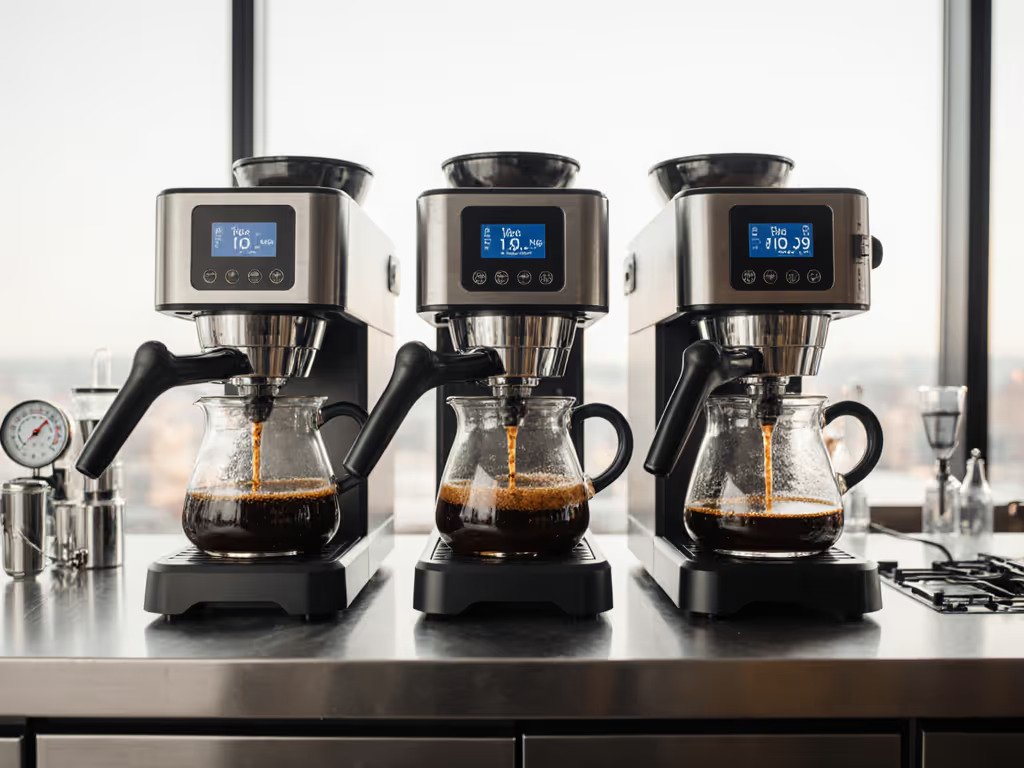
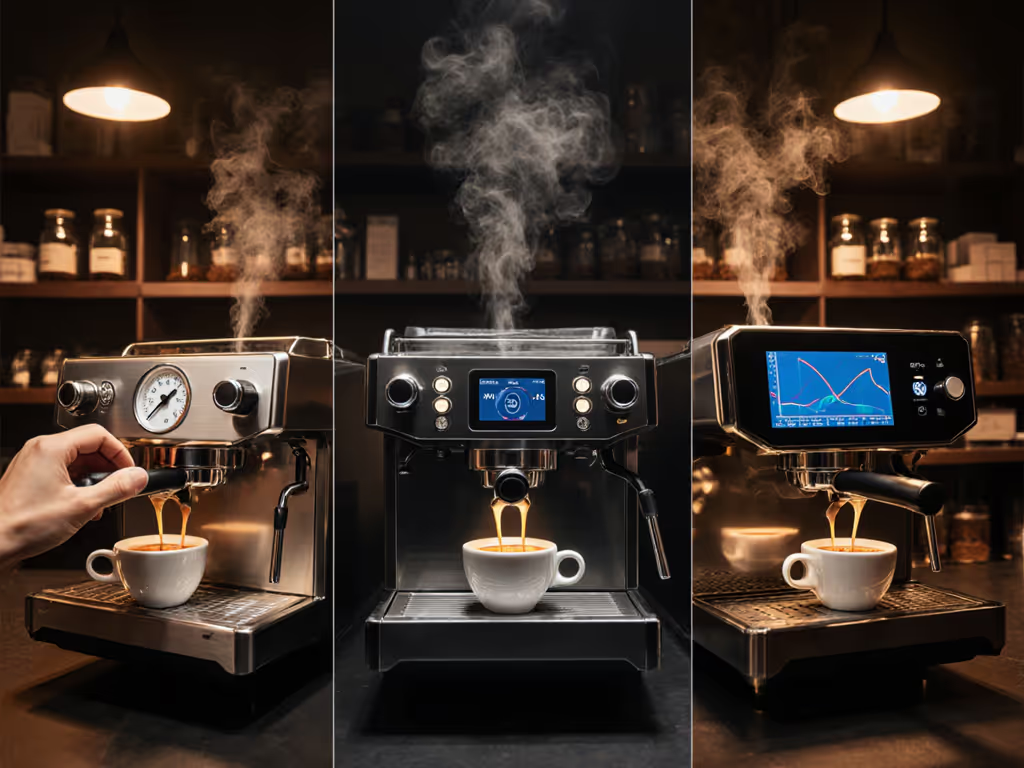
Cold coffee features everywhere now - from supermarket bottles to café signatures - but not all "cold brew" is created equal. This cold brew espresso machine comparison focuses specifically on how home espresso and coffee machines handle low temperature extraction analysis: How stable are they at lower temperatures, how repeatable are the results, and which approaches actually justify paying for a "cold brew" button on the control panel?
In this FAQ-style deep dive, I'll map marketing claims onto measurable behavior and help you decide whether a cold brew-capable espresso machine fits your routine - or whether a simple dedicated brewer will serve you better. For model recommendations focused on this feature set, see our cold brew espresso machines comparison.
1. Defining the Field: What Counts as "Cold Brew" from an Espresso Machine?
Before comparing machines, we need clean definitions. Manufacturers use "cold brew" loosely, but in sensory and extraction terms, there are major differences.
Classic cold brew (immersion)
- Temperature: Room temperature or fridge (~4-25 °C)
- Time: 8-24 hours
- Method: Coarse grounds fully immersed in water; filtered after steep
- Taste profile: Low perceived acidity, rounded sweetness, attenuated aromatics
This is what most research and serious home recipes mean by "cold brew." It is inherently low-temperature, long-contact-time extraction.
Espresso and "cold" espresso drinks
- Temperature: Typically 88-96 °C at the puck; some "cool" profiles go down to ~80 °C
- Time: 25-45 seconds for standard espresso; up to 60-120 seconds for experimental low-temp extractions
- Method: Pressurized extraction through a compact puck
- Taste profile: Higher intensity, more aromatic, usually more acidity than true cold brew
From an engineering standpoint, these are hot extractions even when marketed for iced drinks.
What manufacturers call "cold brew" on espresso machines
Across recent models and marketing materials, I've seen three main behaviors under a "cold brew" or "cold extraction" label:
- True cool-water extraction:
- Water circulates at or near room temperature, sometimes with gentle pulsing instead of full pump pressure.
- Brew times range from 2-10 minutes; this is closer to accelerated cold brew than espresso.
- Warm but not boiling extraction (e.g., 60-70 °C):
- Lower-than-espresso brew temp, sometimes extended pre-infusion.
- Produces a softer, less bitter cup but still fundamentally a warm extraction.
- Standard hot extraction + ice or dilution:
- A normal espresso or lungo pulled at 90+ °C, automatically mixed with cold water or dispensed over ice.
- Taste can be excellent, but it is not cold brew in the classical sense.
Many machines mix these behaviors in confusing ways. That's why a structured cold brew espresso machine comparison must look past labels and evaluate the actual temperature and flow profile.
2. How I Think About Low-Temperature Extraction (Methods, Not Marketing)
My bias is simple: I prioritize taste consistency over time. If a drink tastes bright and smooth on Monday but hollow or harsh on Thursday, the feature failed - regardless of how clever the UI looks.
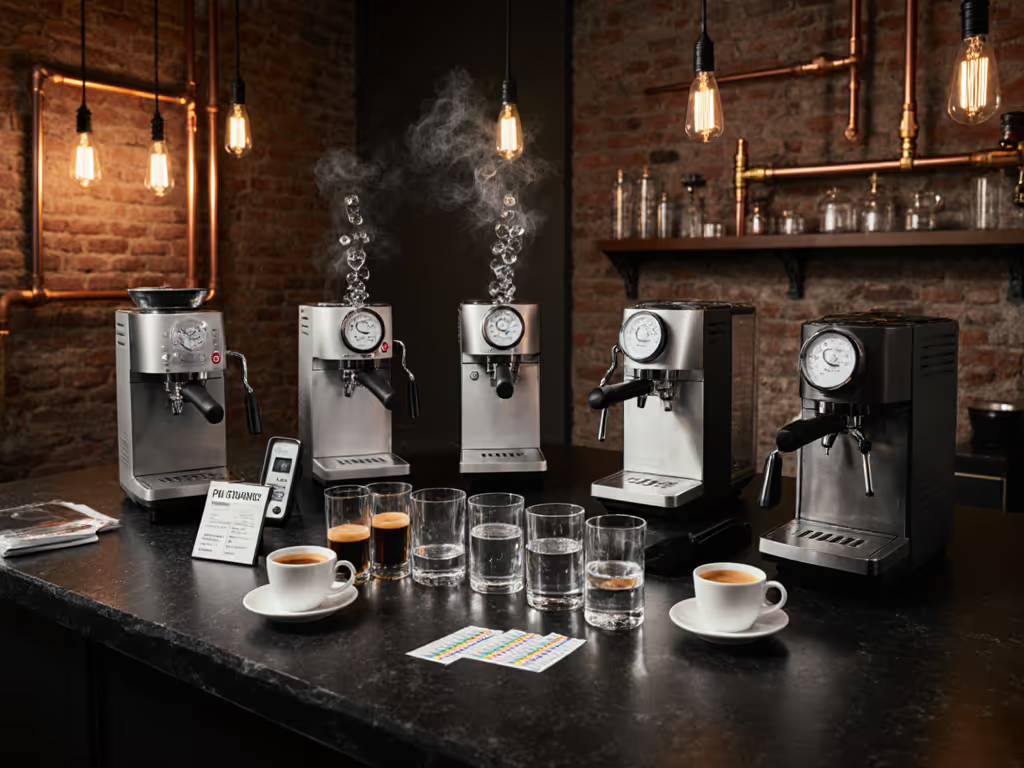
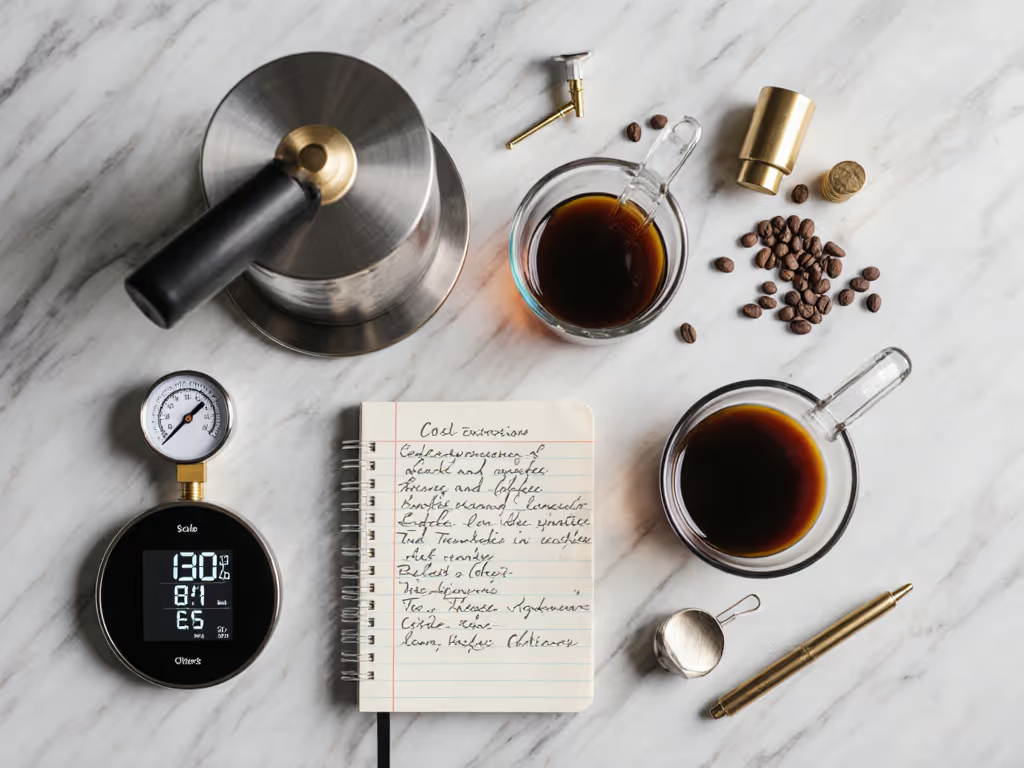
When I evaluate low-temp modes, I look at four quantitative dimensions: For a deeper dive into how changing pressure over time affects extraction, see our pressure profiling guide.
- Temperature stability at low ranges
- How tightly does the machine hold a setpoint like 60 °C or 25 °C over the full brew?
- What's the shot-to-shot variation (standard deviation) over multiple days of use?
- Pressure and flow profiling
- Is the pump using gentle pulses or full 9-bar pressure?
- How does that profile affect channeling and extraction time when the water is cold or lukewarm?
- Extraction yield and time
- Using a consistent coffee, grind, and ratio, what percentage of soluble material is extracted?
- How does this compare to reference immersion cold brew and to standard espresso?
- Workflow: setup, waiting, cleanup
- Does the "cold brew" feature actually reduce effort relative to a jar in the fridge?
- Is the cold brew machine workflow efficiency an upgrade or just a different way to use your time?
In my own early-morning testing, I've watched two near-identical machines diverge: one drifting several degrees day-to-day in its "cold extraction" program, the other holding essentially the same profile every morning. That gap - repeatable performance versus charming chaos - is precisely what matters for weekday routines.
Consistency beats charisma when the alarm is barely past snooze.
3. FAQ: Cold Brew Espresso Machines and Low-Temp Consistency
3.1 Which types of espresso machines actually make something like true cold brew?
There are four relevant categories for home users:
- Dedicated cold brew devices (immersion or slow-drip)
- Examples: Immersion pitchers with filters, slow-drip towers.
- These are not espresso machines, but they are the reference point for flavor and extraction at low temperature.
- Pros: High volume, simple, inexpensive, genuinely cold; very stable results once you lock in a recipe.
- Cons: Long lead time; separate piece of gear; no crema or "espresso-like" texture.
- Espresso machines with genuine cool-water modes
- A small subset of pump machines can route unheated or minimally heated water through the group.
- Brew times are typically 2-8 minutes, with a very low flow rate.
- The end result is a small-batch cold brew-like concentrate.
- Espresso machines with low but warm "cold extraction" profiles
- Many dual-boiler or thermoblock machines now advertise a "cold" or "cool" profile that is actually 60-80 °C.
- These produce hotter-than-iced coffee, but cooler than classic espresso.
- Superautomatic machines with a "cold brew" drink icon
- Behavior varies widely: some simply brew a lungo over ice; others extend preinfusion or mix in cold water.
- From a scientific standpoint, these are iced coffee or iced espresso, not cold brew.
If your goal is classic cold brew flavor and chemistry, the closest matches are:
- Dedicated immersion or slow-drip devices
- Espresso machines that can run near-room-temperature water for several minutes with low flow
Every other implementation is functionally an iced or low-temp espresso variant.
3.2 How do various "cold" modes differ in taste and consistency?
From test logs and cup-tasting, three patterns emerge:
- Ambient / cool-water extraction (2-8 minutes)
- Flavor: Closest to true cold brew - low bitterness, muted acidity, syrupy body.
- Consistency: Highly dependent on grind and agitation, but temperature itself is very stable because water starts and stays near room temperature. Shot-to-shot variance in brew temperature is typically within ±1 °C.
- Warm low-temp profiles (60-75 °C)
- Flavor: Softer than standard espresso, but still aromatic and more acidic than cold brew.
- Consistency: Hardware-dependent. Machines with robust PIDs and good thermistor placement can hold low setpoints within ±1.5 °C. Others overshoot and oscillate by 3-5 °C, which is noticeable in cup-to-cup brightness and bitterness.
- Standard hot extraction + ice or dilution
- Flavor: Very lively iced espresso; can be excellent with light or medium roasts.
- Consistency: Essentially the same as the machine's normal espresso performance. Temperature stability is typically better here because the system is optimized for ~90-95 °C operations.
For most home routines, the temperature stability at low ranges is the limiting factor that separates "fun option to play with on Sunday" from "reliable weekday feature."
3.3 Are "cold brew" superautomatic programs actually worth it?
Superautomatics with a cold brew icon appeal to buyers who want one-touch iced drinks. Under the hood, they usually do one or more of the following:
- Use a coarser grind and pull a long lungo over ice
- Extend preinfusion (low-pressure soaking) before a standard-temp extraction
- Mix hot espresso with chilled still or sparkling water
From a low temperature extraction analysis standpoint:
- Brew water is usually still in the 85-95 °C range when it hits the puck.
- Contact time is still measured in tens of seconds, not minutes or hours.
- The machine's cold water path (for dilution) rarely contacts the coffee grounds.
These systems can produce very good iced Americanos with excellent repeatability, because they leverage the same control loops used for hot espresso. If your goal is highly consistent iced espresso drinks with minimal effort, they can be a good fit.
If, however, you specifically want classic cold brew chemistry, these programs don't deliver it. You're effectively paying for automation, not for a novel extraction regime.
3.4 Can a standard PID espresso machine substitute for a cold brew setup?
A modern PID-controlled espresso machine gives you:
- Adjustable brew temperature (often 80-104 °C)
- Stable shot-to-shot behavior once warmed up
- Good control over pressure and flow (especially on machines with profiling)
You can use this to create low-temp espresso for iced drinks: If your machine supports it, temperature profiling can further smooth shots; start with our practical tutorial.
- Set brew temperature to the lower end (e.g., 85 °C) to reduce harshness.
- Increase shot volume (e.g., a 1:3-1:4 ratio instead of the classic 1:2) for a slightly more dilute, less intense base.
- Pull over ice or mix with chilled water or milk.
This does not replicate true cold brew, but it may hit the flavor space you want: smoother than standard espresso over ice, with greater reliability and speed than overnight immersion.
In terms of cold brew coffee machine compatibility, almost any good PID espresso machine is compatible with iced-espresso workflows, but it's not suitable for large-batch cold brew concentrate. If you need a liter of cold brew in the fridge, an additional immersion brewer is still the efficient tool.
3.5 What espresso cold brew ratios actually work?
Let's split this into two distinct use cases.
A. True cold brew (immersion or slow drip)
Common, reliable ratios:
-
Concentrate: 1:4 to 1:5 (coffee:water by mass)
-
Example: 200 g coffee to 800-1000 g water
-
Steep 12-16 hours at room temperature or in the fridge
-
Dilute 1:1 or 1:2 with water or milk when serving
-
Ready-to-drink: 1:8 to 1:10
-
Example: 100 g coffee to 800-1000 g water
-
Steep 12-16 hours; serve directly over ice
These ratios apply to any good immersion brewer or cold brew tower.
B. Espresso-based "cold extraction" drinks
For espresso machines with cool-water or low-temp modes:
-
Pseudo-cold-brew concentrate:
-
1:3-1:5 (coffee:beverage by mass), brewed at 20-60 °C for 2-8 minutes.
-
Example: 18 g coffee to 60-90 g beverage yield.
-
Expect lower extraction than hot espresso; grind slightly finer to compensate, but stop before channeling shows up.
-
Low-temp espresso for iced drinks:
-
1:2-1:3 at 80-90 °C, 25-40 seconds.
-
Example: 18 g coffee to 36-54 g beverage.
-
This is essentially standard espresso with a cooler profile, then served over ice or with cold water.
In practice, espresso cold brew ratios above about 1:5 (at low temperatures) tend to produce under-extracted, papery notes unless you extend time substantially - which most espresso machines are not designed to handle ergonomically.
3.6 How do workflow and cleanup compare between methods?
From a weekday perspective, this is where the decision often gets made.
Dedicated cold brew device:
- Workload pattern: 5-10 minutes of prep (grind, fill, stir) for 12-24 hours of passive brewing.
- Morning routine: Pour from the fridge; negligible active time.
- Cleanup: Rinse vessel and filter; 3-5 minutes.
- Efficiency: Excellent if you drink cold coffee daily and can plan ahead.
Espresso machine cold modes (manual or superautomatic):
- Workload pattern: Concentrated in real time: grind, tamp (if manual), wait 30 seconds to several minutes, then clean.
- Morning routine: Active time per drink is higher than just opening the fridge, but no day-ahead planning.
- Cleanup: Similar to standard espresso use (puck knock-out, wipe group, rinse basket).
- Efficiency: Good if you're already running the machine each morning and want occasional or on-demand cold drinks.
If you measure cold brew machine workflow efficiency as hands-on seconds per finished ounce, the immersion brewer wins for habitual cold brew drinkers, while the espresso machine wins for occasional iced drinks or when you prioritize flexibility over batch volume.
3.7 What should I prioritize for long-term taste consistency?
If you care about taste consistency over time, put these factors above marketing names: For a hardware primer on group designs that influence thermal stability, compare E61 vs saturated group heads.
For espresso machines:
- Stable PID control with proven low-temp performance
- Look for machines that specify stability at lower setpoints or have a track record in user measurements.
- Thermally stable group and path
- Saturated groups or well-designed thermoblocks tend to be more predictable in non-standard modes.
- Repeatable flow/pressure profiling
- If a machine uses pulsed or low-pressure extraction for cold modes, it should execute the same curve daily.
- Good grinder pairing
- Low-temp extractions are more sensitive to grind inconsistency; a quality burr grinder is critical.
For dedicated cold brew setups:
- Consistent ratio and steep time
- Uniform grind size (coarse, burr ground)
- Stable brewing temperature (fridge vs countertop, not both)
- Repeatable agitation (stir pattern or no-stir, but fixed)
Machines and brewers differ, but at 6 a.m. what matters is that once you find a recipe, it behaves the same on Tuesday as it did on Saturday.
3.8 Is a machine with a "cold brew" setting worth paying extra for?
It depends on which of these profiles describes you:
- "I drink cold coffee almost every day and I like it low-acid and mellow."
- Best fit: A simple dedicated immersion or slow-drip cold brewer plus your existing espresso or filter setup.
- Reason: Higher volume, less active time, closer to true cold brew chemistry.
- "I want occasional iced or low-acid drinks, but not a second device on the counter."
- Best fit: A PID espresso machine with good low-temp stability; a labeled "cold brew" mode is optional.
- Reason: You can mimic most "cool extraction" profiles manually with lower brew temps and adjusted ratios.
- "I prioritize one-touch convenience and primarily drink milk-forward iced drinks."
- Best fit: A superautomatic with a well-implemented iced/'cold brew' program and solid reviews on consistency.
- Reason: You're paying for automation and programmable routines more than for novel extraction physics.
In most test scenarios, the price premium for a "cold brew" label on an espresso machine is justified only if:
- The machine provides genuinely distinct, cooler water paths or extended low-pressure extraction, and
- The low-temp performance is as stable as the machine's standard espresso mode.
Otherwise, your money is better spent on core stability (PID, quality internals) and a modest dedicated cold brew device if needed.
Summary and Final Verdict
Bringing this cold brew espresso machine comparison back to your kitchen:
- True cold brew is best delivered by immersion or slow-drip devices. They excel in volume, simplicity, and repeatability once dialed in.
- Most espresso-machine "cold brew" modes are either low-temp espresso or automated iced coffee. They can taste great, but they're not chemically equivalent to overnight cold brew.
- Temperature stability at low ranges is highly machine-dependent. For how heating architecture drives stability and recovery, see thermoblock vs heat exchange explained. Some PIDs perform as well at 60 °C as at 93 °C; others drift or oscillate enough to change flavor cup-to-cup.
- If you already own or plan to buy a stable PID espresso machine, you can build reliable iced and low-acid drinks without paying extra for a "cold brew" logo - simply by controlling brew temperature, ratio, and serving method.
- If cold coffee is your everyday drink, a separate cold brew brewer plus a solid espresso machine is often the most efficient and flexible setup over the long term.
From an engineering and sensory standpoint, investing in consistent thermal control and robust workflow beats chasing the newest label on a touchscreen. Build your system around stability and repeatability first, and then add cold brew capability in the format - immersion jar or espresso mode - that best fits your mornings.
Related Articles